
From the Attorneys
Real Estate Blog
Expert insights on DC, Maryland & Virginia real estate, title insurance, closing costs, and more. 705 articles and counting.

Federal Title Featured by Redfin
We’re excited to share that Federal Title & Escrow Company was recently featured in a Redfin article discussing one of the most overlooked — but critical — steps in the closing process: the final walk-through. You can read the full article here: https://www.redfin.com/blog/what-can-buyers-demand-at-final-walk-through/ The final walk-through is not just a formality. It’s the buyer’s last […]
Read more →
Fear Not! You Did NOT Just Sell Your House for $10!
Virginia deeds often say something like the following: “That for and in consideration of TEN DOLLARS ($10.00), cash in hand paid, and other good and valuable considerations, the receipt and sufficiency of which are hereby acknowledged, the Grantor does bargain, sell, and convey unto the Grantee the following described real property…” Does this language mean […]
Read more →
NVAR Contract – What Day is It?!
Our attorney team recently received two great questions about the Northern Virginia Association of Realtors (NVAR) Contract relating to HOA deadlines and what counts as a “Day.” Scenario: We Ratified at 9pm on 2/11/26. EMD delivery is required 3 Business Days from Ratification. The Buyer wrote in 2 Days to cancel based on HOA resale […]
Read more →
DC’s New TOPA Law – Rebalancing Expectations for Neighbors, Tenants, and Landlords (RENTAL) Act (Effective December 31, 2025)
Washington, DC has officially entered a new era of tenantpurchase law. With the passage of the Rebalancing Expectations for Neighbors, Tenants, and Landlords (RENTAL) Act, the DC Council approved the most sweeping changes to the Tenant Opportunity to Purchase Act (TOPA) in years. There are a number of provisions of the RENTAL Act that still […]
Read more →
Using a Power of Attorney with a Trust: Q & A for Sellers and Listing Agents
Transactions involving trusts and Powers of Attorney come up regularly — and they’re often misunderstood. Below are the questions we see most often. Q: If the property is in a trust, who has authority to sell it? A: The trustee. If title is vested in a trust, the acting trustee is the party with legal […]
Read more →
Title Insurance vs. Homeowners Insurance: Why Do You Need Both to Protect Your Home?
Title insurance and homeowners insurance feel similar at a glance, but they protect completely different parts of a buyer’s investment.
Read more →A Revisit of Maryland’s First-Time Homebuyer Transfer Tax Exemption
Buying your first home in Maryland is a major milestone. It is also one of the largest financial commitments most people will ever make. What many buyers do not realize is that Maryland offers a valuable state transfer tax exemption that can significantly reduce closing costs for those who qualify. Below is a clear explanation […]
Read more →
Estate Sales in D.C.: A Costly Property Tax Surprise to Watch
When a D.C. homeowner receiving the Homestead Deduction and the Senior Citizen / Low-Income Property Tax Exemption passes away, a hidden tax issue often follows the property to closing: recapture of real property tax benefits. For listing agents and personal representatives, this can mean an unexpected reduction in estate proceeds. Why This Happens Both programs […]
Read more →
Do They Really Have Authority? Understanding Apparent and Implied Authority in Real Estate Transactions
If a contract is signed by someone without valid authority, your buyer may not be able to enforce it—and that’s a risk no one wants to take.
Read more →
The Ultimate Guide to VA Loans
For U.S. veterans, active-duty service members, and eligible military spouses, VA loans offer one of the most powerful paths to homeownership. With benefits like $0 down payment, no private mortgage insurance (PMI), and competitive interest rates, VA loans make buying a home more affordable than conventional mortgages.
Read more →
Tariff Impacts on the DMV Real Estate Market
Tariff Impacts on the DMV Real Estate Market The recent economic policy changes stemming from the Trump Administration’s tariffs pose many questions for investors and buyers looking to participate in the current real estate market. Is it a good time to buy? Is it a good time to sell? What is happening with interest rates? […]
Read more →
Title Fraud: Does Title Insurance cover Fraud?
We hear the concerns of many homebuyers about the potential for title fraud, asking what they can do to best protect against it. Title fraud is on the rise and while fraudsters mostly favor the targeting of properties that are unencumbered (free of mortgages), unoccupied/vacant, or unimproved, all property titles remain at risk. In some […]
Read more →
Understanding the Unauthorized Practice of Law for Realtors
A Guide for Compliance Not long ago, I had a front row seat to a contract dispute in which, among other claims, there was a claim against the realtor for unauthorized practice of law (UPL) involving the drafting of a contract addendum. Fortunately, the parties eventually settled and avoided litigation. As a realtor, your role […]
Read more →
Maryland’s Tenant Right of First Refusal: A Guide for Landlords
On October 1st 2024, Maryland’s new Tenant Right of First Refusal law went into effect, introducing significant changes for landlords planning to sell their rental properties. This law mandates that tenants be given the opportunity to purchase the property they are renting before it is sold to any other buyer. Understanding these new requirements is […]
Read more →
Legal Update: Maryland requires testing for private water systems
Important Update for Maryland Real Estate Transactions: Understanding MD Code, Real Property § 10-713 – Water Quality Testing as a Condition of Sale It is important to ensure that real estate transactions comply with the latest regulations pursuant to Maryland Code, Real Property § 10-713 . Effective October 1, 2024, § 10-713 mandates water quality […]
Read more →Homebuyers Alert! Title Defects Without Coverage
Are title defects covered? The cost of owner’s title insurance can surprise many homebuyers, tempting them to waive coverage without having a clear understanding of its protections and the ramifications of leaving the closing table without it. Many homebuyers wrongly assume that title defects are expected to be uncovered by the title company, and […]
Read more →
Clearing Up Confusion
There have been many changes in our industry recently. Today we came across an article by Jeff Ehrlich clearing up confusion about the recent media release issued by the Office of the Attorney General for the District of Columbia. It is worth taking a few minutes to read through the post to understand how it […]
Read more →
Navigating Your Home Sale
A Title Attorney’s Guide to a Smooth Closing Selling your home can be an exciting but complex process. As a title attorney, I often receive a flurry of questions from clients preparing for closing. Here’s a comprehensive guide to help you understand the key aspects and ensure a smooth transaction. What Are My Responsibilities While […]
Read more →
Unfinished Business: The Final Walkthrough
You are just hours away from closing, conducting the final walkthrough with your buyer, and discover an unfinished repair or unforeseen issue changed from the date of offer. Now what? Now that mortgage lenders no longer permit “repair escrows,” how is a buyer’s agent expected to handle the situation. First, as you walk through the […]
Read more →
A Defense of the Title Industry
As a title attorney, one of the most common questions I encounter is about the cost of title insurance and title fees. Many homebuyers and property investors often feel that title costs are high. However, it’s crucial to understand the dynamics behind these fees and why they are not overpriced. I know you are thinking, […]
Read more →
Deed of Gift Transfers in Virginia
A deed of gift is a legal document used to transfer ownership of property from one person (the donor) to another (the donee) without monetary exchange. This method is often used for familial transfers or charitable donations. Key Elements Voluntary Transfer: The donor must willingly transfer the property. Donative Intent: The donor must clearly intend […]
Read more →
Questions to Ask at Closing
At Federal Title, we have been helping buyers with their home purchases for over 25 years. And over that time, we have been asked many questions. Here is a suggestion of a few questions to ask at closing. When is my first payment? Maybe the most important item to know about your new loan is […]
Read more →
Deed Transfer with a Trust
Recently we received a call about a deed transfer with a trust agreement. Specifically, the property is owned by a mom and dad as trustees of the Mom and Dad Revocable Trust. They would like for their daughter to be added to the title of the property. When it comes to owning property, there are […]
Read more →
How Title Insurance Protects
What is Title Insurance? Title insurance is a crucial safeguard for homeowners, providing protection against financial loss due to defects in a property’s title. Despite thorough research and due diligence during the purchasing process, issues can arise after closing that threaten the validity of the title. Examining a possible claim will help illustrate how title […]
Read more →
Consider Life Insurance when Buying a Home
When purchasing a home, many people focus on securing a mortgage, finding the perfect location, and envisioning their new living space. However, amid the excitement of homeownership, it’s crucial to consider life insurance when buying a home. While it may not be the most thrilling topic, considering life insurance when buying a home is a […]
Read more →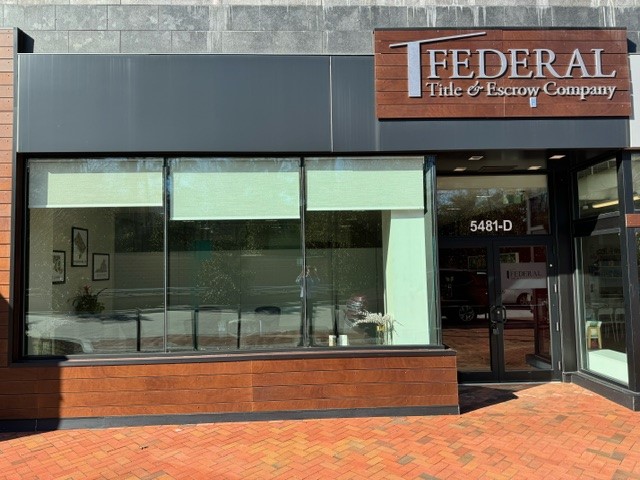
New Office Location!
Federal Title is opening a new office location! After 20+ years in the Chevy Chase Pavilion, this March, Federal Title & Escrow Company is relocating its Uptown office. The new location is only a couple of blocks north and is located in The Collection. The new office location is only a block from the Friendship […]
Read more →
Be Picky About Who Prepares Your Deed
Why You Should Be Picky About Who Prepares Your Deed So, you’re thinking about changing the deed to your property, maybe adding or removing a spouse. Well, guess what? It’s a big deal, and you should be careful about who prepares your deed. Here’s why: Legal Know-How: Dealing with property deeds can be tricky. You […]
Read more →
Buying A Renovated Home? Verify the C of O
If you are buying a recently renovated or modified home, verifying the issuance of a Certificate of Occupancy (“C of O”) may be one of the more critical items on your due diligence list. The purpose of a C of O is to ensure that a seller has properly conformed to construction codes, zoning regulations, […]
Read more →
Two Types of Condo Parking Spaces
Fee Simple or Limited Common Elements Unlike condominium parking spaces that are separately taxed and deeded (known as “fee simple ownership”), parking spaces that are designated as “limited common elements” within a condominium regime are NOT covered by title insurance. In a past blog, we explain the differences between these two types of condo parking […]
Read more →
DC Tax Abatement (AKA Lower Income Homeownership Program): Can I apply for the program after my purchase?
I recently purchased a home in Washington, D.C. and did not apply for the DC Tax abatement program at that time. Am I still able to apply for the program after I have purchased my home? Yes. To qualify for the DC Tax Abatement Program after one’s purchase, the applicant must have met the income […]
Read more →
DC Residential Sales Verification Questionnaire
Do You Know about the DC Residential Sales Verification Questionnaire? If you recently bought a home in DC, you should soon thereafter expect to receive a letter from an appraiser with the Office of Tax and Revenue asking you to complete the DC Residential Sales Verification Questionnaire. The questionnaire asks you to complete specific property […]
Read more →
FSBO
What is a FSBO? FSBO stands for “For Sale By Owner”. It refers to a property that is being sold directly by the owner, without the representation of a real estate agent. While a real estate agent provides tremendous value while listing a property, sometimes a property owner decides to go it alone. What percentage […]
Read more →
The Face of Real Estate Settlements
Federal Title & Escrow Company was recently named The Face of Real Estate Settlements for 2024! The article appears in the January issue of The Washingtonian. Thank you to all of our clients for all your continued support. Thank you to our staff for their dedication and hard work. And thank you to Chief for […]
Read more →
2024 Real Estate Outlook
As we usher in the new year, the real estate landscape of the Washington, D.C., Maryland, and Virginia (DMV) region is poised for a boom. I think we can all agree that this was a challenging year for sellers and buyers alike. We firmly believe that the 2024 real estate outlook is optimistic and will […]
Read more →
Questions on the Reduced Recordation Tax for DC FTHB
I am an employee of an international organization, am exempt from paying US taxes and have some questions on the reduced Recordation Tax for DC FTHB. Can I qualify for the DC First Time Home Buyer Recordation Tax Reduction benefit without providing my tax return? For those individuals who wish to apply for the Reduced […]
Read more →
FHFA Conforming Loan Limits
The Federal Housing Finance Agency (FHFA) has made a change that will hopefully have a positive impact on the housing market in 2024. Effective January 1, 2024, there will be new FHFA conforming loan limits. For most of the United States, the new FHFA conforming loan limits will be increased to $766,550 for one unit […]
Read more →
The Importance of Online Reviews
Title companies are pivotal in real estate transactions, ensuring smooth property transfers by guaranteeing clear titles. In today’s digital age, the importance of online reviews when selecting a title company cannot be overstated. Transparency and Credibility Online reviews offer insights into a title company’s transparency and professionalism. Positive experiences shared by clients instill confidence, while […]
Read more →
Monthly Market Reports
At Federal Title & Escrow Company, we understand the importance of staying informed in the ever-evolving real estate landscape. That’s why we’re thrilled to introduce our Monthly Market Reports, your window into the latest trends and insights shaping the real estate market. Using data from our monthly transactions, our reports offer comprehensive statistics and insights […]
Read more →
Reasons for Changing Tenancy on a Deed after Marriage
Nowadays, many couples buy a house before getting married. Quite frequently, we get asked about whether or not the deed should be updated to reflect their new marital status. Doing so can be done for several reasons, each with its own legal implications and advantages. Here are some common reasons for changing tenancy on a deed after […]
Read more →
Why Federal Title is Distinct from Other Title Companies
In the ever-evolving world of real estate, Federal Title & Escrow Company stands out as a top choice for those seeking a fresh approach to property transactions. Wondering what sets us apart? Let’s explore why Federal Title is distinct from other title companies. Transparency Federal Title & Escrow Company prioritizes transparency, making it the preferred […]
Read more →
To JV or Not to JV: That Is the Question
Recently, the American Land Title Association (ALTA) hosted a webinar titled: To JV or Not to JV: That Is the Question. Federal Title & Escrow Company has expressed concerns over Joint Ventures in the past, but the focus of this webinar was enforcement. That shouldn’t come as a surprise since the presenter was Jeff Ehrlich, […]
Read more →
Homeownership for Unmarried Couples
When two adults decide to dive into property ownership together – be it their first home, an investment property, or a trendy vacation spot – they often find themselves pondering the seemingly complicated question of how to co-own it. While marriage can make this decision a no-brainer for some, unmarried couples face a unique set […]
Read more →
Rainy Weekend Adventures in Washington, D.C.
When the rain clouds gather over the nation’s capital, it’s easy to feel like your weekend plans are drenched. However, Washington, D.C. has plenty to offer even when the weather isn’t cooperating. Grab your umbrella, put on your waterproof boots, and get ready for a memorable rainy weekend in D.C. Smithsonian Museums Spend your rainy […]
Read more →
Transferring Real Property into a Revocable Trust: Benefits and Considerations
Real property, such as your home or investment properties, is often one of the most valuable assets you own. As you plan for the future and consider how to manage and protect your assets, one option worth exploring is transferring real property into a revocable trust. This legal arrangement offers several benefits, but it’s important […]
Read more →
Future Proof Your Real Estate Business 2.0
On September 13, 2023, Federal Title & Escrow Company along with First Home Mortgage will be presenting: Future Proof Your Real Estate Business 2.0! Leading industry experts Andrew Hooper and Tim Hooper will be presenting invaluable information to agents on how to use technology while still keeping your human edge. For more information on the […]
Read more →DC TOPA SINGLE-FAMILY HOME GUIDELINES
What is TOPA? The Tenant Opportunity to Purchase Act (TOPA) is a law which requires an owner who wants to sell his or her rental property to give tenants an opportunity to purchase the accommodation and a right of first refusal to match a third-party contract. The DC TOPA single-family home guidelines derive from this […]
Read more →
Another Way Federal Title Saves Homebuyers Money
Title insurance premiums in the DC area have increased substantially over the past decade such that an owner’s title insurance policy for a $1 million District of Columbia property can cost you as much as $5,000.00. To reduce this pricey closing cost item, Federal Title has partnered with underwriters who make nearly all properties in […]
Read more →
New Satellite Office Locations
Federal Title is proud to announce satellite office locations. The DMV region is comprised of hard-working individuals, and we understand that closing shouldn’t take you away from your job or your family. Federal Title has five full-time staffed locations in DC, Maryland, and Virginia. However, we know that no one wants to take the day […]
Read more →DC TOPA for 2-4 Unit Properties
DC TOPA for 2-4 Unit Properties is one the most confusing topics that we get asked repeatedly. Here is an attempt to help simplify the process. To determine whether the housing accommodation is 2 to 4 rental units, all rental units in the housing accommodation are counted. The occupied rental units as well as vacant […]
Read more →Top U.S. Law Firm Warns Against Joint Ventures
Real estate agents who participate in joint ventures should be wary, a top law firm says.
Read more →
Counting Days in a Contract
Counting days in a contract can often be confusing. If you put a 7-day inspection contingency in the contract, how many days is that? Is that business days or calendar days? What day do you begin to count, and what time of day does the contingency end? The answer will depend on which contract you […]
Read more →New Arlington Location!
Federal Title & Escrow Company has a new Arlington location! As of June 15, 2023, Federal Title’s Virginia location has moved to Clarendon. In 2021, we opened our Arlington, VA location in Ballston. Thanks to our homebuyers, sellers, lenders, and loyal real estate agents, we have expanded our presence in the Northern Virginia real estate […]
Read more →
When Only One Property Owner is Deceased
What do I need to know when only one property owner is deceased? We often handle closings where there are multiple owners and one of the owners has died. Here are a few tips that will assist with this type of listing. First, you will want to confirm the sellers’ tenancy on the Deed. In […]
Read more →
Remote Online Closings Are in Demand!
The future of real estate closings is now, and remote online closings are in demand! There are many different remote online notarization companies, but Federal Title has partnered with Stavvy as its remote online notarization platform. Unlike other title companies, all of Federal Title’s remote online closings are conducted by Federal Title attorneys. So you […]
Read more →3 Essential Questions for New Home Buyers
When looking to save money, here are 3 essential questions for new home buyers. Please subscribe to our YouTube channel in order to receive updates on title related matters. Federal Title & Escrow Company – YouTube
Read more →
Does my Bay Window Encroach onto City Property?
Oh no, does my bay window encroach onto city property? Whether it’s a bay window, porch, retaining wall, or other projection, surveys often reveal what appear to be encroachments, or structures built beyond the property beyond the property boundary line. Most often, these are encroachments onto city public space. Not to worry, the District of […]
Read more →
3 Things Homebuyers Need to Know About Title Companies
Here are 3 things Washington DC, Maryland & Virginia homebuyers need to know about title companies. Please subscribe to our YouTube channel in order to receive updates on title related matters. Federal Title & Escrow Company – YouTube
Read more →
Joint Tenancy Deeds in Maryland
Do Joint Tenancy Deeds in Maryland that do not include, “with rights of survivorship” actually include those rights. In other words, does a Joint Tenancy Deed in Maryland need to include the verbiage “with rights of survivorship” for rights of survivorship to apply. In Maryland, Joint Tenancy always presumes rights of survivorship, whether it states […]
Read more →
Home Inspections and Appraisals are Important Steps
Both home inspections and appraisals are important steps in the process of a home purchase. In short, the key difference is a home inspection allows a prospective buyer to assess the safety and current condition of the home before the sale is complete, while an appraisal assesses the home’s value. They can also both cause […]
Read more →
When a Listing Forces the Contract to their Title Company
What can I do when a listing forces the contract to their title company? I don’t participate in a Joint Venture and want to choose an independent title company, but the listing agent says the offer should include their Joint Venture title company as the closing agent. I don’t want to lose the deal, but […]
Read more →
No Tenancy is Listed on the Deed
I just looked at my old closing papers and noticed no tenancy is listed on the deed. Is that a problem? In most jurisdictions if no tenancy is listed on the deed, the tenancy defaults to Tenants in Common. This is the least common tenancy since it does not allow for rights of survivorship. Consequently, […]
Read more →
DC First-Time Homebuyer Recordation Tax Reduction (UPDATED APRIL 2023)
For the latest information on the DC First-Time Homebuyer Recordation Tax Reduction benefit for first-time homebuyers, please visit our Guide to DC’s Recordation Tax Reduction. Below Are The Updated (April 2023) Requirements to Qualify for a Recordation Tax Reduction: The purchase price can’t exceed $684,500. Total household income doesn’t exceed the below thresholds: Persons In […]
Read more →
Excuses for Waiving Title Insurance
Every year, a handful of purchasers come up with excuses for waiving title insurance. Our website provides many explanations of title insurance and why it is important, but here are a few of the most common excuses for waiving the owner’s title insurance coverage. “The sellers have lived there for 25 years. If there was […]
Read more →
Remember to Cancel the DC Homestead
Why is it important to remember to cancel the DC Homestead deduction real property tax credit on a property that is no longer your principal residence? The simple answer is that you run the risk of being audited by the District of Columbia’s Homestead Department and incurring a hefty tax bill for past due real […]
Read more →
Solar Panel Disclosure – Where’s the Documentation?
Since the introduction of the Solar Panel Disclosure (GCAAR Form #1611), Sellers who own a solar panel system free and clear or purchased the property years ago with that system in existence are often unable to produce the documentation required of them by the disclosure. The disclosure requires the Sellers to deliver the documentation at […]
Read more →
What to Look for in Your Contract: Affiliated Business Arrangement Disclosures
A real estate contract can be over 50 pages long. How can you know what to look for in your contract? Affiliated Business Arrangements (“ABA”) are agreements between two or more parties in a real estate transaction that allow for the services of one party to economically benefit the other party in the ABA. In […]
Read more →
Don’t Lose your $692 Tax Credit in Montgomery County!
Montgomery County offers an Income Tax Offset Credit (ITOC) of $692 for residents who live in the property they own. State law now requires property owners to have a Homestead Tax Credit (HTC) on file with the Maryland State Department of Assessment and Taxation (SDAT) to continue to receive the credit. A property owner must […]
Read more →
Concerns When a Listing Requires Use of a JV Title Company
Concerns When a Listing Requires Use of a JV Title Company A recent trend in the real estate market is for the listing agent to dictate the terms of how to make the offer. A common method of doing this is through the requirements of making an offer. Essentially, the listing agent tells the buyer […]
Read more →
Too Good to be True
Have you ever been presented a scenario in life, and thought, this must be too good to be true? We all, at some point, have had that feeling, right? Maybe it was an email that told you a foreign prince just needed your help to transfer some money and in exchange would reimburse your time […]
Read more →
Residential Real Property Disclosure: Is the POA for Seller excused?
I regularly receive calls from listing agents asking if the POA (or Attorney-in-Fact) for the seller is exempt from completing the disclosure. For DC, MD, and VA properties, the answer is “NO”; despite the fact that the POA may have never set foot in the property. Of course, if the seller is able, it is […]
Read more →
House Passes SECURE Act
On February 27, 2023, the U.S. House of Representatives passed the SECURE Notarization Act of 2023. Technically, this article should be titled: House Passes Secure Act … again. The House already passed the act previously, but it stalled in the Senate. The SECURE Notarization Act would: Permit immediate nationwide use of remote online notarization (RON) […]
Read more →
Criteria for Selecting a Title Company
As a homebuyer, what is the proper criteria for selecting a title company? At Federal Title & Escrow Company, we would like to think that your decision is based on service and pricing. When somebody recommends you use a title company, whether it be your real estate agent, your loan officer or your neighbor, you […]
Read more →
What are Home Warranties?
Imagine closing on your home and right after moving in your dishwasher breaks, the basement sump pump stops working, and your heating system begins to malfunction. None of these issues were discovered during the home inspection and now you are stuck with repair costs that are adding up quickly. This is not a pleasant situation […]
Read more →
Don’t Give Up Your Buyer Right to Choose the Title Company
A recent, concerning trend during the real estate offer and acceptance phase is for the seller to push a particular title company on the buyer. This is a troubling new trend for many reasons. The buyer, wanting to appeal to the seller and wanting to make their offer as enticing as possible, often agrees to […]
Read more →
The Title Company “Represents the Contract”
If you’ve been a real estate agent or mortgage lender for any length of time, you’ve no doubt heard it uttered that the title company’s role is to “represent the contract.” But what is the meaning of this? Surely, the title company cannot represent a thing. The expression is most often used to assure homebuyers and sellers […]
Read more →
Virginia first time home buyer, here’s 3 programs you should know about
Buying a home in Virginia? First-time Homebuyer programs can help more than you think. We all know the narrative – rates are higher than they’ve been in some time, and economic uncertainty is looming. Virginia first time home buyer programs are available to help. Now may be a better time to buy than you think. […]
Read more →
Location Surveys: When Are They Needed?
When purchasing a property, there are many different expenses, a lot of which seem to overlap. One expense that is frequently questioned is whether it is worth it to obtain a location drawing, a boundary survey or no survey at all. Need help with a survey? Speak with a survey expert Most buyers choose […]
Read more →
Future Proof Your Real Estate Business – Registration Now Open!
Registration is now open, and seats are filling fast. Don’t miss out on your chance to Future Proof Your Real Estate Business. Join us for a complimentary luncheon followed by our business development and marketing seminar. You will walk away with a full belly and fresh ways of thinking about your real estate business, including: […]
Read more →
Agent Spotlight: Jonathan Eng’s Epic Summer Staycation
The Century 21 Redwood Realty agent discovers his real estate business isn’t the only source of “uplifting and eye-opening” life experiences It’s 3 o’clock in the morning, and Dulles International Airport is practically a ghost town. Real estate agent Jonathan Eng is a ball of nerves as he sits with his partner Kevin at the […]
Read more →
Do you qualify as a DC first-time homebuyer?
The would-be DC first-time homebuyer was treated to some promising news this week when Mayor Bowser’s office announced a limit increase for the city’s Home Purchase Assistance Program from $80,000 to $202,000 beginning October 1. Did you know? Even if you have owned real property before, you may still qualify as a DC first-time homebuyer […]
Read more →
DC First Time Home Buyer Program Offers Up to $202K
A DC first time home buyer who qualifies for DC’s Home Purchase Assistance Program could receive as much as $202,000 for down payment assistance and gap financing beginning October 1, 2022. This is incredible news for DC first time home buyers, as it represents an increase of more than 2.5 times the current maximum amount, […]
Read more →
Attract more DC, MD & VA Home Buyers with Instant Closing Credit – REAL Credit
We’ve seen fewer home buyers on the hunt this summer and a steady uptick in inventories around DC, Maryland and Virginia. Some people might point to rising interest rates as the culprit, but interest rates remain at historically low levels at just over 5%. Another theory about the lull in home buyers is that many […]
Read more →
Digital closing a.k.a. remote closing – New opportunity for your real estate business?
Digital closings, or remote online closings as they are known in the title industry, are a complete game changer for real estate agents and their clients. What makes digital closings so special? Using the latest identification verification technologies, your title agent at Federal Title can now facilitate the entire document signing and real estate closing […]
Read more →
What is a Reissue Rate?
What is a reissue rate? Simply put, a reissue rate is a homebuyer discount on the rate of an owner’s title insurance policy. The following sets forth the requirements along with some FAQs we encounter from homebuyers about title insurance reissue rates. (Our title insurance underwriters are WFG National Title Insurance Company and First American […]
Read more →
What does contingent mean?
When browsing homes for sale on a real estate app like Zillow or Redfin, you may come across property labeled contingency or contingent. What does contingent mean in real estate? A contingent contract means the offer to buy the house includes conditions of sale. A home seller may accept, reject or counter a contingent offer. […]
Read more →
DC property taxes due September 15
DC property taxes are due again. They are billed in two installments, with the first half being due March 31 and the second half being due September 15. The first bills are usually mailed out in February by the DC Office of Tax and Revenue, while the second bills are mailed in August. Property tax […]
Read more →
How to change your chosen title company after you have a ratified sales contract
You can change title companies with the consent of the seller, through a simple addendum to the ratified sales contract. View our settlement agent-change sample addendum. What happens if a homebuyer doesn’t know about their right to choose a title company until after their sales contract has been drafted, accepted and ratified by all parties, […]
Read more →
Homebuying competition drops in D.C. real estate market
The stories about homes for sale receiving multiple offers, contracts with waived contingencies and properties purchased sight unseen may soon be coming to an end. Rising interest rates, inflation, high home prices and an uncertain economic forecast have helped put the brakes on a runaway housing market that for several years has made it incredibly […]
Read more →
SECURE Notarization Act passes in the House, paves way for national RON legislation
The U.S. House of Representatives passed a series of bills on Wednesday night that included the ALTA-supported Securing and Enabling Commerce Using Remote and Electronic (SECURE) Notarization Act (H.R. 3962), according to a news bulletin we received from American Land Title Association. The SECURE Notarization Act would – Permit immediate nationwide use of remote online […]
Read more →
Employee Spotlight: Former preschool teacher and long-time outdoor enthusiast Sanam Geramifar loves her family, her job…and turkey sandwiches
Sanam Geramifar looked up from her computer, glanced around her office and thought about her life: she has a son that she adores, a close-knit family, and as Federal Title’s disbursement controller since 2018, she enjoys many aspects of her position, even her commute to work! “I love my job, and I love what I […]
Read more →
Real estate tax and escrow/reserves explained…
Homebuyers and refinancing homeowners are often confused at closing about their mortgage lender escrow/reserve requirements. Typically if a homebuyer’s down payment amount is less than 20% or a refinancing homeowner’s equity is less than 20%, a lender will require the homebuyer to maintain a reserves account controlled by the lender for the purpose of paying homeowner’s insurance premiums and real estate taxes. The lender has good reason to make sure homeowner’s insurance premiums are paid in si
Read more →
What really drives high closing costs? (Hint: It’s not home prices)
The tallies are in, and the District of Columbia officially ranks No. 1 for the highest average closing costs in the nation, according to a report on closing costs that ran last month in the Washington Post. Open Closing Cost Comparison Chart Closing Cost Comparison Jurisdiction Purchase Price (Average) Close w/ Average Companies Close w/ […]
Read more →
Understanding 4 types of property surveys
At Federal Title and Escrow, we require a property survey for single family home purchase closings. Homebuyers frequently ask us why it is necessary to have a survey. The main reason we obtain a survey is that the lender providing the purchase financing requires that we issue a lender’s title insurance policy that does not take exception to survey matters, and in order to do that, we need to review a survey. My recent post discussing encroachments onto neighboring property is an example of how
Read more →
Ways to Save on Real Estate Closing Costs
Now more than ever, it is important that homebuyers and sellers in the DC metro area reduce their closing costs – without sacrificing the quality service they deserve. Consumers are spending more for a home at a higher interest rate, so why settle at a higher cost for low rated title service elsewhere? Homes in […]
Read more →
What’s the Benefit of Choosing a Title Company Near Me?
Why should I choose a title company near me in DC, Maryland or Virginia when there’s an online title insurance vendor that can close for a few dollars less? The old adage remains true, real estate is local. Only a local title company operating near you and the property you’re looking to buy or sell […]
Read more →
Federal Title & Escrow Company Awarded Prize for Exceptional Management of Consumer Funds: Press Release
The 3E Remittance Award from WFG recognizes the Mid-Atlantic Region’s top performing title companies in delivering streamlined and consistent remittances Washington, D.C. (June 28, 2022) – Independent settlement service provider Federal Title & Escrow Company, known for leveraging high tech to deliver a personalized closing experience, recently accepted the Mid-Atlantic Region’s “3E Remitter Award” from […]
Read more →
Why does owner’s title insurance get a bad rap?
Google “owner’s title insurance,” and you will find scores of blogs and other publications scorning this misunderstood insurance product. Frequently, at the settlement table, we hear homebuyers opine that title insurance is a “rip-off” and not worth the cost. Most of these comments stem from a deep misunderstanding of the product and, too often, are merely a regurgitation of the opinions that predominate the conventional wisdom. While owner’s title insurance is optional t
Read more →Title company serving Bethesda, Md.
Some of our clients are surprised to learn that our title company also serves Bethesda, MD. We’re conveniently located on Wisconsin Avenue and offer parking validation to all our guests, along with complimentary snacks and soft drinks. We may have gotten our start as a title company in Washington, DC, but over the past 26 […]
Read more →
Wire fraud risk increases before long weekends: First American fraud bulletin
The Friday before a holiday weekend represents an exponentially higher risk for falling victim to wire fraud, according to a bulletin we received from First American. The bulletin goes on the say: Criminals know our business and have learned to take advantage of a busy agents’ desire to provide great customer service and quickly move […]
Read more →
Selling a property in Maryland? You might be eligible for a MD non-resident withholding tax exemption
Recently a Maryland agent was asked by a client who does not reside in Maryland, “When someone like me is selling a property, what’s a topic that most sellers don’t know about?” The seasoned agent thought about it for a moment and replied, “The Maryland non-resident withholding tax.” The Maryland non-resident withholding tax was established […]
Read more →Deed transfers in Washington DC
We often receive calls about deed transfers, usually someone asking to add or remove an individual from the deed or title to a property. People are often shocked to find out that, depending on the type of deed transfer, there may be a Recordation and Transfer Tax involved, even if no money is changing hands. […]
Read more →
Post-settlement occupancy/rent-back agreement: a leverage for sellers and buyers
A March 2022 Redfin study revealed that on average, Washington, DC homes sold after being on the market for 29 days. Fantastic news, right? What do you do if you want to sell, but you don’t want to move out by the closing date? You consider a post-settlement occupancy agreement, which benefits sellers and buyers. […]
Read more →
Federal Title’s REAL Online Closings: virtually anywhere
It seems like you can do practically anything online: shopping, working, a home closing… For home sellers, all-cash buyers or borrowers with lender approval, virtual closings are a convenient, popular and easy option to consider. Federal Title’s remote online closing service is our REAL Online Closing. Here are two frequently asked questions we have received. […]
Read more →
What does ‘no consideration’ deed mean?
When someone says “no consideration” deed, what does it mean? Does it mean no transfer and recordation taxes? No. It actually means that the property is being transferred via deed without money exchanging hands. However, not all no consideration deeds are exempt from transfer and recordation taxes. There are a number of situations where a […]
Read more →
Agent Spotlight: Jason Skipworth honors his loving and adventurous great-grandmother with his dedicated involvement with the Alzheimer’s Association
DC Living Real Estate partner Jason Skipworth goes above and beyond for his clients, helping them find the home of their dreams. Enjoying all that life has to offer is something Jason inherited from his great-grandmother. Her battle with Alzheimer’s disease and the affect it had on his family led to Jason’s desire to advocate […]
Read more →
How to choose a title company: Washington Post
We talk often about the importance of choosing your own title company. Homebuyers who choose their own title company pay far less on average on their closing costs. They also tend to receive better service. Another advantage when homebuyers choose their own title company is the benefit of having an independent third-party looking out for […]
Read more →
Deed transfers in Montgomery County… explained
In our previous looks at the topic of deed transfers, we’ve outlined the most commonly asked questions in our deed transfers FAQ and explored deed transfers + joint tenants as well as deed transfers + revocable trusts in DC. Today we will switch gears by taking a look at deed transfers as they relate to […]
Read more →10 things you should know about closing costs
Closing costs will inevitably take a large bite out of your wallet at the settlement table — anywhere from a few to several thousand dollars. But are homebuyers in DC, Maryland & Virginia paying more than they have to? With a solid understanding of title insurance and closing costs, homebuyers will know the right questions […]
Read more →
Wire fraud: 5 tips to protect your funds
Your closing date is approaching and soon that dream home will be yours. But you just received an email or phone call requesting funds immediately, or different wiring instructions are provided. What do you do? These are red flags for the strong possibility of wire fraud, and we have strategies to keep your money safe. […]
Read more →
Employee Spotlight: On her way to becoming a psychiatrist, Stephanie Dudley Caster changed career paths and found happiness
Stephanie Dudley Caster has always been interested in human behavior. It’s why she has a bachelor’s degree in psychology. It’s why she enjoys being a settlement attorney and it’s why one of her hobbies is acting. We recently had a chance to catch up with Federal Title’s Managing Attorney of the 14th Street office, Stephanie […]
Read more →
Why Every Agent Should Refer Their Clients To An Independent Title Company: Part 3
Guest contribution written by Alex Craig, a real estate agent based in Lansing, Mich. In the first installment of my series, I noted that as Realtors® we agreed to a code of ethics and affiliated business arrangements and joint venture relationships damage the credibility and image of a Realtors®. In Part 2, I discussed the […]
Read more →
Now Hiring: Human Resources + Compliance Director
Head to our Careers Page for the most current information. The position is now filled.
Read more →
Why Every Agent Should Refer Their Clients To An Independent Title Company: Part 2
Guest contribution written by Alex Craig, a real estate agent based in Lansing, Mich. Anything but independent is anti-consumer In the first installment of my series, I made the moral argument that as Realtors® we agreed to a code of ethics, while affiliated business arrangements and joint venture relationships are damaging to the credibility and […]
Read more →
How to avoid 4 common closing delays
Closing day should be a day for celebration, but for some, it’s a nightmare. What can you do to make sure your closing runs smoothly? Fortunately, most closings occur on schedule. According to a January 2022 survey by the National Association of Realtors, over a three-month period, respondents reported 70% of closings occurred on time, […]
Read more →
Why Every Agent Should Refer Their Clients To An Independent Title Company: Part 1
Guest contribution written by Alex Craig, a real estate agent based in Lansing, Mich. Affiliated business arrangements and joint ventures are all too common in our industry. Specifically, it seems like every real estate broker — from small independent ma-and-pa shops to nationally recognized franchisees, like Coldwell Banker or Century 21 — are partnering with […]
Read more →
Cryptocurrency: can you use it for real estate transactions?
If you think cryptocurrency is just a fad, think again. This alternative form of payment is showing up in just about any industry that has a buyer and a seller. A steady increase in real estate transactions have been made with the help of cryptocurrency. What is cryptocurrency and can it be used when you […]
Read more →
Title search and title insurance: do you need both?
Over the years, some clients have asked us why is title insurance necessary if a title search will uncover title defects. Other clients have challenged that they have never needed title insurance on previous home purchases and they don’t personally know of anyone who has needed title insurance. Title search and title insurance: what’s the […]
Read more →
Agent Spotlight: Philip Sturm and his family host an Afghan refugee family who went from being guests to friends and now family for life
This is the first of a series of Agent Spotlight interviews, a chance for us to say thank you to real estate agents who give back to our community and an opportunity to get to know top agents beyond the conference room table. Our first Agent Spotlight interview features Philip Sturm. Phil Sturm has all […]
Read more →
Deed transfers, revocable trusts… explained
Our office receives several inquiries on this topic. Check out our deed transfer FAQ and guide to deed transfers + joint tenants. Today I will be addressing Deed Transfers and Revocable Trusts. Need help with a deed transfer? Speak with a deed transfer expert (1) Transferring title from a sole owner to a Revocable Trust We […]
Read more →
Buyers: Here’s How to Save Up to $1,000 on Closing Costs
Seems like Groundhog Day around here lately. Nearly every day, I receive a call and have a conversation with a prospective homebuyer that goes something like this… Homebuyer: “Hello, I just got a quote from your website and was hoping you could confirm that your quote for settlement fees was accurate – because it’s about […]
Read more →Video: DC Property Taxes Due Again (March 31)
DC property taxes are due March 31 and September 15. This video explains how sellers closing near these dates are impacted at closing.
Read more →
Virginia Bans Split Closings
The Virginia Bureau of Insurance today announced in an administrative letter that it has effectively banned split closings, which is an industry term for a practice where closing services are divided between two or more settlement agents. In a letter to all licensed and registered settlement agents in the state, dated February 4, 2022 with […]
Read more →Tax Break Low Down: What Every Homebuyer Should Know
Tax season is just around the corner. As a title company, we’ve become quite familiar with closing and ongoing costs of homeownership that may entitle you to some tax relief. Below are some of the most common tax breaks homebuyers can take advantage of. If you closed with us, we can provide another copy of […]
Read more →
Why you should work with an independent title company
As we fast-approach 30 years of business, we’ve come to realize that Federal Title is one of the only major independent title company remaining in this marketplace. What does that mean, and what are the advantages for agents, their homebuyers, and their home sellers? First, Federal Title has no business ties with your brokerage, or […]
Read more →
Deed transfers among joint tenants… explained
Each week this office receives several inquiries from homeowners seeking to transfer title to their property. The scenarios include transferring title between spouses, between ex-spouses, between and among family members, transferring title to a revocable trust, transferring title to a LLC or corporation, and the list goes on. Their two main questions are: Who do I hire to prepare and record the deed and transfer forms? How much will it cost me? The first question is simple since you should hi
Read more →
FHFA announces upfront fees increase coming soon for high-balance & second-home loans
If you have a high-balance mortgage or own a vacation home, expect to see an increase in upfront fees this spring. Upfront fees on specific high-balance (above the conforming loan limit) and second-home mortgage loans sold through the Enterprises, Fannie Mae and Freddie Mac, will see price hikes effective April 1, 2022, according to the […]
Read more →Federal Title & Escrow Company Announces 10 Beneficiaries of 2021 Holiday Giving Campaign: Press Release
Non-profit causes include children’s education, animal welfare, health care, and social justice. Washington, D.C. (January 4, 2021) – Independent settlement service provider Federal Title & Escrow Company, known for leveraging high tech to deliver a personalized closing experience, announced 10 beneficiaries of its inaugural Holiday Giving Campaign that invited some of the area’s top real […]
Read more →
Real estate predictions for 2022
Will the 2022 real estate market be better, worse, or a repeat of this year? realtor.com recently published their nationwide predictions, and summarized we can expect a “whirlwind year”. Demand for housing will still be strong, supply of inventory will remain almost the same, and the mortgage rate will increase. The experts at realtor.com crunched […]
Read more →
Split Closings: Vulnerable To Wire Fraud
Cybercriminals look for easy targets to make their move, and split closings or split settlements are a fantastic way for cybercriminals to steal wired transactions. According to the American Land Title Association, there has been an increase of wire fraud cases in split closings – and here’s why. Traditional Closing vs. Split Closing In a […]
Read more →
2022 Conforming Loan Limits for DC-Area To Increase to Nearly $1 Million
The Federal Housing Finance Agency recently announced its annual update of conforming loan limits, the maximum mortgage amounts that Fannie Mae and Freddie Mac will guarantee or purchase. The latest increase is in response to home prices over the past year, on average an 18.05 percent increase from third quarters 2020 and 2021. The national […]
Read more →
Employee Spotlight: Settlement Processor Melina Carroll Is a Newlywed in a Lively Household, Working from Home in Picturesque Shenandoah Valley
As Melina Carroll looks out the window of her home office, observing the beauty of the Blue Ridge Mountains, she thinks about how fortunate she is to be able to work from home, share outdoor adventures with her husband (pictured above), and care for their six children and several pets. It has been an eventful […]
Read more →
DC’s Class 3 Vacant Property Exemption Process
You just received a notice that your DC property has been reclassified to a Class 3 Vacant Property with exceptionally high taxes due; what should you do? The Department of Consumer and Regulatory Affairs (DCRA) is revitalizing neighborhoods in the District of Columbia, one vacant building at a time. This agency notifies property owners and […]
Read more →
DC Tax Abatement Program Updates
Visit our DC Tax Abatement program guide for the most up-to-date information. The Office of Tax and Revenue updated two key components of the DC Tax Abatement Program and we have the details. The DC Tax Abatement Program, officially The Lower Income Homeownership Exemption Program, provides first time home buyers the opportunity of tax abatement […]
Read more →
Stress Less with These Nine Tips for Moving Into Your New Home
It’s fun to dream about living in a new home, but the thought of actually moving sounds like a nightmare, right? Well, moving can be a smooth process if you follow these simple strategies. 1. Use A Moving Checklist: Do an Internet search for week-by-week checklists of what needs to be accomplished. 2. Hire A […]
Read more →
Employee Spotlight: Traveling cross-country in a Volkswagen Beetle with a friend, camping gear, and a cat: just one of the many adventures of Saritta Veronesi
Senior Title Underwriter and Settlement Agent Saritta Veronesi’s life would be a fascinating novel, one that could be written by Saritta, a gifted writer and photographer, and book enthusiast. She has an engaging personality, and a great appreciation for her husband (pictured above with Saritta), friends, and for working at Federal Title & Escrow for […]
Read more →
Top Home Warranty Companies for Washington D.C., Maryland, and Virginia
If you own a home for any length of time, something will break down, but there is no need to panic because with home warranty coverage, help is on the way. We compiled an overview of three of the leading home warranty companies and a couple of honorable mentions that service Washington, D.C., Maryland, and […]
Read more →
Learning The Lingo: Earnest Money Deposit vs. Down Payment
Every industry has its jargon, and real estate is no exception. Don’t worry, we’ve got you covered. Here is a quick overview of two terms you will hear or read about at some point during your house search: earnest money deposit and down payment. Earnest Money Deposit First of all, an earnest money deposit and […]
Read more →
Press release on Federal Title’s sponsorship for Celebrate Logan At Home Event
This well-established title company with five locations in the Washington, D.C. area, including an office on 14th Street/Logan Circle, is endorsing an important not-for-profit organization. Washington, D.C. (September 21, 2021)—Federal Title & Escrow supports the ongoing accomplishments of Washington, D.C.’s N Street Village, and is a sponsor for the Celebrate Logan At Home Event, which […]
Read more →
Home Staging: Is It Worth The Cost?
Soft gray bedding with a hint of blue, an area rug with a gorgeous geometric design pattern, an eye-catching vase with colorful peonies … if you have watched a home renovation show, those gorgeous designs are the work of home staging. But what exactly is home staging and is it really worth it when you […]
Read more →
Real Producers Partner Spotlight: Todd Ewing, man with an axe to grind
This story first appeared in the August, Northern Virginia edition of Real Producers magazine. Todd Ewing has an axe to grind. The founder and CEO of the largest independently owned title company in the District of Columbia, Ewing says the consolidation of the real estate transaction leads to fewer checks and balances and ultimately threatens […]
Read more →
Title insurance protects you from these very common homeowner nightmares
Purchasing a new home is a huge investment and the sheer volume of documents to sign at closing can be overwhelming and a little intimidating, right? You wonder if you can cut a few corners, decline a coverage here or there. However, when it comes to title insurance, pay the one-time fee for coverage, and […]
Read more →
How to choose a really good real estate agent: Updated
Several years ago, we posted How To Choose A Really Good Real Estate Agent, which detailed the importance of asking about referrals from relatives and friends, reading online reviews, and interviewing your top three choices of real estate agents. Here are a few more suggestions to find the perfect match. Get Preapproved For A Loan: […]
Read more →
Employee Spotlight: One-time aspiring cardiologist discovers her heart belongs to real estate and title, celebrates 20 years in the business
When Dedra Roberts was 6 years old, she would venture out with her fisherman father at 4 o’clock in the morning, in a tiny boat with no life jacket on. It was her job to grab the bucket and bail out any water that seeped into the boat as her father fished for the day’s […]
Read more →
Federal Title continues expansion in Capital Region with opening of Potomac, Maryland location
The D.C.-based title company that has served the region for over 25 years opens in Potomac; now offers choice of 5 closing locations along with mobile, online closing solutions Independent settlement service provider Federal Title & Escrow Company today announced it will offer clients even more choice and convenience with the grand opening of a […]
Read more →
How Property Easements Affect Homebuyers
A couple of years ago, we posted When In Doubt DISCLOSE – DISCLOSE – DISCLOSE, detailing the importance of disclosure of property easements, a topic still popular today. Let’s take a closer look at what exactly are property easements and how they impact homebuyers. What Is a Property Easement? A property easement grants permission to […]
Read more →
Close It! House of the Week: Enjoy lush, private green space plus flexible living space and easy restaurant & retail access in Cleveland Park
We are thrilled to bring back one of our favorite blog features, the Close It! House of the Week. Each week we pick a listing from the Capital Region and crunch the numbers with our cash-to-close app. To suggest your listing, please contact us. This week we’re venturing to the heart of Northwest D.C. and […]
Read more →
We’re turning 25!
We’re turning 25 this month and kicking off a year-long celebration of 25 years of service to the Capital Region real estate community. If you’re not already, be sure to follow us on Facebook and Instagram, where we’ll be sharing stories in the coming months about some of the people who have helped us reach this […]
Read more →
How to Market Luxury Homes Using Intelligent Data: Real Estate Links
Each week we share a recap of the best real estate links for you. Keep up with the latest real estate news from a Capital Region perspective and share your favorite stories with your growing social media audience. Four Work-From-Home Strategies To Embrace For Your Real Estate Business One of these strategies is an overlooked […]
Read more →
Essentials for a cozy bedroom: City Chic Real Estate
Your bedroom should be your sanctuary after a long day and a place that makes you feel warm and comfortable. Here are our top 5 essentials for a cozy bedroom: Add touches of wood. Whether it be wood furnishings or a wood-paneled wall, wood accents create a feeling of warmth. Create ambiance with light. Turn […]
Read more →
Special assessments FAQ
A special assessment is a fee assessed to a homeowner by a condo association or homeowner’s association (HOA) separate from the regular dues to cover unexpected budget shortfalls. We often receive the same kinds of questions from DC, Maryland and Virginia homebuyers and sellers, so we’ve started to compile an FAQ list: When are special […]
Read more →
3 Biggest Factors to Consider when Choosing a Title Company
Selecting a title company is often an afterthought in the home buying and home refinancing process. Everybody carefully selects the lender or the real estate agent, but by the time it gets to the title company, often the parties are burned out or willing to just use whoever is recommended to them. But that is […]
Read more →
Rent-back agreements: Perks & Pitfalls
While rent backs are popular in our current low inventory market, they can subject both the buyer and seller to unexpected risks. We’ve put together a Quick Guide that overviews some of the perks and pitfalls of the post-settlement occupancy agreement. Download Brochure A post-settlement occupancy agreement can be a life-saver for sellers who are […]
Read more →
Buying REO Property: What to expect
An REO is a real estate owned property that has gone through the foreclosure process, was not purchased through a real estate auction, and is now a bank owned property. Buying REO Purchase: How to prepare REO properties can often present themselves as a good deal for the buyer. In most cases, the bank owner […]
Read more →DC First Time Homebuyer Program vs DC Lower Income Tax Abatement Program: What proof of income documents do I need to provide to the title company?
The District of Columbia offers several homebuying programs, including the popular DC Tax Abatement program and the DC First-time Homebuyer Recordation Tax Reduction program. We’ve noticed sometimes homebuyers get these two programs confused when it comes to household and documentation requirements. Here we break down the household and income document distinctions for DC Tax Abatement […]
Read more →A Guide to Tenancy
We receive lots of questions from Realtors and their clients regarding types of tenancy, which prompted us to create a new Tenancy Guide to help people navigate the topic. When making the decision to add your child to title as a part of your real estate transaction, it is important to understand the legal implications […]
Read more →
Press release on Federal Title’s Virginia location
Federal Title brings superior closing experience to Northern Virginia with opening of newest office The D.C.-based title company will start closing transactions from Ballston starting February 1 Washington, D.C. (January 26, 2021) – Independent settlement service provider Federal Title & Escrow Company, known for leveraging technology to deliver a superior closing experience, today announced the […]
Read more →
Federal Title opens location in Northern Virginia
We’re about to make an announcement to the press but wanted you to hear it first: We’re opening a new office location in Northern Virginia. The new office is in the Ballston area, located at 4601 N. Fairfax Drive, Suite 1200, Arlington, VA, 22203. We officially open for business there February 1, and we are […]
Read more →
Is your title company giving you the lowest title insurance rate?
As part of our ongoing effort to place clients first and to provide the best service at the best price, Federal Title always applies the “refinance rate” on all residential refinances. Whenever a client refinances, the lender requires a new loan policy. The loan policy protects the bank against title claims or challenges in the […]
Read more →
5 things real estate agents and their clients should know when preparing for virtual closing
We’ve talked about how nearly all our home sellers are opting to close remotely via the remote online closing platform NotaryCam. The currents were moving that way before the onset of COVID-19, but the need to keep a safe social distance transformed a slow stream to a torrent. Because this is a newer method for […]
Read more →
Is it possible to shield or withhold my name from the public land records?
This is a common question from homebuyers and existing homeowners; perhaps more so from the Washington Beltway clientele we serve. For various reasons of privacy, many folks would prefer to not have their individual names appear in the public land records. For them, their options are limited but here are some of the methods by […]
Read more →
What are the benefits of enhanced title insurance?
We’re always thrilled to see coverage of the benefits of title insurance. It’s not a subject that comes up in everyday conversation for most people, and by the time it does enter the conversation it’s often in the form of a question about whether or not anyone actually needs title insurance. The article (“How to […]
Read more →
Are you safe from title fraud?
It’s a type of identity theft you may not have heard of before, but it could jeopardize one of your most precious assets.
Read more →For Immediate Release: Attorney-facilitated online closings
Real estate agents enamored by Federal Title’s new attorney-facilitated online closings Customers of the D.C.-based title company don’t have to sacrifice quality experience of in-office attorney closing when opting for convenience of remote online closing Washington, D.C. (November 2, 2020) – Federal Title & Escrow Company, an independently owned title company in the Capital Region […]
Read more →
DC Tax Abatement Income, Purchase Price Thresholds Increase
Officially known as the Lower Income Homeowner Exemption Program, DC Tax Abatement delivers a large tax savings to first-time homebuyers who qualify.
Read more →
Without title insurance, new homeowner pays special assessment
The buyer was stuck with a $9,550 special assessment on her property tax bill because she waived title insurance coverage at closing. In this story, the homebuyer purchased a property from an estate in which the prior owner decedent had been receiving Senior Citizen property tax relief. The decedent died 18 months prior to the […]
Read more →
How to scan your closing documents when you don’t have a scanner
The pandemic brought on by COVID-19 demands we improvise in our lives. Not long ago, buyers and sellers would go to the office of the title company to sign closing documents, and often sit across from one another at the conference table, joined by real estate agents and settlement attorneys. Now title companies are facilitating […]
Read more →
Help! My funds are being withheld
Just this morning we received an inquiry from a seller who discovered an old home equity line of credit was still open from a bank that had since merged several times. The seller had no paperwork for such a loan or any recollection of taking out a home equity line of credit. We expect a […]
Read more →
Realtor: ‘To have not had title insurance would have been a disaster’
In 35 years as a Realtor, Ellen Sandler of Evers & Co. has had just one buyer refuse title insurance. Thankfully, it was the not the buyer in this story, because the buyer in this story would one day become a seller with a real property marketability problem – legally he only owned 10 percent […]
Read more →Couple pays over $20,000 after waiving owner’s title insurance protection
We had a couple waive an owner’s policy that would have cost $815. They’ve spent near $20,000 in attorney fees defending title to their home. The seller sat across from them and signed closing documents. He brought a notarized Power of Attorney document that authorized him to sign on behalf of his wife, and he […]
Read more →
Lack of owner’s protection can increase cost to sell property
Title insurance protects property ownership + marketability, but we tend to overlook the value of the owner’s policy for buyers who one day become sellers. We had to inform a seller that our title search revealed two unexpected mortgage liens acquired by the previous owner who sold to them. Ordinarily this would be handled between […]
Read more →
The HELOC scam is a bigger threat during COVID-19 pandemic
The seller walked away with nearly $90,000, and the buyer was left holding the bag. One of the most common types of claims we’ve paid out is due to the HELOC scam. With pandemic delaying government services, now is an especially vulnerable time. We once had a buyer receive a notice of foreclosure a few […]
Read more →Disconcerting trend emerging at closing table
Federal Title unveils campaign to educate public about value of ‘optional’ owner’s title insurance policy – and the inherent risks of waiving coverage Federal Title & Escrow Company, an independently owned title company in the Capital Region delivering a tech-driven, consumer-friendly closing experience, today announced it will kick off a campaign to educate the public […]
Read more →
Financial assistance for Maryland homebuyers
If you are planning to purchase a property in Maryland and are: a first-time homebuyer, buying in one of the targeted areas, a veteran or someone with student debt, then this post is for you! The MMP 1st Time Advantage program is open to first-time homebuyers and borrowers purchasing in a targeted area. Look into […]
Read more →
Buying a home during coronavirus – and closing at a safe distance
Maybe you’ve been planning to grow your family – or maybe you’ve been cooped up with family during coronavirus – and found yourself daydreaming about buying a home with more space. As you wake from your reverie, the realist in you wonders if buying a home during coronavirus is even a possibility. The answer is […]
Read more →
Buying a home? DC may offer down payment assistance
Buying a new home for the first time is exciting but can leave you with a lot of questions. For starters, “How am I going to finance this purchase?” Luckily, there are programs that help assist you in this process. The DC Housing Finance Agency (DCHFA) offers three programs for first-time homebuyers: DC Open Doors […]
Read more →
Real estate closings during COVID-19
Living through a pandemic is hard and leaves a lot of questions out in the open. I know one question that has run through my head is, “can I still purchase a home during this time?” If you are like me, then I have some good news to share! In the DMV area, the real […]
Read more →
How we’re getting creative amid coronavirus pandemic: WTOP news radio
We’ve had to get creative with how we accommodate for buyers and sellers in the wake of the coronavirus pandemic. WTOP news radio is the latest to pick up our story. A home is not officially bought or sold until it the transaction is legally closed by a title company like us. Banks require that […]
Read more →
Closing solutions for purchases, refinances that eliminate need for in-person document signing through duration of COVID-19 crisis
Fannie & Freddie approve use of remote online notarization for conforming loans to designate Power of Attorney who can provide wet-ink signatures on consumer’s behalf Federal Title & Escrow Co., an independently owned title company in the Capital Region with a reputation of using technology to deliver a seamless closing experience, today announced it has […]
Read more →
How we’re handling COVID-19: Washington Post
Federal Title has long advocated for innovation and technology to streamline and simplify the closing process and already has the tools in place to make for a more secure and remote closing experience. Now it seems our investments are paying off as businesses scramble to adapt to challenges created by the novel coronavirus including how […]
Read more →
Ask your Rep to support the Secure Notarization Act
We shared with you last week how the American Land Title Association was lobbying the Senate to ask for support on the Secure Notarization Act. A companion bill is now in the House. Please sign the latest petition asking your Representative to support the SECURE Notarization Act. Title companies are continuing to support the activities […]
Read more →
Agent’s Guide to Real Estate Sales Contract Signatures
You’ve taken your buyer on a tour of several of the homes for sale in your market and finally found the right house on which to make an offer. Now comes the task of drafting the sales contract. But what if one of the parties involved in the transaction is not an individual? For example, […]
Read more →
We can close your transactions digitally
During these challenging times, Federal Title remains able to conduct closings, including e-closings, using remote online notary technology (RON), and e*recordings so parties may sign documents without attending a closing meeting. For lenders, this means we are prepared to issue lender title insurance commitments and policies without exception for electronically signed/notarized/recorded documents. For agents, please […]
Read more →
Ask your Senator to support the Secure Notarization Act
Please sign this American Land Title Association petition asking your senator support the SECURE Notarization Act. This legislation will allow real estate closings to happen virtually and will go a long way toward helping a lot of small business owners across the country. Mortgage Bankers Association and National Realtors Association are also asking the U.S. […]
Read more →
A message regarding COVID-19
Like most people, we’ve been closely watching news coverage of the coronavirus and taking precautions to protect our employees and keep our clients safe. We want to reassure our customers and their clients that we have safeguards in place to prevent the spread of germs in our office. We continue to wipe closing tables and […]
Read more →
What Exactly Are Home Warranties?
Imagine closing on your home and right after moving in your dishwasher breaks, the basement sump pump stops working, and your heating system begins to malfunction. None of these issues were discovered during the home inspection and now you are stuck with repair costs that are adding up quickly. This would not be a pleasant […]
Read more →
DC First-Time Homebuyer Recordation Tax Reduction
For the latest information on DC’s Recordation Tax Reduction benefit for first-time homebuyers, please visit our Guide to DC’s Recordation Tax Reduction. Below Are The Updated (October 2019) Requirements To Qualify For A Recordation Tax Reduction: The purchase price can’t exceed $647,000. Total household income doesn’t exceed the below thresholds: Persons In Household Household Income […]
Read more →
DC Tax Abatement Program
Also known as DC’s Lower-Income Homeownership Exemption Program, it provides an exemption from the DC 1.1% (or 1.45% depending on the purchase price) Recordation Tax and an allowable credit from the seller(s) of 1.1% (or 1.45% depending on the purchase price) equal to the DC Transfer Tax. Additionally, the program provides a five-year real estate […]
Read more →
What Is Title Insurance?
When a buyer puts in an offer to purchase a house, the buyer wants to ensure that the property is free and clear of title defects. However, even the most diligent search of public records could fail to disclose several title issues. A simple mis-indexing of a seller’s name in the public records could lead […]
Read more →
Introducing Our REALCredit Partner Program
Federal Title & Escrow Company, the largest non-affiliated title and escrow company in the D.C. metro area, today announced the launch of the REALCredit™ Partner program so that real estate agents and mortgage lenders can better serve their homebuyers and sellers. Federal Title’s REALCredit™ Partner program offers a suite of new tools and benefits, including […]
Read more →
Maryland Non-Resident Withholding
When you sell real estate in Maryland and are not a resident of the State of Maryland, you need to be aware of the non-resident withholding tax. Since 2003, the State of Maryland has mandated the withholding of income tax on the sale of all real property by non-resident individuals and non-resident entities. The settlement […]
Read more →
Why Picking The Right Closing Date Matters
There’s one detail of the closing process that regularly gets overlooked: selecting a closing date. This often-overlooked detail can make a big impact on your entire closing experience. Here are some tips when trying to select a closing date and time: While Fridays are popular closing dates, steer clear of them if possible. Lots of purchasers […]
Read more →
D.C. Tax Abatement: Can I apply more than once?
Can you apply for the D.C. Lower Income Homeownership Exemption (D.C. Tax Abatement) more than once? Yes. According to the Recorder of Deeds, there are no current statutory limitations as to the frequency of a homeowner applying for the tax abatement. As such, if you are receiving the tax abatement benefit on your current home […]
Read more →
AfBAs And MSAs Are Bad For Consumers
Written by: Tyler J. Turner, Executive Director of the Utah Association of Title Professionals In a case of legislative railroading spurred on by national real estate brokerages, Utah lawmakers cast aside a longstanding consumer protection in passing 2019 Senate Bill 121. The sole purpose of SB 121 is to allow real estate brokers and home […]
Read more →Owner’s Title Insurance: You Have Options Despite What Your Title Company Might Tell You!
You Have A Choice: Every day I take phone calls or receive emails from prospective clients who are shopping for a title company. And every day it always amazes me when they are genuinely surprised to learn that there are two different title insurance options, even though we are the second, third, or sometimes even […]
Read more →
Real Estate Agent vs. Client Reviews: Why the Divergence in Opinion?
Nearly all established title companies in the Washington DC market boast a substantial number of online reviews. However, unlike other service industries, the title industry invites highly divergent review ratings when comparing reviews by real estate agents versus the homebuyers and sellers. For example, take a peak at the Yelp reviews of a few of […]
Read more →
Does The D.C. First-time Homebuyer Program Include G-4 Visa Holders?
Yes. For G-4 visa holders that do not file U.S income taxes, the DC Recorder of Deeds requires a letter from their employer stating the annual salary and that the individual is not required to file income taxes in the United States. It is worth noting that the applicant will also be required to apply […]
Read more →
Is A Radon Test Required For Sale In Montgomery County?
As of October 1, 2016, county law requires that “a single-family home located in the county must be tested for radon before completing a sale of the home.” A single-family home includes detached single family homes and townhomes, except those units that are part of a condominium regime or a cooperative housing corporation. The law […]
Read more →
Carbon Monoxide Detectors, Required For Sale In MD?
Are carbon monoxide detectors required for selling property in the State of Maryland? Let’s find out. First, carbon monoxide detectors have been required in all rental units in Maryland since April 1st, 2018. If your property is not a rental unit but it falls into the below categories, carbon monoxide detectors are required. The property […]
Read more →
Federal Title & Escrow Announces The Opening Of Rockville Location
Federal Title & Escrow Company, a leading title & escrow closing company in D.C., Maryland, and Virginia announces the opening of its new Rockville office at 2275 Research Boulevard, Suite 500, Rockville, MD 20850. Headquartered in Friendship Heights, D.C., Federal Title & Escrow Company opened its first office in May of 1996. Today, the company is moving into Maryland, […]
Read more →
When In Doubt, DISCLOSE – DISCLOSE – DISCLOSE
Disclosure of easements, conditions, and restrictions is a must. For example, a buyer recently walked on a contract because the seller had failed to disclose a building easement benefitting the next door neighbor. Neither the property disclosure statement nor any marketing materials made mention of the easement which, arguably, presented a future marketability issue to […]
Read more →
Federal Title & Escrow Now Accepts Closing Funds Through ZOCCAM
Washington, D.C. February 11th, 2019 – Federal Title & Escrow is pleased to announce that Cash to Close funds can now be submitted electronically through our partner ZOCCAM. This technology means clients are now able to submit both their Earnest Money Deposit (EMD) and Cash to Close funds through the ZOCCAM app. This method not […]
Read more →
D.C. Homestead Deduction: What If The Property Is Titled In The Name Of My Trust?
Do you qualify for the D.C. Homestead Deduction if the property is titled in the name of your trust? Yes, assuming you occupy the property as your principal residence and you are the grantor, settlor, or trustor, and a beneficiary of the revocable trust. D.C. regs define “revocable” to mean “that the grantor, settlor, transferor, […]
Read more →
Wire Fraud is Growing, Are You Prepared?
According to the latest FBI report, criminals are becoming more secretive and agile at committing wire fraud schemes. With the amount of wire fraud incidents growing each year, being aware of how these incidents happen is the first step in preventing them. The steps and information outlined below can help prevent you from becoming a […]
Read more →
TOPA: Confused yet?
We’ve had a lot of questions about TOPA lately. Some of them listed below.
Read more →
TOPA: New law is finally here!
The new TOPA statute for a single-family home, condominium unit and single-family home with an appurtenant unit is finally in place.
Read more →
Workshop today on recent changes to DC’s TOPA law
Did you know TOPA was amended as of July 3? The DC Department of Housing and Community Development will hold a workshop to provide an overview of the newly enacted Single-Family Home Exemption Amendment Act of 2018 (Bill 22-0315, Act 22-339). today from 1 to 3 pm. For those who cannot attend in person, the DHCD Facebook page will also broadcast the workshop live. The workshop will cover a variety of topics including: Types of single family properties that are exempt Criteria that an elderly or
Read more →
5 Things to Know About DC Homestead Deduction
In the process of purchasing a property, it is hard to keep track of all of the elements involved. Such elements can even include things that could be beneficial to the homebuyer. Therefore, we here at Federal Title do our best to keep homebuyers informed about their options in the homebuying process, like the DC Homestead Deduction, so that they can make the best decisions. What is there to gain? The DC Homestead Deduction provides valuable savings when it comes to what amount of the assess
Read more →Upcoming workshop on recent changes to DC’s TOPA law
Did you know TOPA was amended as of July 3? The DC Department of Housing and Community Development will hold a workshop in a couple weeks to provide an overview of the newly enacted Single-Family Home Exemption Amendment Act of 2018 (Bill 22-0315, Act 22-339). The workshop will take place Wednesday, July 25 from 1 to 3 p.m. at One Judiciary Square, located at 441 4th Street NW, Old Council Chamber Room, Washington, DC 20002. The workshop is free but you must register to attend. For those who c
Read more →
Real Estate Headlines: Tiny Homes, Tall Views
HERE’S A LOOK AT WHAT’S HAPPENING IN REAL ESTATE IN THE DISTRICT OF COLOMBIA AND BEYOND. Tiny house movement makes its way to DC The Independent model single-family manufactured by Kasita is coming to DC to be available for touring. –Washington Post Rosslyn shares its corner of the sky Rosslyn’s Observation Deck at CEB Towers will be available to the public for no cost, offering flawless views of the skyline. –Curbed DC Architect David Adjaye’s first skyscraper makes its debut Designs for Dav
Read more →What’s the status of e-closings in DC, Maryland and Virginia?
It’s about time. The title insurance industry is catching up and rapidly integrating technology into all aspects of the real estate transaction. The ESIGN Act was federally passed in 2000 to enforce the viability of electronically signed documents, but ironically, an industry that thirsts for more efficiency has been slow in adapting to technology. Eighteen years on, homebuyers and refinancing homeowners still come to our closing table every day to sign their closing documents, some 50+ pa
Read more →
To protect your data from being shared with affiliates, opt-out
You would be surprised at how many people I meet at the settlement table who have never opted out of their information being shared with their bank’s or lending institution’s affiliates. People often complain about solicitations via mail, email and phone. If you have a credit card, bank account or mortgage with a lending institution, they are often allowed to share your information with their affiliates unless you specifically ask them not to share. I hear, “I don’t want to be on the phone for h
Read more →
Assignment of TOPA rights (Tenant’s Opportunity to Purchase Act): Q&A
Q: Can TOPA rights be assigned without a contract? A: With our without a contract, TOPA rights can be assigned. Q: How much (consideration) does the landlord/owner need to pay the Tenant to make the assignment valid? A: Most title insurance underwriters agree that there must be at least $300.00 of consideration which can be in the form of rent abatement/waiver, moving expenses, or cash payment. Q: What forms must be provided to the tenant prior to the existence of a contract? A: The land
Read more →
What’s the Benefit of the Maryland First-time Homebuyer Tax Credit?
What’s the Benefit? The Maryland First-Time Homebuyer Credit exempts the buyer from paying the State Transfer Tax. Qualifications* All homebuyers must be individuals (cannot be a trust or other entity) who have never owned in the state of Maryland residential real property that has been the individual(s) principal residence; and The residence will be occupied as the homebuyer’s principal residence. * There is an exemption that will allow a homebuyer to qualify if a co-buyer is on title solely
Read more →Seller Property Disclosure Requirements in DC
Question from an Agent: My client, a seller of a DC property, has recently purchased a property and has never occupied it. Is the seller still required to complete the property disclosure form or is the seller exempt? Answer from an attorney: There is no statutory exemption that would preclude the above seller from providing the property disclosure statement. DC Code § 42-1301 (b), provides guidance and lists certain types of property transfers that are exempt from anyone having to fill out
Read more →Assignment OF TOPA Rights vs. TOPA Affidavit
I am often asked which is preferable – Assignment of TOPA Rights or a TOPA Affidavit? The answer is it depends on multiple factors i.e. is Owner/Seller/Landlord willing to pay consideration to a tenant; is there a ratified contract; how much time is there before settlement; etc. Assignment TOPA rights can be assigned with or without a contract – there must be consideration of at least $300 per current underwriting guidelines and this consideration can be in the form of cash, forgiven rent, waiv
Read more →Judgment Creditor Lien: When does it Automatically Release in DC?
Listing Agent Question: I have a client with a judgment creditor lien – arising from credit card debt – that has attached to the property we are trying to sell in the District of Columbia. The judgment creditor lien arose from a judgment issued in December, 2005. The judgment was issued in the amount of ~$10,000.00 at a rate of 15.50% per annum – that judgment has ballooned to over $55,000.00 courtesy of the power of compounding interest. This amount would force a short sale and cause major dela
Read more →
A Common Misconception about VA Home Loans
A common misconception of the VA Loan Program is that once you take out a VA loan to purchase a home, it is a one-time benefit that cannot be used again. However, that is simply not the case. According to the U.S. Department of Veterans Affairs, once a member of the military has met the eligibility requirements and earned the benefit, it can be utilized for the remainder of their lifetime. This re-use of the benefit is what is referred to as “restored entitlement.” In order for a veteran or serv
Read more →Owner Occupancy
I often get asked at the settlement table – Why are 5 different lender documents required if the borrower is going to occupy the property? The answer is the interest rate and the type of loan offered by the lender may be directly related to owner occupancy. If the property will be owner-occupied, the client usually gets a better deal on the interest rate and fees. The theory being owner occupants typically take better care of the property, are more likely to protect the lender’s interest i
Read more →Insurability vs. Marketability: How is a property’s insurability different from its marketability?
The terms “marketable” title and “insurable” title are very common real estate terms that come up in every contract for sale of real property. They are frequently used but commonly misunderstood. First, “marketable” title is generally defined as title that is free from encumbrances or defects that would legally or physically restrict the property owner’s use of the property. Some examples would be: outstanding mortgages/liens; restrictive covenants; easements on the property; zoning restriction
Read more →DC Tax Abatement: A Deeper Look at the Income Threshold
Note: For those unfamiliar with the DC Tax Abatement program or in need of a refresher, Federal Title & Escrow covers the basics of the program in the following blog post – How to Qualify for the DC Tax Abatement Program. As always, you can find the most up-to-date Tax Abatement Application on the Office of Tax and Revenue’s website. I recently had a question from one of our agents regarding the income threshold for the DC Tax Abatement Program. The question was prompted because th
Read more →Federal Title & Pavaso Partner to bring online closings to the DMV
For Immediate Release Media Contact: Nikki Lyon Main Line: 202.362.1500 Federal Title & Escrow Company Partners with eClosing Provider Pavaso to serve Washington, D.C., Maryland, and Northern Virginia Settlements Washington, D.C., December 22, 2017 – Federal Title and Escrow Company has partnered with eClosing service provider Pavaso to bring cutting-edge technology to real estate settlements in the Washington D.C., Maryland, and Virginia area. Pavaso created the industry’s only end-to-end
Read more →DC Real Property Assessment Cap Credit
Understanding the property tax assessment process can be a bit tricky. Specifically, it can be difficult to understand the difference between an assessed value and a taxable assessed value. Part of the confusion has to do with the Assessment Cap Credit. Here is an example of a recent question on this topic: Question: On my DC Tax bill, the assessed value is listed as $388,500, but my taxable assessment was only $291,200, a difference of $97,300. What accounts for this difference? Answer: The b
Read more →Maximum VA Loan County Limits for 2018
The Department of Veterans Affairs Loan Guaranty Program recently published county “limits” to be used for VA Loans effective January 1, 2018. Please note, these limits do not reflect a maximum amount that an eligible veteran is permitted to borrow, but rather, reflects the VA’s maximum guaranty amount for a particular county. The maximum VA guaranty amount for loans over $144,000 is twenty-five (25%) percent of the 2018 VA limit. The limits listed below are for some counties in Maryland and V
Read more →Condominium By-Laws: Why are they so important?
If you are considering purchasing a condo, it is important that you read through all the condominium documents that have been provided by the seller for your review. You will be provided with what appears to be an overwhelming amount of paperwork, but reading through the information will assist you in making an immediate decision as to whether this is the right condo for you and it may also assist you down the road should any issues arise that impact you as the owner. The condominium package th
Read more →A title report – What’s That?
After receiving a title order, one of the first steps we take as a title company is to order a title search from a licensed abstractor. Within a few days, that abstractor produces a title report (otherwise known as an abstract of title) for our review and determination as to the insurability of title. See Sample Title Report – here. A title report contains, but is not limited to, the following determinations: Proper ownership by examining documents of conveyance in the chain of title Outstand
Read more →Seller-Side “Split” Closings
Beginning January 1, 2018, Federal Title & Escrow Company will be performing Seller-Side “Split” Closings; a new service to sellers and past clients. What is a Seller-Side “Split” Closing? In the DC Metro area, because the buyer pays for both owner’s and lender’s title insurance, it is the buyer’s right to choose the title company who will insure title. As a result, and typically, the buyer and seller identify a single title company in their sales contract and agree to use the title/closi
Read more →Radon Testing in Montgomery County
Question from a client: The buyers are going to do a rebuild of their home. Is the seller still required to do a radon test or can we get an exception? Answer from an attorney: Montgomery County’s Radon Testing Requirement Act provides an exception that does not require radon testing when the “home is to be converted by the buyer into a use other than residential or to be demolished.
Read more →
Food Drive to Help the Hungry
Federal Title has teamed up with the Capital Area Food Bank to help fight hunger in the DMV with food drives at both our office locations. Our goal is to contribute 50 pounds of their most wanted food with support from people like YOU. Please help support our mission by donating canned goods to either of our office locations mentioned below by Thursday, November 30, 2017. FRIENDSHIP HEIGHTS5335 Wisconsin Ave., NW #700Washington, D.C. 20015 U STREET / LOGAN CIRCLE1803 14th Street, NW, Third F
Read more →How to qualify for DC Homestead Deduction
Real estate agents and homebuyers often ask us about DC Homestead Deduction, a program that offers tax relief to District homeowners. Who qualifies and what are the benefits? As a complimentary service, Federal Title will complete and file the application as part of the closing services we provide. Read the latest news on the DC Homestead Deduction. Who Qualifies? An owner of a residential (1-5 units) property who occupies the property as a principal residence. Must be a resident of the Distr
Read more →More Info to Qualify for DC Homestead
Information about the Homestead Deduction and Property Tax Relief for Seniors or Disabled • Domicile: To apply for the Homestead Deduction/Disabled/Senior Citizen Tax Relief, you must be domiciled in the District of Columbia and the property listed on this form must be your principle residence. To establish District domicile, the District must be your permanent home. Actions which you should take to establish domicile include obtaining a District driver’s license/ Identification card, registerin
Read more →
Let Super Be the Superintendent of Your Home
Super, a smarter home warranty system for a smarter home owner is reinventing the industry with their innovative-technological platform. This subscription based company applies technology to several areas of their offerings, from appointment scheduling to service provider monitoring, to improve the overall customer experience. Super works with the best of the best, and goes to great lengths to ensure their network of providers is stocked with 4 and 5 star rated companies. Since the home warranty
Read more →
Security in Real Estate Lunch & Learn
Join us for an important luncheon to discuss security within the real estate industry. Topics to include: Cybersecurity/Wire Fraud – Protect Your Clients Personal Security – Protect Your Self When Showing Homes Home Security – Protect Your Home With a Warranty Expert speakers from the Metropolitan Police department’s cybercrime and security unit, as well as Super Home warranty. When: Monday, October 2, 2017Where: Maggiano’s Little Italy, Washington, D.C. Time: 12
Read more →
Wire Fraud is on the Rise
In the digital era, fraudsters have upped their game to attempt to steal, connive, and deceive. A lucrative target for criminals is now the real estate industry at large. All parties involved in a real estate transaction must take extra steps to ensure minimal risk when dealing with sensitive information and funds. Fraudsters are constantly lurking for vulnerabilities at every corner of the internet, especially when it comes to online banking transactions. A known email scam called phishing is b
Read more →
What the TOPA? 3 Options DC Home Owners Should Know
An old affordable housing law called TOPA is preventing some DC homeowners from selling their home. TOPA, otherwise known as Tenant Opportunity to Purchase Act, was established in the early 1980’s to ensure renters could not be displaced from their home and had first rights to purchase the home, should the owner decide to sell. But now- some clever renters have been able to hold properties hostage by selling their rights to the highest paying bidder, to put major cash in their pocket – yes the
Read more →
Send EMDs Electronically and Securely Now!
It’s official – realtors and home buyers can NOW send earnest money deposits electronically and securely to Federal Title & Escrow Company with ZOCCAM! This is a leading banking application for an Iphone or Andriod that deposits and transfers escrow money instantly, anytime, day or night- from your pocket! Simply take a picture of the front and back of your earnest money deposit check, select Federal Title & Escrow Company’s escrow account, confirm the information to be
Read more →
Wire fraudsters relentless in phishing attempts for down payments, seller proceeds
A very serious cyber threat continues to loom over the homebuying process, and hyper-vigilance is presently the only way homebuyers and sellers, as well as real estate professionals, can protect themselves. The threat is wire fraudsters, who remain relentless in their efforts steal homebuyers’ down payment funds and sellers’ net proceeds and are becoming increasingly deft at defrauding title companies and consumers alike. We’ve encountered multiple scams in which criminals attempted to phish aw
Read more →
Top D.C. real estate stories (Week of April 24)
Two former Olympians now working in D.C. commercial real estate, a banner war in Southwest, high hopes for D.C.’s spring real estate market and more in this week’s top stories. D.C. building bans balcony banners after residents use them to argue about politics | Washingtonian The likely inspiration for this sudden order, according to one resident, was a rush of political banners in the past few months, starting with a “Trump: Make America Great Again” flag that appeared shortly after
Read more →
Our favorite real estate stories (Week of April 17)
Is living in D.C. worth it for Millennials? Are robots taking over the home construction business? Why should you hire a real estate attorney anyway? All this and more in this week’s favorite stories. The Robots Streamlining Home Construction | Urban Turf Humans pick up where the robots leave off, adding details to more-customized pieces and moving and packing the products to be shipped to development sites. Selling Your Home in a Seller’s Market Isn’t as Easy as You Think | Washington
Read more →
3 must-have apps for real estate agents who crave better cyber security
The threat cyber criminals pose to real estate agents – and specifically their inboxes – has come up in a lot of recent conversations within the real estate and title insurance world lately. Wire fraud scams have cost the industry millions, if not billions, over the past decade or so. At Federal Title, we’ve received several phony emails supposedly from real estate agents, asking us to wire funds to a particular account. We’ve read about these scams happening in other parts of the country as w
Read more →What is two-factor authentication, and why is it important for your real estate business?
We’ve noticed an uptick in agent email addresses that have been compromised by cyber criminals with the intent of defrauding home buyers, sellers and title companies – and most agents are totally unaware when we tell them. The emails we’ve received of late are generally inquiries about wire transfers of seller proceeds. The sender is hoping the recipient (in this particular scam, title companies) will fall for a request to wire funds to their “client’s” account. If the victim is duped and sends
Read more →
A better way to deliver EMDs
Delivery of earnest money deposit checks is about to become incredibly easy and more secure than ever. We are excited to share with you the benefits of our new partnership with ZOCCAM, a revolutionary service that lets real estate agents and homebuyers send their EMDs directly to Federal Title’s escrow account – with just a few taps on their smart phone. Simply take a picture of the front and back of your EMD check, select Federal Title’s escrow account, confirm the information
Read more →
Beware of possible malware attack
Several real estate agents and lenders who work with Federal Title recently received an email purporting to be from a Federal Title employee with the same name as a local real estate professional and with a file attachment for download. The email is a scam, and we implore you to delete the email immediately. If you ever have questions or concerns about an email you received from Federal Title, please do not hesitate to contact us to verify its authenticity. Also, know that we will never ask for
Read more →
The cost of buying a home in Montgomery County to increase Sept. 1
Despite protests from the local real estate community, the Montgomery County Council last week unanimously approved an increase to the recordation tax, paid by homebuyers and sellers at closing, as a way to pay for school construction. The recordation tax rate will now increase for the first $500K from $6.90/$1,000 to $8.90/$1,000 and for amounts above $500K from $10/$1,000 to $13.50/$1,000, a “pretty significant increase said County Council President Nancy Floreen who proposed the bill
Read more →State, federal tax benefits for homeowners
The ink has dried and keys have been exchanged. Your real estate agent snapped a few pictures for social media, commemorating the day you became a homeowner. If you’re like most Americans, your home is now your largest asset. And while that comes with great responsibility, it also comes with some perks. Among those perks are the myriad tax benefits Uncle Sam has made available to homeowners, and here we will explore many of them. [widgetkit id="107" name="Federal Tax Benefits for Homeowners"]
Read more →MoCo Council to consider increase to recordation taxes
The cost of buying a home in Montgomery County may soon increase, as County Council President Nancy Floreen has proposed an increase in the recordation taxes paid at real estate closings as a way to finance school construction. The measure is projected to raise $185 million in revenues with $155 million earmarked for school construction, and a hearing on the bill is scheduled for May 10. The current recordation tax in Montgomery County is $6.90 per $1,000 for the first $500,000 of purchase pr
Read more →
What is FIRPTA?
The rules of FIRTPA changed February 16, 2016 when the withholding rate on properties over $1 million increased to 15%. Read our coverage of the increase of FIRPTA withholding to learn more. The Foreign Investment in Real Property Tax Act, better known as FIRPTA, 26 U.S.C. § 1445, provides that a buyer must withhold 10% of the amount realized by the foreign seller in the sale of an interest in U.S. real property. If the seller is a foreign person and the buyer fails to withhold, the buyer may be
Read more →What’s the status on B21-0417, aka The First-time Homebuyer Tax Benefit Amendment Act of 2015?
Legislation that would offer tax relief for District residents buying DC real estate is currently under committee review and awaiting scheduling for a mark-up, a spokeswoman for the Council’s Committee on Finance and Revenue said. Known as the First-time Homebuyer Tax Benefit Amendment Act of 2015 (B21-0417), the bill would create a new transfer tax rate of 0.725% for homebuyers who have never purchased a house, condo or share in a cooperative unit in the District. It would go into effe
Read more →
Clarifying a common misconception: title insurance premiums
We’ve said it before, and we want to make it absolutely clear because we continue to get questions about title insurance premiums. Title insurance premiums are NOT created equal. While you no doubt have heard that title insurance underwriters are legally required to file their rates with the local insurance commission, underwriters do not file identical rate schedules. It is true that title companies who are agents of the same underwriter must charge the same title insurance premium. B
Read more →
Fewer hands in the pie means more pie to go around
Happy Pi Day! What better day than Pi Day to remind homebuyers about all the hands in their “pie” so to speak when it comes to real estate closings. It’s no surprise that everyone wants a piece of the proverbial pie, from the real estate agent’s commission to the lender’s fees to the government’s taxes and, yes, even the title company’s charges. Having to share some of your pie is a fact of life. Having to give up all of your pie is a tragedy of life.
Read more →
Refinancing home loan will require new lender’s title insurance policy
For those who closed with Federal Title in the recent past and who may be considering refinancing their mortgage, we’d like to let you know we can provide you substantial savings on your closing costs. In addition to providing a reissue rate discount on your title insurance premium, Federal Title also offers repeat clients a $200 credit applied toward settlement fees. When you order settlement services through our website, you can save an additional $100. We’d like to remind you
Read more →
RSVP to our software demo of Create.io
Create is a Web-based application we recently discovered that is helping us improve how we do business. It occurred to me that other real estate pros might like to see how they can also benefit from this useful tool. We have organized a live demonstration of Create and invite you to join us at our Friendship Heights office on Tuesday, March 1 at 10 a.m. to learn clever ways you can leverage this software to improve your real estate business. Click here to RSVP. The application provides excell
Read more →Transfer tax relief coming for first-time homebuyers in DC
First-time homebuyers in the District of Columbia can look forward to a lower transfer tax rate at the closing table starting this fall, provided the City Council votes in favor of the “First-time Homebuyer Tax Benefit Amendment of 2015” as it is expected to do. A new transfer tax rate of 0.725% for first-time homebuyers would go into effect on Sept. 30, 2016, according to the bill that is sponsored by councilmembers Jack Evans (D-Ward 2), David Grosso (I-At Large) and Anita Bonds (D
Read more →
FIRPTA withholding to increase next week
If you work with foreign nationals in your real estate business, be advised that the FIRPTA withholding rate on home sales exceeding $1 million will increase to 15% on February 16. Also known as the Foreign Investment in Real Estate Property Tax Act, FIRPTA requires foreign persons to pay U.S. income tax on gains made from the sale of real estate in the United States. Home sales that do not exceed the $1 million dollar threshold are subject to a 10% withholding. There is an exception to th
Read more →Have you stopped by our new location on 14th Street?
We are pleased to announce a second Federal Title office located at 1803 14th Street, NW is now open for business. Our new location is two blocks south of U Street and three blocks north of Logan Circle in the heart of the burgeoning 14th Street Corridor. Use our main phone number (202) 362-1500 to get in touch with that office or send your general inquiries to info@federaltitle.com. Be sure and bookmark our Contact Page to keep our information for both locations at the ready. Stephanie Du
Read more →Tax Proration Guide
Jurisdictional Due Dates District of Columbia Tax Periods 1st Half 10/1-3/31 (Due 3/15 – Paid in Arrears) 2nd Half 4/1-9/30 (Due 9/15 – Paid in Arrears) Maryland Tax Periods Montgomery County 1st Half 7/1-12/31 (Due 9/30 – Paid in Advance) 2nd Half 1/1-6/30 (Due 12/15 – Paid in Advance) Virginia Tax Periods Fairfax County 1st […]
Read more →FIRPTA withholding rate to increase to 15% for sales exceeding $1 million
Starting February 16, 2016, there will be changes to the Foreign Investment in Real Property Tax Act (“FIRPTA”). FIRPTA is a tax law passed in 1981 that requires foreign persons to pay U.S. income tax on the gains they make from selling U.S. real estate. The duty is on the U.S. national buyer to deduct and withhold a portion of the sales price and report the sale to the IRS. Buyers can withhold less than the statutory amount if they obtain a determination of the specific amount o
Read more →
Maximum VA Loan county limits updated for 2016
The Department of Veterans Affairs Loan Guaranty Program recently published county “limits” to be used for VA Loans effective January 1, 2016. Please note, these limits do not reflect a maximum amount that an eligible veteran is permitted to borrow, but rather, reflects the VA’s maximum guaranty amount for a particular county. The maximum VA guaranty amount for loans over $144,000 is 25% of the 2016 VA limit. For example, an eligible veteran may borrow up to $625,500 to purchase a property in
Read more →
Help wanted: Settlement Coordinator
The largest independently owned title company serving the Washington, D.C. metro area is in need of a Settlement Coordinator with a minimum of one year of professional experience handling real estate transactions in the District of Columbia, Maryland and Virginia. This opportunity offers benefits and salary commensurate with experience. Submit a resume and cover letter to apply. About the employer Federal Title & Escrow Company is a forward thinking real estate settlement service provi
Read more →
Consumer agency takes aim
Consumer agency takes aim at deals that cost home buyers extra money [Oct. 21, 2015]
Read more →
What DC homebuyers need to know starting Monday
What DC homebuyers need to know starting Monday [Oct. 12, 2015]
Read more →
CFPB takes aim at Marketing Service Agreements: Washington Post
We had a very nice mention in the Washington Post this week on a topic that we are very passionate about: “The best defense against getting ripped off [at real estate settlement] is to shop for settlement services aggressively, get competing quotes and look for online consumer reviews and complaints. You could save a bunch of money.” The story comes after the Consumer Financial Protection Bureau released a compliance bulletin highlighting the substantial risks real estate professio
Read more →
‘Grave concerns’ about use of Marketing Service Agreements: CFPB
Having determined Marketing Service Agreements involve “substantial legal and regulatory risk,” the Consumer Financial Protection Bureau issued a word of caution to the mortgage industry in a compliance bulletin published Thursday. “We are deeply concerned about how marketing services agreements are undermining important consumer protections against kickbacks,” CFPB Director Richard Cordray said in a separate statement about the bulletin. “Companies do not seem
Read more →CFPB to institute ‘hold harmless’ period when TRID takes effect
The Consumer Financial Protection Bureau is instituting a hold-harmless period during the initial implementation of the Know Before You Owe TILA-RESPA Integrated Disclosure rule, wrote CFPB director Richard Cordray in a letter to the industry obtained by Federal Title. The letter does not specifically state how long the hold-harmless period will last. Cordray noted in the letter CFPB’s approach is similar to the one it took to enforce mortgage rules that went into effect in January 2014, addi
Read more →What homebuyers need to know beginning this weekend
Much of the focus of TRID has been on how it’s going to change the real estate game from a business standpoint. But what do your buyers and sellers need to know about the final rule for TRID? The folks over at Urban Turf, one of DC’s most popular real estate blogs, called us yesterday and asked us to weigh in on the question. In a nutshell, your buyers and sellers should be prepared to set aside more time for closings, especially in the beginning as the industry gets acclimated
Read more →DC ranks 12th lowest in nation for closing costs
DC ranks 12th lowest in nation for closing costs [Aug. 20, 2015]
Read more →Closing time about to get a big makeover
Closing time about to get a big makeover [May 14, 2015]
Read more →‘eClosings study’: Advanced document delivery empowers homebuyers, improves grasp of closing process; technology helps
HOMEBUYERS WHO RECEIVE THEIR CLOSING DOCUMENTS well in advance of their closing date are more likely to report higher levels of understanding, efficiency and empowerment regarding the real estate closing process, according to a study conducted by the Consumer Financial Protection Bureau. CFPB Director Richard Cordray delivered prepared remarks during a forum about the pilot project known as “eClosings.” “Though the sample for this pilot was somewhat limited, the correlation
Read more →
Letter to Congress regarding H.R. 1799
Editor’s note: Earlier this week, we caught wind of a piece of legislation that’s designed to create a more even playing field between affiliated and independent title companies, the “Ensure Fair Practices of Title Insurance Act of 2015.” The National Association of Independent Title Agents, asked its members to write to Congress. Federal Title’s founder Todd Ewing penned this letter. Dear Representative: I am a real estate settlement attorney and small business own
Read more →CFPB proposes effective date of Oct. 1 for new mortgage disclosure rules
Title companies and lenders who are bracing for one of the biggest shake-ups of the mortgage industry in decades may have a couple more months to prepare. The director of the Consumer Financial Protection Bureau announced a proposed amendment to push the effective date of the new mortgage disclosure rules from August 1, 2015 to October 1, 2015. The proposed amendment is up for public comment, and a final decision will be made afterwards; however, for all intents and purposes the new effective
Read more →Best Practices policy safeguards our clients
Federal Title & Escrow Company was one of the first title companies in the country to implement a series of business procedures with the best interest of consumers – homebuyers and sellers – in mind. The procedures are known as “Best Practices,” and consumers, financial institutions, and real estate agents who work with us can rest easy knowing that each settlement is fully compliant with federal and state regulatory requirements. What is your title company doing to ensure consum
Read more →
Headlines: The studio stigma; top DC suburbs for young workers
Here is a look at what’s happening in real estate in and around the District of Columbia. What you should know before buying a newly constructed home Plan the details of your new home’s infrastructure and finishes, allocate your budget for the features and amenities that will make it uniquely yours, and monitor its construction with a builder who stands behind their work. -Washington Post Title insurance: A friend in deed After a house goes into contract, a title company searches public re
Read more →Top 10 things real estate agents should know about the new TILA-RESPA integrated disclosures
Editor’s note: The director of the Consumer Financial Protection Bureau issued a statement announcing a delay in the implementation of the new TILA-RESPA integrated disclosures until October 1, 2015. Big changes are on the way that will impact real estate agents, lenders, buyers and sellers alike. The HUD-1 is out come August 1, and the Closing Disclosure form (CDF) is in. A new form inevitably means new procedures and deadlines to observe, which is why we’ve put together this list
Read more →
Headlines: 11th Street Bridge project to launch major capital campaign
Here is a look at what’s happening in real estate in and around the District of Columbia. Expect to see more transit-oriented housing in the future Transit-oriented development is driven in part by real estate market forces and changing demographics. Studies show that single-person households are now the most common household type, and that young adults as well as seniors prefer living in pedestrian-oriented, urban-style communities served by transit. -Washington Post DC files suit agains
Read more →
Headlines: A Renaissance in Ivy City; what you need to know about Dupont Underground
Here’s a look at what’s happening in real estate in and around the District of Columbia. The Ivy City renaissance But beginning around 2012, Ivy City’s fortunes began to change: Its location near the burgeoning Union Market area began to attract the interest of area developers. -Urban Turf What you need to know about Dupont Underground, opening in July The 13,800-square-foot east platform of the subterranean trolley station, Dupont Underground, is expected to open this July as a visu
Read more →
Headlines: On the brink of a housing boom in NoMa; 67 condos coming to Logan Circle
Here’s a look at what’s happening in real estate in and around the District of Columbia. The Union Market housing boom is about to explode In May, the neighborhood’s first mixed residential/retail space will break ground. If all goes well, eight more development projects will follow. -Washingtonian Massive Tyson’s project rebranded, final development plans filed One of the few massive Tysons overhauls remaining in the Fairfax County pipeline has a new name and a clear vision f
Read more →
Headlines: New loan options for first-time buyers; nearly 1 in 5 DC homes costs more than $1M
Here’s a look at what’s happening in real estate in and around the District of Columbia. Lenders offer new options for first-time and credit-challenged homebuyers In a recent poll by NeighborWorks, a network of community development organizations that provides homeownership assistance, 70 percent of those surveyed did not know about the existence of down payment assistance programs for first-time buyers. -Washington Post 5 things to know about DC property taxes While this Wednesday
Read more →Title insurance protects your biggest investment for not a lot of cost
Title insurance protects your biggest investment for not a lot of cost [April 8, 2015]
Read more →Headlines: DC home prices up dramatically in 5 years; is Whole Foods moving in near Howard U?
Here’s a look at what’s happening in real estate in and around the District of Columbia. The dramatic 5-year jump in DC home prices The most startling jump in median sales price, at approximately 143 percent, belongs to Trinidad. The neighborhood north of H Street, infamous for its police checkpoints as recently as 2008, has seen median sales prices rise from $160,800 in 2009 to $390,500 last year. -Urban Turf Whole Foods slated for project near Howard University Grocery options have
Read more →
Your title insurance policy covers you more than you may realize
Even the most diligent of title searches cannot uncover 100 percent of title defects 100 percent of the time. Title insurance not only covers mistakes made during a title search, it covers many more issues that a title search may not reveal. Sometimes tardy record keeping at the government clerk’s office is to blame. Other times, it may be a forged document. No matter what the issue may be, without title insurance the homeowner will be on the hook for any costs to defend title as well as
Read more →
Headlines: New rules for pop-up construction, does house color affect homebuyers?
Here’s a look at what’s happening in real estate in and around the District of Columbia. What to watch in the Washington-area housing market this year The real estate market this year is off to a good start — sales, prices and inventory are up. But if last year was an indication, any one of several factors could disrupt the market’s upward trajectory. -Washington Post Pop goes the pop-up Here’s what the change actually does: In areas zoned R-4, the maximum height to which deve
Read more →
Realtor Day at DC Design House
Realtor Day at DC Design House is happening Wednesday, April 22 from 10 a.m. to 3 p.m. with light bites and beverages being served at noon, provided by Federal Title. Tickets are $30 and may be purchased at the door. Realtors who present a business card will receive a $5 discount, courtesy of DC Living Real Estate. This year’s canvas is a McLean country estate. Twenty-four design firms have been selected to reimagine 28 spaces spanning three levels. This is the 8th Annual DC Design House
Read more →
Survey finds it’s often up to Realtors to clue millennials in to closing costs
Survey finds it’s often up to Realtors to clue millennials in to closing costs [March 25, 2015]
Read more →
Headlines: Existing home sales rise and a statistical break-down of DC’s housing market
Here’s a look at what’s happening in real estate in and around the District of Columbia. DC area housing market decoded Even though sales of homes in many places around the Washington area were slower than expected last year, there were encouraging signs. -Washington Post Existing home sales rise modestly in February The National Association of Realtors says existing home sales in February rose 1.2 percent from January’s pace. Total existing home sales were up 4.7 percent from a year
Read more →Federal Title is hiring
We are currently looking for an attorney or licensed title producer. Minimum five years experience in title services production, settlement coordination/processing and conducting real estate closings required. Excellent opportunity for individual seeking to expand his or her current referral business. Competitive salary and benefits package. Interested parties please contact us with resume.
Read more →
Headlines: First residential project at The Wharf to deliver 2017; how much cash do you need to buy, anyway?
Here’s a look at what’s happening in real estate in and around the District of Columbia. How much cash do you need to buy a house? Closing costs typically range from 2 to 5 percent of the purchase price. Included in the sum are title insurance, loan-processing costs, taxes, and various other fees. -Urban Turf Waterfront’s Wharf project opens residential building in 2017 The building will scale 12 stories with 112 units ranging from studios to one-bedroom, two-bedroom, and thre
Read more →
Headlines: More shipping container residences; what’s in store for Half Street
Here’s a look at what’s happening in real estate in and around the District of Columbia. DC region housing market off to an encouraging start February’s winter storms didn’t do much to damper the enthusiasm in the D.C. region’s housing market, an encouraging sign heading into the busy spring season. -Washington Post 22 shipping container condos planned near H Street Corridor The 22 residences would be built like rowhouses, with two units per three-story house. The homes would be buil
Read more →
Headlines: When baby boomers become empty nesters
Here’s a look at what’s happening in real estate in and around the District of Columbia. Save at settlement by cutting your closing costs By understanding what title insurance is, how it works and why you need it, you can ensure you’re adequately protecting your real estate investment without spending more money than you have to. -Washington Post How Starbucks impacts home values in the DC metro area Looking for somewhere to live that’s constantly abuzz with soaring home price
Read more →Save at settlement by cutting your closing costs
Save at settlement by cutting your closing costs [Mar. 2, 2015]
Read more →
Headlines: Consumers don’t shop for mortgage, title services enough
Here’s a look at what’s happening in real estate in the District of Columbia and beyond. Why DC’s housing inventory shortage will continue ‘for the foreseeable future’ A recent uptick in the number of homes on the market hasn’t been enough to balance an inventory shortage in the DC metro, and low inventory will likely continue to be a theme through the year. -Urban Turf How to negotiate closing costs on a newly constructed home Today, many builders offer incentives
Read more →Title problems can snag your closing
Title problems can snag your closing [Jan. 26, 2015]
Read more →Preprinted real estate contracts could get you fined
Pre-printed real estate contracts could get you fined [Jan. 23, 2015]
Read more →
Headlines: Millennials make their way into mortgage market; more on fate of pop-ups in DC
Here’s a look at what’s happening in real estate in the District of Columbia and beyond. Millennials jump into the mortgage market Statistical measures and anecdotal reports suggest that young couples and singles in their late 20s and early 30s have begun making a belated entry into the home-buying market, pushed by mortgage rates in the mid-3-percent range, government efforts to ease credit requirements and deep frustrations at having to pay rising rents without creating equity. -Wa
Read more →
Headlines: Despite cold weather, DC area housing market heating up
Here’s a look at what’s happening in real estate in and around the District of Columbia. DC-area housing market is on a roll Typically, January is one of the slowest months of the year. But last month, according to analytics firm RealEstate Business Intelligence (RBI), a subsidiary of Rockville-based multiple-listing service MRIS, the market showed across-the-board progress. -Washington Post Washington home prices reach highest January level in 7 years The median price of a house or
Read more →
Headlines: New condos on Capitol Hill; across town a development battle looms
Here’s a look at what’s happening in real estate around the District of Columbia. What homebuyers need to know about seller disclosures Although all states require some form of property disclosure statement, the extent of what must be revealed can vary from state to state, county to county and even city to city. -Washington Post Greater Washington home prices rising much slower than national average In December, home prices in the Washington metro were up just 1 percent from a year
Read more →Choosing your own title company – yet another reason
Two of the largest financial institutions in the country are having their feet held to the fire over blatant violations of the Real Estate Settlement Procedure Act, according to a complaint filed in federal court last week by the Consumer Financial Protection Bureau and Maryland Attorney General. The complaint involves employees of Wells Fargo and JPMorgan Chase who participated in a kickback scheme with a now-defunct Maryland title company Genuine Title in which loan officers received cash, mar
Read more →
Headlines: Title problems can snag your closing; pre-printed real estate contracts can get you fined
Here’s a look at what’s happening in real estate in and around the District of Columbia. Title problems can snag your closing The unexpected unreleased mortgage lien rears its ugly head all too often, according to those of us charged with shepherding consumers through the last stages of home buying. -Washington Post Pre-printed real estate contracts could get you fined It’s a seemingly innocuous practice, some say a convenience, but many real estate agents are steering their brokerag
Read more →
How to make sure you have “good funds” for your real estate closing
Wire transfers are a very common aspect of the real estate settlement process. But for many consumers, the purchase of a home is their only exposure to wire transfers, which can lead to confusion and unnecessary stress. To clear up any confusion and to help prepare our clients for settlement, here is rundown of some of the questions we hear and things to consider regarding wire transfers. I wired directly via my bank’s website and money has left my account – why don’t you have it yet? This is a
Read more →
Headlines: Cultural hub coming to U Street? Cost of FHA loan to drop
Here’s a look at what’s happening in real estate in and around the District of Columbia. Proposal would bring museum, condos and performing arts center to U Street area Under the proposal, the former Grimke School would be transformed into a cultural hub. In addition to creating a permanent space for the African-American Civil War museum, the building would be home to several performance groups, including Step Afrika!, CityDance, Dance USA and Imagination Stage. -Washington Post Wash
Read more →Hazard Insurance – If I change it, will it affect my mortgage?
If you are like everyone else, you have at least one New Years’ resolution. Some choose weight loss, others fiscal awareness, other personal awareness, etc, etc. If one of your resolutions is to lower your monthly costs and you are looking at changing your hazard / homeowner’s insurance, make sure you talk to your mortgage company. Why, you ask? Well, you want to make sure you have enough insurance to meet the lender’s guidelines and the lender has notice of your insurer. What do you mean
Read more →
FHA to reduce cost of mortgage insurance
In an attempt to bring more First-Time Homebuyers back into the housing market, the Federal Housing Administration (“FHA”) recently announced that it would reduce its annual mortgage insurance premiums from 1.35 percent to 0.85 percent. This is estimated to save borrowers approximately $1,000 per year on a $200,000.00 loan, for example. After requiring a $1.7 billion bailout from the federal government as a result of a high number of loan defaults during the financial crisis in 201
Read more →Timely recordings for DC properties thanks to e-recording
Once a deed is signed, sealed and delivered, the transfer from seller to the buyer has taken place. It is not legally necessary or required for the document to be recorded. However, in order to protect the buyer’s interest in the property, Federal Title & Escrow Company records the deed with the Land Records office, providing constructive notice that the property has transferred. By recording the deed, another party is prevented from recording a document (such as a lien, judgment or even
Read more →Maximum VA loan county limits updated for 2015
The Department of Veterans Affairs Loan Guaranty Program recently published county “limits” to be used for VA Loans effective January 1, 2015. Please note, these limits do not reflect a maximum amount that an eligible veteran is permitted to borrow, but rather, reflects the VA’s maximum guaranty amount for a particular county. The maximum VA guaranty amount for loans over $144,000 is twenty-five (25%) percent of the 2015 VA limit. For example, an eligible veteran may borrow up to $6
Read more →
Greatest media hits of 2014
We enjoyed some nice press over the past year, including a couple mentions in the Washington Post as well as our first mention in a feature story from Inman News, a real estate tech website. Coverage mainly focused on our app Close It! and the announcement of our partnership with MRIS to offer a specially licensed version for their agents. Federal Title’s version remains available to all and has had nearly 13,000 downloads to date. The mobile way to buy or renovate a home (Washington Post
Read more →Top posts of 2014
As another year comes to a close at Federal Title, we take a moment to look back at some of the most popular articles posted to our blog in 2014. Supplemental tax bill catches some Maryland homebuyers off guardBy Catherine Schmitt A supplemental tax bill is a bill that is issued when a property is reassessed during the current tax year. Often the supplemental bill will be for a specific period, i.e., a quarter, half or three-quarter tax period. This bill is an additional bill that is sent direc
Read more →Federal Title now a trusted & verified SSI agent
Federal Title is now a trusted and verified title agent, having completed a standardized risk management process through risk management firm Secure Settlements Inc. We successfully demonstrated to SSI that we meet federal regulatory requirements. Our implementation of the American Land Title Association’s industry best practices was also helpful in attaining this new distinction. Mortgage industry risk management is a relatively new market niche, and SSI is the first company to offer tit
Read more →
Headlines: Arts coming to Dupont Underground; How will DC fund new United stadium?
Here’s a look at what’s happening in real estate in and around the District of Columbia. Housing gets more affordable: Why aren’t more millennials buying? The problem may also be geographic. Rent gains are cooling slightly, with a slowdown in 14 out of the 25 largest rental markets, according to a new report from Trulia, but high rents still plague the youngest adults. -CNBC DC neighborhoods with best price appreciation on 2014 Using legal subdivision data provided by RealEstat
Read more →What to do when the home seller has dementia?
A Power of Attorney allows a person with dementia (“the principal”) to name another individual (“the agent” or “attorney-in-fact”) to make financial and other decisions when the person with dementia is no longer able. As with any Power of Attorney, the decision in regards to who to appoint as the attorney-in-fact should be made after careful consideration. In addition, a successor agent should be named in the event the original agent is unavailable or unwilli
Read more →
Headlines: The real estate roller coaster; 7 mortgage myths debunked
Here’s a look at what’s happening in real estate in the District of Columbia and beyond. Buying trumps renting in Washington A Washington resident making the region’s median household income is spending an average of 18.1 percent of monthly income on a mortgage payment, according to report from Zillow. Renters are spending an average 27.1 percent. -Washington Business Journal DC region’s housing market remains stalled According to data released Wednesday by RealEstate Bu
Read more →
Not all Power of Attorney documents created equal
The topic of “Power of Attorney” comes up pretty frequently in our office. On an almost daily occurrence, clients ask whether or not a Power of Attorney is sufficient for a client’s upcoming real estate settlement. Or, at the 11th hour we are informed someone who should be at settlement will not be attending settlement, and then come to find out their Power of Attorney is insufficient. Government mortgage entity Fannie Mae also issued new guidelines regarding the use of Powers of
Read more →
Maryland rule threatens agents with $5,000 fine
Agents concerned about a rule in Maryland that threatens to fine them $5,000 for non-compliance can rest easy recommending Federal Title to their clients. We are fully licensed and all of our licenses are up-to-date. Visit federaltitle.com/verify any time to verify our licenses for yourself. And please feel free to share the link at your discretion. For your information, here is the gist of the new regulation that outline the responsibilities of agents who refer their clients to third-party serv
Read more →
Headlines: Construction spending, property values around DC on the rise
Here’s a look at what’s happening in real estate around the District of Columbia. George Mason study says suburbs feeling property tax pinch The report found that property assessments have reached new highs in D.C. and Alexandria as well as Arlington and Loudoun counties. Over the past five years, values are up 15 percent in Arlington and Loudoun counties, 11 percent in the District and 7 percent in Alexandria. -Washington Business Journal Construction spending rises more than expec
Read more →
Did you know? Tenant Opportunity to Purchase Act in Takoma Park, Maryland
If you have been involved in real estate in the DC metro area you have likely come across the DC Tenant Opportunity to Purchase Act. But did you know that Takoma Park, Maryland also has a Tenant Opportunity to Purchase Act (“TOPA”)? The intent of TOPA is to promote the conversion of rentals to owner-occupied housing. Not complying with TOPA does leave the possibility that a court of competent jurisdiction may declare the transfer of the property void. As with DC, there are exceptio
Read more →
Headlines: Cat cafe coming? DC Open Doors program closes on $72M in financing so far
Here’s a look at what’s happening in real estate in the District of Columbia and beyond. DC Open Doors program has closed on $72M in financing so far Open Doors works by giving buyers access to mortgage products that can include incentives like down payment assistance, lower mandatory down payments and lower interest rates than a buyer might normally qualify for. –Urban Turf DC may get its own cat cafe The Washington Humane Society will supply the cats to the cafe, according to
Read more →
Headlines: Rents on the rise; 45% of homes deemed ‘affordable’ to DC metro middle class
Here’s a look at what’s happening in real estate in the District of Columbia and beyond. Report: 45% of DC homes are affordable to middle class Statistics refer to the DC metro area as a whole — a very large statistical area — not to DC proper. -Urban Turf Rents skyrocket well beyond wages Rents are rising most in the local housing markets where renters are already stretched thinnest. In the five least affordable markets, rents are now 7.8 percent higher than they were a year ago. -
Read more →5 marketing ideas for real estate agents from Close It!™
The best real estate agents are constantly on the look-out for ways to better market themselves to their home buyers. And while the latest report shows it’s 34% more affordable to buy versus rent in the DC metro area, many would-be homebuyers remain on the fence. How can you get these homebuyers off the fence – and then convince them to buy the fence along with the house that comes with it? Here are 5 ways Close It!™ can help you market your real estate business: 1. Follow up with
Read more →
Headlines: Best October in 9 years; how to woo first-time homebuyers
Here’s a look at what’s happening in real estate in the District of Columbia and beyond. The key to fueling first-time homebuyers Purchases by first-time homebuyers fell to the lowest level in nearly three decades—just 33 percent this year, down from 38 percent a year ago, according to an annual survey of homebuyers by the National Association of Realtors released last week. The long-term average, dating back to 1981, shows that 4 out of 10 purchases are by first-time buyers. − CNBC
Read more →
Headlines: The case of the incredibly shrinking first-time homebuyer demographic
Here’s a look at what’s happening in real estate in the District of Columbia and beyond. First-time homebuyers hit lowest level in nearly 30 years The U.S. economy is improving, employment is growing and home prices are recovering, but first-time homebuyers are not returning to their normal, historical levels of homeownership. — CNBC Where have all the first-time homebuyers gone? “Rising rents and repaying student loan debt makes saving for a down payment more difficult, especi
Read more →
Headlines: Spooky Halloween edition
Here’s a look at what’s happening in real estate in the District of Columbia and beyond. New real estate investors misread signs in the market The writing is clearly on the wall — this local housing market has definitely leveled off and there’s no saying for sure which direction it’s going from here. It’s by no means doom and gloom but housing prices have stalled almost everywhere in our region and inventories are starting to grow. — Washington Post Mapping the hidden locations of 10
Read more →
Headlines: Rule change may lower down payment requirement to 3%
Here’s a look at what’s happening in real estate in the District of Columbia and beyond. Navigating the wide world of mortgage overlays The word “overlay” in the context of home loans refers to the mortgage approval standards that lenders and their investors place above the guidelines set by Fannie Mae, Freddie Mac, the Federal Housing Administration and the Department of Veterans Affairs. — Washington Post JBG prices Atlantic Plumbing condos, and they’re pushing $2
Read more →
Headlines: Time to refi is now; 34% cheaper to buy versus rent in DC
Here’s a look at what’s happening in real estate in the District of Columbia and beyond. Should you refinance today? A lot of the first-time homebuyers purchased over the last three to four years, whether using FHA as their vehicle with a lower down payment, or conventional with a lower down payment, but they also had mortgage insurance, so while their interest rate may be 4 percent or 4.25 percent, when you factor in the mortgage insurance that they’re paying, it’s relat
Read more →Marketing Service Agreements face more scrutiny
The Consumer Financial Protection Bureau (CFPB) is actively seeking enforcement actions against Marketing Service Agreement (MSA) participants. Their latest enforcement action occurred last week against Lighthouse Title, a Michigan title company, resulting in a $200,000 civil penalty, forcing Lighthouse Title to cancel all existing MSAs and prohibiting them from entering into future MSAs. If your brokerage currently participates in MSAs, your broker would be well served to carefully review t
Read more →
Headlines: Bizarre story of missing real estate agent ends in tragedy
Here’s a look at what’s happening in real estate in the District of Columbia and beyond. Body of missing Arkansas Realtor found in shallow grave The body of missing Arkansas realtor Beverly Carter has been located north of the Little Rock area in a shallow grave, the Pulaski County Sheriff’s Office said early Tuesday. — CNN Realtor goes to show house, disappears, deputies say The agent’s husband found her brown Cadillac sport utility vehicle parked in the driveway with he
Read more →
MRIS and Federal Title launch comprehensive closing costs calculator
MRIS and Federal Title launch comprehensive closing costs calculator [Sept. 8, 2014]
Read more →MLS arming agents with app that calculates buyer and seller closing costs
Read more →
MRIS teams with Federal Title on closing app (PR Web)
MRIS teams with Federal Title on closing app [Sept. 8, 2014]
Read more →
MRIS partners with Federal Title to launch closing app
[Sept. 8, 2014]
Read more →
Headlines: An elevated park in DC? Wardman Tower to become condos
Here’s a look at what’s happening in real estate around the District of Columbia. Wardman Tower to become swanky DC condos The prices will run from $2 million to up to $8 million or more, targeting the international crowd and the upscale — obviously — suburban Potomac and Great Falls contingent who are looking to reestablish their primary residence in a city location with lots of services. — Washington Post DC’s elevated park may be best yet Washington, D.C. plans to transform
Read more →Language stemming from outdated DC law should be removed from lender’s loan packages
Several mortgage lenders continue to require borrowers to sign a statement at closing as to whether a borrower has a non-borrowing spouse or domestic partner living with the borrower. The recitation provided by the lender reads, “Washington, DC law provides that a mortgage, deed of trust, or assignment for the benefit of creditors is not binding or valid unless it is signed by the spouse or domestic partner of the debtor who is living with his or her spouse or domestic partner. Consequen
Read more →
Headlines: Do home renovations impact tax assessments? What’s in store for fall real estate?
Here’s a look at what’s happening in real estate around the District of Columbia and beyond. Top 10 ways to strengthen your purchase offer and beat out competing buyers Sometimes buyers and their agents don’t realize that there are many different ways to strengthen a purchase offer besides just the obvious one, the purchase price. This is always something to seriously consider when making any offer, whether or not competing with other buyers. — Inman News MRIS and Federal Title launc
Read more →
Headlines: First-time DC homebuyers flourish. And there’s an app for that.
Fall predictions: Watch the inventory The prospects for the region’s housing market for the rest of 2014 and into 2015 will be determined by the inventory trends over the next few months. If the ratio of inventory to sales continues to increase, sales price growth will remain modest at best. However, if the pace of sales picks up or inventory begins to diminish, prices should recover. — DC Urban Turf MLS arming agents with app that calculates buyer and seller closing costs The app, MRIS Close It
Read more →The cost of title insurance does vary. Homebuyers should shop.
Too often, I hear real estate professionals telling homebuyers or borrowers that “title insurance is all the same – no reason to shop.” This frequently shared conventional wisdom is only partly true. While the terms of coverage are virtually the same, the cost of the title insurance premium does vary. Since choosing a settlement company is the right of the homebuyer, the homebuyer/borrower should take time to shop for the best title insurance rates. Many state insurance commissions,
Read more →
MRIS to offer custom, specially licensed version of Close It! to members through partnership with Federal Title
MRIS, the industry-leading Mid-Atlantic Multiple Listing Service (MLS), and Federal Title & Escrow Co. today announced they have launched MRIS Close It!, a desktop and mobile app that provides quick and concise closing cost estimates. “MRIS Close It! accurately answers questions real estate agents commonly hear such as ‘how much cash do I need to close?’ and ‘how much can I expect to net from the sale of my home’,” said Andrew Strauch, Vice President of Pr
Read more →
Headlines: The future of real estate in the Internet Age
Here’s a look at what’s happening in real estate around the District of Columbia. Online listings breathe new life into open houses The popularity of online home search sites over the past few years is positively impacting the effectiveness of open houses. With homes now listed online, buyers can learn everything about a house before they even step foot in it. — Washington Post How to effortlessly use online reviews to grow your real estate business Whether you’re new to the online r
Read more →
Headlines: DC’s first-time and boomerang homebuyers
After losing their homes in the foreclosure crisis, boomerang buyers are back Boomerang buyers who lost a home to a foreclosure or short sale between 2007 and 2013 are projected to make about 10 percent of all U.S. home purchases in 2014. — Washington Post Average profit for a DC Metro house flipper is $136,135 Flips made up 10.2 percent of all sales in DC proper in the second quarter, more than twice the national average for the quarter. Gross profits nationwide were $46,000; in DC proper they
Read more →.realtor coming in October
All you tech-savvy real estate agents out there who wish to further distinguish yourselves online will be able to register a .realtor domain name by Halloween, says the National Association of Realtors. If this is something that interests you, make sure to jump on the band wagon early since NAR is offering a year’s worth of free hosting to the first 500,000 people who register. And if you have an existing profile at Realtor.com, you’ll be able to transition it into a stand-alone sit
Read more →Apptitude: Wondering what your closing fees will be? Ask Close It!
Apptitude: Wondering what your closing fees will be? Ask Close It! [Aug. 14, 2014]
Read more →
Headlines: Close It! makes a splash; $1M condos at The Wharf
Here’s a quick look at what’s happening in real estate around the District of Columbia. Record income gap fuels US housing weakness The income gap between America’s richest and poorest metropolitan regions has reached its widest on record, shaping an uneven housing recovery that threatens to hold back the broader revival of the world’s largest economy. —CNBC How SB-Urban plans to get its no-parking developments approved Given the very low likelihood of residents having ca
Read more →
Washington Post profiles our awesome app Close It! in this Sunday’s magazine
Word is spreading about the app that takes the guesswork out of closing. This weekend, the Washington Post will run an article in their Sunday magazine that profiles our free iOS and Web app, Close It! Reporter Kathy Orton breaks it down: “Whether you want something quick, easy and accurate to estimate closing costs and monthly mortgage payments, or you want to drill down into the numbers, this app takes the mystery out of closing.” Believe it or not, this is the third time the Washi
Read more →
Headlines: A look at DC’s tiny houses and million dollar ‘hoods
Here’s a quick look at what’s happening in real estate in and around the District of Columbia. Refinances drive meager mortgage volume again Applications to refinance jumped 4 percent from the previous week but are still off 39 percent from the same week a year ago. — CNBC 6 DC neighborhoods where homes cost $1M and up The most expensive neighborhood so far in 2014 is Massachusetts Avenue Heights, to the west of the Naval Observatory, where the median sales price this year is $1.847
Read more →Federal Title targets consumers’ best interest with ‘Best Practices’
While real estate settlement service providers across the country groan about new government regulations stemming from Dodd-Frank, the largest independently owned title company in the region is capitalizing on the changes in its latest effort to turn the title industry on its head. A “leader in compliance,” Federal Title & Escrow Co. at the beginning of this year became one of the first title companies in the country to implement a series of business procedures with the best inte
Read more →$3,000: personal check limit at closing
The Federal Title & Escrow Company team will make every effort to provide its clients with a precise Cash to Close amount, in advance of the closing date, so our clients can arrange for a wire transfer or obtain a cashier’s check for the exact amount. In some instances, due to last-minute changes in financing or sales contract revisions, the Cash to Close amount will change after the client has already wired her funds or obtained a cashier’s check. If the change results in an additional
Read more →CFPB cracks down on real estate brokerage to tune of $500,000
Real estate brokerages need to be aware of the risks of writing into the contract a title company with which they have either an Affiliated Business Agreement (ABA) or a Marketing Service Agreement (MSA). In the past, we have issued warnings on this blog that the Consumer Financial Protection Bureau (CFPB) is looking closely at Marketing Service Agreements. Well, last month the CFPB came down hard on a major real estate company in Alabama. I strongly recommend any broker that refers a title comp
Read more →In memory of Bonnie
The Federal Title family is deeply saddened after learning of the loss of our dear friend Bonnie Lewin. All of us wish to extend our heartfelt sympathies to Bonnie’s family and her many friends. We will remember her as someone of great character and a devoted advocate of those she served.
Read more →
How can real estate agents protect against Internet security threats?
Thanks to the Internet, small businesses are better able to compete with their bigger competitors. Most boutique real estate agencies are hip to the importance and value of maintaining a website with an active blog and social network, as are top-producing agents in many of the big brokerages. A solid Web marketing strategy can be […]
Read more →Mobile real estate apps help take guesswork out of house hunting and renovation
Mobile real estate apps take guesswork out of house hunting, renovation [April 25, 2014]
Read more →5 safety tips for real estate agents
A female real estate agent who was preparing to show a vacant property in New Carrollton, MD was robbed on Monday, according to news reports. It appears the attacker took her purse and some personal items, but the woman will be O.K. While rare, attacks on real estate agents do happen from time to time […]
Read more →Avoid the DC recapture tax ‘surprise’
If you are an agent listing a property for a decedent’s estate/personal representative in DC, help your client and the prospective purchaser avoid a potential big surprise – the real property recapture tax. DC Office of Tax and Revenue has recently been imposing a recapture tax against properties that were receiving senior citizen tax relief […]
Read more →Split closings are (almost) never a good idea
The other day I handled a split closing – the buyer used Federal Title & Escrow Company and the seller used another title company – and things did not go so smoothly. A closing already has many different parties involved: buyers, sellers, buyer’s agent, seller’s agent, loan officer. But two title companies? For a closing […]
Read more →DC Council passes the Senior Citizen Real Property Tax Relief Act of 2013
Ten members of the Council of the District of Columbia voted for and passed the “Senior Citizen Real Property Tax Relief Act of 2013” earlier this week. The bill will now be submitted to DC Mayor Gray for his signature. If it passes, it will provide a significant savings to seniors who own property and have […]
Read more →A wake-up call from CFPB regarding Marketing Service Agreements
If you are an agent, broker, or mortgage lender who has been solicited by a title company to enter into a Marketing Service Agreement (MSA), you would probably be best served to avoid the temptation. The Consumer Protection Financial Bureau (CFPB) has made it clear that they are actively probing and investigating such arrangements as […]
Read more →Property tax relief for seniors
Did you know that the District of Columbia provides a substantial discount on real estate property taxes for seniors? If eligible, a senior can save 50% on his or her property tax bill. Further, the threshold for the income level was raised to its current level on October 1, 2013 (previously the threshold was $100,000), […]
Read more →New Maryland bill to limit cost of condo resale package
Maryland law requires the seller to provide specific information pertaining to the resale of property within a Homeowner’s Association (HOA) or a property designated under a condominium regime. Typically, this information is produced by the management for the HOA or condominium, and the HOA or condominium charges the seller a fee for the production and […]
Read more →Scheduling a settlement date is a contractual obligation for homebuyers
An often overlooked provision in paragraph #6 of the GCAAR Regional Sales Contract provides that the “Purchaser agrees to contact the Settlement Agent within 10 Days after the Date of Ratification to schedule Settlement and to arrange for ordering the title exam and, if required, a survey.” Homebuyers and their agents should pay particular attention […]
Read more →What’s up in real estate?
Housing outlook 2014: 10 predictions from the expertsForbes In 2013 the housing recovery was a welcome bright spot for the economy: prices were shooting up, fewer homeowners were underwater, and builder confidence was finally on the upswing. It’s looking like 2014 should be another good year for housing – mostly. What are your gripes about […]
Read more →Supplemental tax bill catches some Maryland homebuyers off guard
When people purchase a home, especially for the first time, many practice their due diligence and find out the amount of the present tax bill and proposed insurance in order to calculate their closing costs and future expenses in addition to their proposed mortgage payment. This is not as easy when purchasing a newly renovated […]
Read more →Maximum VA loan county limits for 2014 released
The Department of Veterans Affairs Loan Guaranty Program recently published county “limits” to be used for VA Loans effective January 1, 2014. Please note, these limits do not reflect a maximum amount that an eligible veteran is permitted to borrow, but rather, reflects the VA’s maximum guaranty amount for a particular county. The maximum VA […]
Read more →Real estate predictions for 2014
Demand will remain high and the cost of homebuying will increase for homebuyers in the Washington, DC metro area. LIMITED HOUSING INVENTORY is the biggest driver of the DC region’s housing market, says Federal Title & Escrow Company’s founder, and as long as supply is limited the market in 2014 will look a lot like last year. Houses with multiple offers selling for tens of thousands dollars above asking price in some cases – it happened frequently enough in 2013 that the editors
Read more →Greatest media hits of 2013
It proved to be an exciting year for us with the release of our iOS and Web app, Close It!, which has garnered more than 8,000 downloads and was nominated last October for a Tabby Award. Several publications wrote stories about our app, including the Washington Post, Washington Business Journal, DC Urban Turf and Curbed DC. 42 best tablet apps for business finalists announced by Tabby AwardsPR Web | Oct. 8, 2013 The Tabby Awards /Business, the only competition for the best business and enterpris
Read more →Most popular posts of 2013
At Federal Title we believe educating consumers and their agents is the best way to ensure the real estate closing process is as quick, painless and affordable as possible. Our attorneys regularly write articles based on their experiences “in the trenches” and provide insight and, occasionally, commentary on the current state of our industry. Over […]
Read more →
Federal Title & Escrow shows 5,000 downloads of Close It! in three months
Federal Title & Escrow shows 5,000 downloads of Close It! in three months [Aug. 13, 2013]
Read more →42 best tablet apps for business finalists announced by Tabby Awards
42 best tablet apps for business finalists announced by Tabby Awards [Oct. 8, 2013]
Read more →
Real estate settlement app for Apple users
Real estate settlement app for Apple users [June 8, 2013]
Read more →Post settlement occupancy agreements: A useful tool, but beware of potential pitfalls
A post settlement occupancy agreement allows a seller to continue to live in his home after settlement, under an arrangement where the seller is essentially renting the home back from the new purchaser. This type of arrangement can be a life-saver for a seller who is purchasing another home but won’t be able to close […]
Read more →New govt regulations take effect, drive up closing costs
Homebuyers in 2014 will no doubt experience a higher range of closing costs than those homebuyers coming before them. With the start of this new year, both mortgage lenders and title companies are now subject to several new regulations spawned by the Dodd-Frank Wall Street Reform and Consumer Protection Act of 2010. For example, as administered through the newly formed Consumer Protection Financial Bureau (CFPB), new disclosure forms will be required of mortgage lenders and title companies by A
Read more →Happy holidays from Federal Title
We thought this year we’d jazz up our holiday greeting, and it may very well be the greatest gift you’ll receive this holiday season.WATCH: Todd, Joe, Helen, Catherine and Jackie perform a special holiday dance just for you.
Read more →Meet our new compliance officer protecting homebuyers and home sellers
Moving into the year 2014 and beyond, “Compliance” is the word at Federal Title as our industry undergoes a major facelift in the wake of the Dodd-Frank regulatory outgrowth. We are very proud to announce the addition of Dianne Pickersgill, Esq. to fulfill our newly created position of Chief Compliance Officer. Dianne received her Juris […]
Read more →The importance of choosing a title company
Choosing a title company is often an afterthought. And that’s understandable, since in the home buying process, decisions will have to be made in regards to a real estate agent, a lender, a home inspector, a moving company, a termite company, a home insurance company, and on and on. However, the selection of a title […]
Read more →Fannie Mae, Freddie Mac conforming loan limits for 2014 released
The Federal Housing Finance Agency (FHFA) published today the maximum conforming loan limits, which is the ceiling on loans eligible for backing by Fannie Mae and Freddie Mac. The limits listed below are for some counties in Maryland and Virginia, as well as for the District of Columbia. To get a complete list of the […]
Read more →Using Power of Attorney? Think again
Fannie Mae recently issued new restrictions on the use of power of attorney (see bulletin details). As a result, these new restrictions will apply to virtually every real estate transaction. One important restriction is that if you are doing a cash-out refinance, you cannot use a power of attorney. There are no exceptions to this […]
Read more →
Close It! nominated for Tabby Award
We’ve got exciting news to share! Our iOS app is one of three finalists for a Tabby Award in the Business Products and Services category. Launched in May of this year, Close It! has already received more than 5,000 downloads. The app is available for iPad and iPhone (the former is the version that’s in […]
Read more →How to choose a really good real estate agent
The idea of buying a home is simultaneously enchanting and daunting. For instance, it’s fun to daydream about color palettes and kitchen / bathroom renovations and coming home to your very own Home Sweet Home. It’s less fun to think about what the transition from daydreaming and dream home entails. A really good real estate […]
Read more →Lenders, be careful when calculating income for D.C. Tax Abatement
The D.C. Tax Abatement Program is a great program for those homebuyers who qualify. Qualifying homebuyers are exempt from paying transfer and recordation taxes at closing and will also be exempt from paying real property taxes for 5 years beginning the next full tax year after filing. It is understandable that lenders want their clients to qualify for the program wherever possible. One of the key qualifications is income. The household must have an income under a certain limit. Often, lenders wi
Read more →DC wants to ‘Open Doors’ to potential home owners
A new program from the DC Housing Finance Agency (DCHFA) called ‘DC Open Doors’ seeks to make homeownership in the District even more affordable. This new program offers qualified homebuyers a variety of mortgage loans, including FHA and Fannie Mae conventional mortgages, as well as down payment assistance. In order to qualify for the new […]
Read more →FHA issues new rule on foreclosure, bankruptcy and short sale waiting period
In its August 2013 Mortgagee Letter, the Federal Housing Administration (FHA) issued updated guidelines for giving an FHA-insured mortgage to borrowers who may otherwise be ineligible as a result of its post-bankruptcy, foreclosure or short sale waiting period. For the majority of FHA-insured mortgages, the guidelines are fairly straightforward: The borrowers monthly debt should not […]
Read more →Sellers should consider an appraisal addendum
As we are again finding ourselves in a competitive market, with sellers in many cases receiving multiple offers, one issue that has re-surfaced is the concept of “waiving the appraisal contingency.” What does this mean to a buyer and seller? First, a little history. History of the GCAAR Appraisal Contingency The concept of an appraisal […]
Read more →How to estimate closing costs when buying a new home
The searching is over. The bank has been contacted. The offer has been accepted, and now the dream of owning your new home is coming to fruition. So, what are the typical closings fees that you can expect to pay as part of your upcoming settlement? Let’s take a look at what some of the […]
Read more →The bait ‘n’ switch continued…
In Part 1, we looked at a scenario where a purchaser (Offer B) was attempting to switch from an “all cash” purchase to using lender financing under the GCAAR Regional Sales Contract, after the contract had been ratified. We concluded that such an act by a purchaser would be a breach of the contract. Here we […]
Read more →New law will eliminate subordination agreement requirements for some Maryland residential refinances
A homeowner who wants to refinance his or her first mortgage when there are two mortgages on the property is typically required to obtain a subordination agreement for the existing second mortgage. This is because without such an agreement, when the existing first mortgage is paid off, the existing second mortgage would move up to […]
Read more →Another driver of increased closing costs – Marketing Service Agreements (MSAs)
Affiliated Business Arrangements (ABAs), once known as Controlled Business Arrangements (CBAs) are becoming a focus of the Consumer Financial Protection Bureau (CFPB). Recent efforts by the CFPB, evidenced by enforcement actions and resulting settlements, are clear indications of the CFPB’s intent to better protect the consumer against sham ABAs. Many ABAs are nothing more than […]
Read more →The bait ‘n’ switch: From an all-cash offer to not
Consider the following scenario: It’s a bidding war, and the seller of a property is choosing between multiple offers. It comes down to the two highest offers: Offer A: $505,000, FINANCING of 20% down and 80% loan, $5,000 earnest money deposit, closing date 30 days, no home inspection contingency. Offer B: $500,000, ALL CASH, $5,000 […]
Read more →The Closing Costs Calculator Company
With the exception of Federal Title & Escrow Company, nearly all major title companies write a check to real estate brokers or mortgage companies as a “Thank You” for the referral of business. In some cases, the payment is made through a Marketing Service Agreement (MSA) in which, ostensibly, the referring party provides marketing services on behalf […]
Read more →A win for the consumer
We’d like to applaud Wells Fargo for announcing a move toward eliminating their role in the ABA/CBA marketplace. The bank announced last week that it would discontinue 8 joint ventures, according to a report in American Banker. We’ve repeatedly exposed the truth behind the legal kickback known as the Affiliated Business Arrangements (also known as a Controlled Business […]
Read more →Is DC’s $5,000 first-time homebuyer tax credit making a come back?
**This $5,000 credit no longer exists however you can find the LATEST information here on DC’s Newly Enacted First-Time Homebuyers Recordation Tax Reduction program.** Congresswoman Eleanor Holmes Norton (D-DC) introduced the District of Columbia Incentives for Business and Individual Investment Act yesterday, which would reauthorize the $5,000 first-time homebuyer tax credit in DC “The DC. tax incentives have been an essential ingredient in stabilizing and reinvigorating the Dis
Read more →Marketing Service Agreements may be more dangerous than Affiliated Business Arrangements
Federal Title is an independent title company, which means that, unlike most of our competitors, we do not enter into Affiliated Business Arrangements (“ABAs”) or Marketing Service Agreements (“MSAs”) with lenders and/or real estate agents. An ABA is an arrangement where someone who is in a position to refer settlement business has an affiliate relationship […]
Read more →Get what you pay for with national ‘bargain’ title service providers
I’ve noticed a trend among homebuyers that I find concerning. Some are opting for a national title company to handle their real estate closing as opposed to a local title company, being led to believe they can receive the same settlement services at bargain prices. This is simply not true. It’s just another example of […]
Read more →A warning to recent homebuyers: Watch out for deed scam
When you purchase a property, the deed transferring the title of the property to you is recorded in the public land records. This deed contains your name and the property address, or at least enough information for someone to figure out the property address. There are companies that troll these public land records for new […]
Read more →DC zoning changes in the works
Did you know that the District of Columbia is changing its zoning regulations? The process started almost five years ago and has been somewhat contentious. This article in the Washington Post discusses some of the most controversial issues, like “accessory” apartments and off-street parking requirements. DC has set up a website to provide the public […]
Read more →
6 real estate apps that make you look like a genius
Want to look smart in front of your clients? It’s gonna take a lot more than just having a smart phone with access to email and Internet. You need to know what real estate apps can increase your productivity, expand your networks and, well, make you look like a tech genius in front of your […]
Read more →Big change for Maryland refinances involving non-principal residences
Until recently, Maryland treated refinances of principal residences and other properties differently. A borrower refinancing a principal residence paid recordation taxes on the difference between the outstanding principal balance of the existing loan and the face amount of the new loan. However, for non-primary residences (and for commercial property) a borrower paid recordation taxes on […]
Read more →Attention buyers and refinancers: Don’t acquire new debt!
If you apply for a loan to buy or refinance a property, your lender will tell you not to acquire new debt before closing. What does this mean? It means, don’t buy a car with a car loan. Don’t get a new credit card. Don’t increase your credit line on existing credit cards. Don’t buy […]
Read more →Encroachments onto a neighbor’s property – A question of marketability of title
At Federal Title, we order location surveys for all purchases except for condominiums and cooperatives. When the survey is received, it is reviewed to determine whether there are any potential issues. If a potential issue is identified, that issue is communicated to the purchaser and his or her agent. One of the issues that we […]
Read more →
Title company unveils mobile app that produces customizable HUD-1
Title company unveils mobile app that produces customizable HUD-1 [June 4, 2013]
Read more →
New app from D.C. company calculates closing costs
New app from D.C. title company calculates closing costs [May 29, 2013]
Read more →Federal Title & Escrow creates app to generate cash to close info
Federal Title & Escrow creates app to generate cash to close info [May 31, 2013]
Read more →Tip of the week: New mobile app
Tip of the week: New mobile app [May 31, 2014]
Read more →
Free app calculates residential closing costs in Maryland
Free app calculates closing costs [May 29, 2013]
Read more →
Free app calculates closing costs
Free app calculates closing costs [May 28 2013]
Read more →Condominium rider: What is it, why does my lender require me to sign it?
If you’re buying a condominium, one of the documents you will be required to sign in connection with your loan is a “Condominium Rider.” This rider is an attachment to the document recorded in the land records to secure your loan. In DC, Maryland and Virginia the recorded document is called the Deed of Trust. […]
Read more →Condo fees and closing: Why do we care?
If you’re buying a condo, Federal Title needs to make sure condo fees are collected and paid current by the seller at closing. This is because a new owner is personally liable for a prior owner’s unpaid fees, and unpaid fees can even be a lien against the property. Condo associations in DC, Maryland, Virginia […]
Read more →My parents are going to be on title with me. Can I still qualify for the DC Homestead Deduction?
If you are buying a property in DC and otherwise qualify for the Homestead Deduction, you will still qualify even if your parents, who live somewhere else, are co-owners with you. As a benefit to homeowners living in a property as their principal residence, the DC Homestead Deduction subtracts $69,100 from the assessed value of […]
Read more →
DC home prices rise. How does that impact cash to close?
One of the lead stories in the Washington Post’s real estate coverage yesterday was the jump in DC metro area home prices – up a whopping 7.7 percent, the biggest increase in seven years. For those who own homes in the District and nearby suburbs like Arlington, VA or Bethesda, MD, this is fantastic news. Property […]
Read more →I just bought a property in Maryland. How do I qualify for the Homestead Tax Credit?
If you just bought a property in Maryland, there is nothing that you need to do right now to qualify for the Maryland Homestead Tax Credit. The property taxes you pay are calculated based upon the assessed value of your property. If the assessed value goes up, your property taxes go up. The Maryland Homestead […]
Read more →
Testing Close It!, an app that calculates homebuying costs
Testing Close It!, an app that calculates homebuying costs. [Curbed DC; May 20 2013]
Read more →New app calculates total cash outlay for homebuyers
New app calculates total cash outlay for homebuyers [May 20, 2013]
Read more →
Close It! for iPad ready for download
Ever wonder what your total cash to close would be to buy your home? Or how much money you will pocket from the sale of your home? Now there’s an app for that. “Close It! is like Turbo Tax for real estate transactions,” said Todd Ewing, president of Federal Title who first conceived of […]
Read more →
Realtors aim to help buyers navigate a D.C. market short on inventory
Realtors aim to help buyers navigate a D.C. market short on inventory [Apr. 10, 2013]
Read more →How changes to FHA loans could impact you
Two major changes to FHA loans designed to boost its depleted mortgage insurance fund may result in many borrowers opting to forego an FHA loan for a conventional loan with private mortgage insurance. The first change became effective April 1, 2013 in which the annual mortgage insurance premium charged to borrowers has increased 5-10 basis […]
Read more →HARP extended 2 more years
The Federal Housing Finance Agency (FHFA) announced earlier this month that Fannie Mae and Freddie Mac would extend the Home Affordable Refinance Program (HARP) through December 31, 2015 earlier this month. The HARP Program was originally set to expire December 31, 2013. The extension will allow more borrowers who have little or no equity in their […]
Read more →Benefits of a VA loan in today’s real estate market
With interest rates remaining steady at all-time lows and a housing market that has seen below-market prices in most areas, now is a great time for servicemembers to purchase a home or refinance their existing home and take advantage of the benefits of a VA loan. So, what are the benefits of a VA loan? […]
Read more →What does it mean when my DC property is classified as Class 3?
As a real property owner in the District of Columbia, the last thing you would ever want or need is for the Department of Consumer and Regulatory Affairs to classify your property as Class 3 – Vacant Real Property. That’s because the DC Office of Tax & Revenue assesses properties classified as vacant nearly six […]
Read more →Real property tax assessment guide
REAL PROPERTY TAX ASSESSMENT GUIDE While all government jurisdictions collect taxes on real property, each does so in its unique way. Collection methods and tax due dates, for example, vary from one jurisdiction to the next. To help you navigate real property taxes in the District of Columbia, Maryland and Virginia, we have compiled this […]
Read more →New simplified loan modification initiative announced to help troubled homeowners avoid foreclosure
Fannie Mae and Freddie Mac will offer a new loan modification initiative designed to help troubled borrowers avoid foreclosure and remain in their homes, according to an announcement today from the Federal Housing Finance Agency. Consequently loan servicers will be required to send a Streamlined Modification Solicitation Offer to troubled borrowers who are delinquent on their […]
Read more →Loan payoff includes more than just principal balance
In about half of the settlements that I conduct a seller will stop me and comment, “The payoff is too high, I owe less than what’s listed.” This is because the seller is confusing the mortgage principal balance with the payoff amount. The principal balance is the remaining principal due on the loan. This gets […]
Read more →This app’s got your number
This app’s got your number Shopping for homes these days is as easy as downloading your favorite mobile app. The swipe of a finger brings up the latest listings with information like annual property taxes, estimated monthly payment and more. Shouldn’t it be just as easy to figure out your cash to close? Close It!™ […]
Read more →Have a home inspection without placing a contingency in the contract
I want a home inspection, but I don’t want to put a contingency in my offer. How can I have it both ways? Since inventory is low in the DC area, most potential buyers do not want to remit an offer that has any contingencies. Many buyers find themselves in a multiple contract deal and […]
Read more →Q&A: Do I really need a land survey?
Q. What is a location survey? A. A location survey is a sketch or drawing that shows the boundaries of a particular property. Also, the survey typically includes the dimensions of the house, patio or any additions as well as the locations of fences and any easements or rights of way. Mortgage lenders generally require […]
Read more →Refinance appraisal: How you can prepare
Now you’re doing a refinance, and your appraisal is scheduled for next week. We talked earlier about what you can expect from an appraisal. Now let’s discuss some things you can do to prepare. The following are some thoughts, based on my own personal experiences with refinance appraisals, including a refinance appraisal of my DC […]
Read more →Refinance appraisal: What you can expect
You’re refinancing the mortgage on your home, and your lender tells you there will be an appraisal. If this is your first refinance, you probably have only a vague memory of the last appraisal of your home, which would have been before you purchased the property. Most likely, your real estate agent took care of […]
Read more →Cost saving tips for home insurance
Homeowners can do a number of things to ensure they get the best home insurance rate possible, and today I’d like to share some of my top suggestions, created with the help of manifested data and proven reports. While most companies’ premiums for home insurance policies proposing the same coverage and policy forms are […]
Read more →Buying a newly renovated house
I am putting in an offer on a recently renovated house and I am not sure the sellers got permits. Is there a way to protect myself in the contract? Buying a newly renovated house is always an adventure. What do you ask for and what don’t you ask for in a seller’s market with […]
Read more →Condominium limited common elements: Know what you’re buying
Condominium ownership is really popular in DC, Maryland, and Virginia. Here at Federal Title, condominium sales make up about 25% of our transactions. Most people buying a condominium understand the basics – you’re buying a unit, and you have to pay monthly dues to cover the general expenses of maintaining the building, and there are common areas (in legalese – “common elements”) like the hallways and the elevators that all of the unit owners can use (in legalese, “have an un
Read more →DC – Tenant’s Opportunity to Purchase Act a.k.a. TOPA
As a settlement attorney in the District of Columbia, the last thing you want to hear for the first time at the settlement table is there are/were tenants in the property being sold. The Tenant’s Opportunity to Purchase Act (TOPA) is very pro-tenant and is often daunting for agents to tackle as part of a listing or as part of a purchase. Fortunately, there is guidance out there and the shock of the last-minute TOPA issue has become less likely as agents and their clients have become more educate
Read more →Round-up of recent changes to DC metro area transfer, recordation taxes
As Todd mentioned in his blog post earlier this month, the biggest ticket item for closing costs for a real estate purchase in DC can be the transfer and recordation taxes collected by the DC government. The same holds true for Maryland and Virginia transactions – with the added complication that in Maryland and Virginia, you can […]
Read more →
Understanding closing costs
Video review: Understanding closing and settlement costs [Aug. 24, 2009]
Read more →Unique anti-AfBA business model pays off
Title company’s unique anti-AfBA business model pays off [Oct. 18, 2009]
Read more →
Settlement rules set to change
Settlement rules to set to change Jan. 1 [Dec. 25, 2009]
Read more →Federal Title provides GFE quote guarantee
Federal Title provides GFE quote guarantee [Feb. 23, 2010]
Read more →Federal Title launches new website
Federal Title launches new website [Mar. 2, 2010]
Read more →RESPA, new tool to lenders
RESPA pushes title companies to provide new tool to lenders [Mar. 21, 2010]
Read more →Time to breathe new life, website?
Is it time to breathe new life into your website? [May 30, 2010]
Read more →
Aggressive home pricing
Aggressive home pricing = multiple bids [June 8, 2010]
Read more →
Mad dash as homebuyer tax credit deadline arrives
Mad dash as homebuyer tax credit deadline arrives [June 30, 2010]
Read more →Agents hone marketing tactics
Agents hone marketing tactics for lenders, consumer relationships [July 11, 2010]
Read more →
Take protective steps, buying a foreclosure
Take protective steps when buying a foreclosure [Oct. 10, 2010]
Read more →
Who owns the foreclosure?
Who owns the foreclosure you bought? [Oct. 21, 2010]
Read more →Seller financing rare but successful
Seller financing rare but can be successful [Oct. 10, 2010]
Read more →Foreclosure investigation freezes home sales
DC’s foreclosure investigation freezes home sales for months [Dec. 23, 2010]
Read more →Title insurance explained
Video review: Title insurance explained [Jan. 27, 2011]
Read more →Shop around for title insurance
Shop around for title insurance [Feb. 2, 2011]
Read more →
Are you walking in blind?
Closing on your home: Are you walking in blind? [Mar. 4, 2011]
Read more →Fire sale on property liens
District holding fire sale on property liens [Mar. 6, 2011]
Read more →Get the refi the lender promised
Get the refi the lender promised [Mar. 11, 2011]
Read more →Outcome of title fee study
Local competitors question outcome of title fee study [Mar. 20, 2011]
Read more →10 things you should know, closing costs
Sponsored: 10 things you should know about closing costs [Apr. 5, 2011]
Read more →Shop to save on title services
Shop to save on title services [Apr. 7, 2011]
Read more →Shopping title services, save a bundle
Shopping for title services can save you a bundle [May 2, 2011]
Read more →New refinancing options for lower title fees
New refinancing options for lower title fees [Sept. 16, 2011]
Read more →
Title insurance tradition coming undone
A title insurance tradition coming undone [Sept. 16, 2011]
Read more →DC title insurance shortcomings
New DC title insurance shortcomings [Nov. 11, 2011]
Read more →Shop and save on title
Shop and save on title, closing services [Dec. 12, 2011]
Read more →Shop for title insurance
Shop for title insurance and closing services [Jan. 31, 2012]
Read more →
Tax liens, buyer beware
Tax liens promising 18% returns may be a case of ‘buyer beware’[Feb. 8, 2012]
Read more →The cost of buying revisited
The cost of buying revisited[Mar. 16, 2012]
Read more →DC Tax Credit not renewed
DC Tax Credit not renewed[Jan. 10, 2013]
Read more →Entity sales for non-individual sellers: Must-know info for home sellers
Must-know info for sellers To prepare for settlement, we will need several pieces of information well in advance of closing.
Read more →Is now a good time to consider a refinance?
Reasons to refinance Is now a good time to refinance? The advantages to refinancing could be numerous. Once you’ve decided to refinance, grab a Quick Quote for an accurate estimate of your closing costs. 1. Reduce your interest rate and lower your payment. This is why most people refinance since lower interest rates mean lower […]
Read more →Info buyers should know for settlement
Info buyers should know for settlement Please review the following information regarding your upcoming settlement. If you have questions, feel free to contact us via e-mail or by calling 202.362.1500.
Read more →Understanding FIRPTA
FIRPTA Withholding: Tax on non-resident aliens selling real property in the U.S. The Foreign Investment in Real Property Tax Act (FIRPTA) of 1980 authorizes the United States to tax foreign persons who are nonresident aliens selling U.S. real property interests.A U.S. real property interest includes sales of interests in parcels of real property. Persons purchasing U.S. real property interests (transferee) from nonresident aliens (transferor), certain purchasers’ agents, and settlement off
Read more →Closing costs complicated in Montgomery County, Maryland
Closing costs in Montgomery County, Maryland – both in terms of the required complex calculations and the high rates – may be the most unfriendly jurisdiction to home buyers and sellers compared to all other jurisdictions in the country. Most homebuyers and sellers can very easily determine their closing costs for government transfer taxes by simply multiplying a base factor of say 1% or .5% against their contract purchase price. However, in Montgomery County, Maryland, a multitude of factors co
Read more →Closing costs… explained: 3 tips for achieving best value
If homebuyers and refinancing homeowners want to achieve the very best value on closing costs, they should follow these three simple steps: 1. Shop mortgage terms Since most mortgage lenders today all charge about the same in origination and ancillary charges (i.e., Processing Fees, Document Preparation Fees, Appraisal and Credit Report Costs, Tax Service Fees, […]
Read more →Popular $5,000 DC Homebuyer Tax Credit for first-time buyers not renewed for 2012 tax year
This credit no longer exists however you can find the LATEST information here on DC’s Newly Enacted First-Time Homebuyers Recordation Tax Reduction program. Del. Norton working to re-instate tax credit that has existed since 1997 First-time homeowners in the District of Columbia, who purchased their principal residence after Dec. 31, 2011, will not be able to take […]
Read more →Maximum VA loan county limits for 2013 released
The Department of Veterans Affairs Loan Guaranty Program recently published county “limits” to be used for VA Loans effective January 1, 2013. Please note, these limits do not reflect a maximum amount that an eligible veteran is permitted to borrow, but rather, reflects the VA’s maximum guaranty amount for a particular county. The maximum […]
Read more →Agents can define ‘settlement costs’ in sales contract to protect clients
A closing at Federal Title last week resulted in a dispute between the buyer and seller over the definition of “settlement costs” that could have been avoided had the GCAAR Regional Sales Contract better defined the term. I’ll get to the language in just a moment real estate agents, but first let me tell you […]
Read more →Most popular posts of 2012
As another year comes to a close, let’s take a look back at some of the more popular articles that were posted to our blog in 2012. What does ‘no consideration’ mean?by Catherine Schmitt When someone says “no consideration” deed, what does it mean? Does it mean no transfer and recordation taxes? No. It actually […]
Read more →Who owns the fence?
A boundary fence (also known as a division or partition fence) is that which runs along a property boundary line separating two lots or parcels and used by adjoining landowners. While neither the District of Columbia nor Maryland have specific laws defining or regulating boundary fences, Virginia law (Va. Code Ann. §55-317) makes boundary fences […]
Read more →Homeowners should follow 2 golden rules when it comes to tree law
While trees provide shade and beauty to our homes, they can also wreak havoc when not properly maintained or cared for. As a homeowner, it’s important to understand your responsibilities when it comes to tree care and the law. By following these two golden rules, homeowners can maintain harmony with their neighbors. The Self-help Rule […]
Read more →Homeowner’s guide to surface water law
What if you are suffering flooding and damage to your property from water running off from your neighbor’s property? Is your neighbor liable? Must your neighbor take action to avert the water runoff? In the District of Columbia, the neighbor is most likely not liable. This is because the District of Columbia follows a modified […]
Read more →Marketing services agreement: A kickback by another name
While Affiliated Business Arrangements (also known as a The Legal Kickback) between settlement companies and real estate brokers have been much discussed and criticized over the years as anti-consumer, they continue to permeate the market. Here is yet another kickback scheme – the Marketing Services Agreement (MSA), which is becoming more popular among real estate […]
Read more →A title agent’s response to 3rd-party ‘vetting firms’
Recently an article appeared in the Washington Post by our colleague Harvey Jacobs about the influx of third-party “vetting” firms that seem to have capitalized on a jittery lending community. For a fee, these so-called “vetters” claim they will conduct a due diligence investigation into the practices and procedures of a settlement service provider. Then […]
Read more →
Tips for out-of-town buyers at settlement
Please keep in mind that attending settlement is always the best solution, but we understand that sometimes a situation might arise where you will be out of town on the closing date. If you are the buyer and, you cannot attend settlement, here are some potential solutions. Click beyond the jump to continue reading.
Read more →When should you cancel your DC Homestead Deduction
You cannot maintain a Homestead Deduction on a non-owner occupied property. If you no longer occupy a property that currently receives the Homestead Deduction benefit, you must complete and submit this Cancellation of Homestead Benefit form. Under the following circumstances you should likely cancel your DC Homestead Deduction if you recently: moved out of the […]
Read more →MD homestead tax credit eligibility application deadline is Dec. 31
For Maryland homeowners who wish to submit their one-time application to confirm eligibility for the homestead tax credit, the deadline is finally approaching. Every principal residence homeowner in Maryland should follow these steps to make sure that their property is registered and eligible for the homestead tax credit: Step 1: Check your status Visit the Maryland […]
Read more →
Why choosing a local title company is better
After 16 years of handling real estate closings, I could easily provide 100 examples of why a borrower, whether a homebuyer or a refinancing homeowner, should choose a local title company rather than allowing a national “out-of-town” title company to handle your real estate closing. But allow me to just give you 3 simple and basic reasons.
Read more →Settlements made harder
We’re about to see some big changes regarding the delivery of HUD-1 Settlement Statements and Truth-in-Lending Disclosures, which could result in added cost and closing delays for homebuyers, if the Consumer Financial Protection Bureau’s new rules go into effect as proposed. The CFPB rule would merge the HUD-1 and TILA forms, which together total five pages, into a single five-page document known as a Closing Disclosure form. The proposed rule would also require lenders to deliver th
Read more →Homebuyers: Do you know what you are buying?
While this would seem to be obvious, purchasers should pay close attention to exactly what they are buying. I am not referring to inspection issues, I am referring to something that seems obvious, but does occasionally come up as a problem. Here are some real scenarios where an individual bought something that was not exactly […]
Read more →
Escrow issues for sellers can arise when closing near property tax due date
Whenever a real estate settlement is close to a property tax due date, the potential for a post closing property tax issue increases. Simply, it is a matter of bad timing. Here are a couple escrow issues that can cause problems for home sellers who are planning to close near a property tax due date. […]
Read more →See how Federal Title stacks up against national, local closing cost averages
The cost of buying a home dropped 12 percent from last year, according to a survey conducted by Bankrate.com, which reports homebuyers nationally pay $2,159 on average for title and closing costs. The numbers vary a bit by state, but in every case Federal Title charges less than average for title and closing costs. In […]
Read more →Refis save on closing costs with Absolute Reissue Rate
If you are about to refinance your mortgage, your mortgage lender has or will soon provide you with a Good Faith Estimate (GFE) which will include, among other costs, a line item charge for title insurance. Although you are required to pay for it, this is “lender’s” title insurance as opposed to the “owner’s” title […]
Read more →3 reasons HELOCs create title headaches
Home Equity Lines of Credit (HELOCs) may be difficult to obtain in today’s market, but not too long ago, everybody had one. Recently, a series of closings were delayed in our office due to issues with HELOCs, and I expect that dealing with HELOCs will only get worse. There are several reasons why HELOCs often […]
Read more →Average loss on a DC title policy is $639
A recent Demotech study may reveal yet another reason for homebuyers to obtain owner’s title insurance – especially if you are buying a home in the District of Columbia. Title insurance companies take a loss of $215 on average in Maryland and $165 in Virginia, according to the study. In the District of Columbia the […]
Read more →Owner’s title insurance: Case of forgery after infidelity
Part 6 of a series Fraud is a common cause of title claims, and it’s practically impossible to detect in many cases because there is no way for the title agent to know about the fraud until after the fact. As we’ve discussed before, title insurance is about “risk elimination” of title problems arising from past events and not “risk assumption” of future events. If a title claim arises down the road, as was the case for the homebuyers in this story involving
Read more →Say good-bye to the HUD-1 Settlement Statement
The Consumer Financial Protection Bureau (CFPB), by mandate under Dodd-Frank, will soon change our world once again. Just barely two years since the title and mortgage industry was turned upside-down with regulatory changes to the Truth-in-Lending Act (TILA) and the Real Estate Settlement Procedure Act (RESPA), the CFPB will be releasing its proposed forms and regulations next month to replace the HUD-1 Settlement Statement, Good Faith Estimate, and Truth-in-Lending Disclosure. These new forms w
Read more →
How to compare title insurance service providers in DC, MD & VA
Pending home sales in the Washington, DC metro area are nearly as high as they were two years ago when the $8,000 federal first-time homebuyer tax credit was still in effect, another sign that the market is poised for a turn-around. That’s good news for sellers. More buyers hopefully means homes are spending less time […]
Read more →What does ‘ground rent’ mean?
A ground rent refers to a scenario where an individual owns his house, but someone else owns the actual property (the “ground”). The homeowner pays the ground rent owner an annual fee, or a ground rent, as a rent on the land. In Baltimore, this form of ownership dates back to the 18th century. The […]
Read more →What exactly does a title company do?
While we talk all the time about the importance of shopping for title services, it’s about time we address what it is exactly that a title company does. Let’s take a closer look at what goes on between the time when you agree to purchase your property and when you legally take ownership. An order […]
Read more →Buying new construction? Agents, homebuyers should verify proper permitting
Too often, after closing a homebuyer is faced with faulty workmanship performed by a contractor and/or the seller. In some cases, the homebuyer finds out too late that the faulty workmanship was not even permitted. This scenario can lead to blood-bath of expenses, including the possibility that a government inspector orders a demolition of the […]
Read more →
How to assemble a winning homebuying team
Let’s face it: When it comes to buying a house, title insurance is likely the farthest thing from your mind. After all, there are so many steps along the path to homeownership that you’ll take before you find your way to the settlement table. Securing a loan, finding the right real estate agent and finding […]
Read more →Owner’s title insurance: Seller fraud and HELOCs
Part 5 of a series During our 16 years of business Federal Title has, on three separate transactions, paid out claims on owner’s title insurance policies due to a seller committing fraud by securing a home equity line of credit (HELOC) immediately prior to closing. These claims amounted to a total of $280,000. Here’s how it works. A fraudulent seller recognizes that the public records are usually 2-3 months behind in indexing liens or other matters of public record. Thus, he or she applies f
Read more →Owner’s title insurance: The costly ‘bond off’
Part 4 of a series So let’s say you just sold your home. You then receive an email notice from the settlement company as follows: “Our office has completed the title search for your upcoming closing and sale of 2525 Badtitle Lane, and we regret to inform you that the search has revealed two unexpected mortgage liens secured against the subject property. Both of these open mortgages (deeds of trust) were acquired by your seller (the prior owner). The settlement company that handled your
Read more →Owner’s title insurance: Encroachment from neighboring property
Part 3 of a series Just recently, during our underwriting review of an upcoming closing, our office discovered that the subject property — we will call it LOT 1 — was severely encroached upon by the improvements of the neighboring lot, which we will call LOT 2. I have included an actual copy of the location drawing below for your reference.Immediately after our discovery, my office forwarded a copy of the location drawing to the buyer and the seller advising them that we could not insure titl
Read more →Owner’s title insurance: Case of clerical error
Part 2 of a series Our most recent real-life case involved a $65,000 claim and a tax sale purchase, which occurs when a government agency auctions off properties with delinquent property tax bills. The homebuyer almost lost $65,000 in equity because of a clerical error. A DC Superior Court judge entered the wrong date on the court order – March 15, 2009 instead of March 15, 2010 – making it appear as if the one-year statutory appeal period on the tax sale case had expired. In this case, ther
Read more →Owner’s title insurance: Is it worth the price?
Part 1 of a series While a homebuyer is required to pay for the lender’s title insurance premium, the owner’s title insurance is optional to the homebuyer, and sometimes homebuyers who are looking to shave dollars off their closing costs consider opting out of the owner’s title insurance policy. They may feel having an owner’s title insurance policy is not worth the expense. A lot of misinformation about owner’s title insurance permeates the blogosphere and, in fact, one Washingt
Read more →Borrower pays $2,000 for in-office closing?
Your refinance loan application has just been approved and your lender asks if you have a preference in selecting a title company. The borrower (name redacted) in the HUD-1 you see below answered “No” to this question and was taken for a ride – so to speak.Closing DocIn fact, by allowing his lender to select […]
Read more →How do you calculate a home inspection contingency window?
We receive many phone calls from real estate agents asking us, “I have this contract that was ratified on “x” date, it has a home inspection contingency, but we didn’t get notification until “y” date, so have the parties met their obligations under the contract?” Let’s start with the actual contract itself. Paragraph 26 of […]
Read more →How do real estate taxes factor in the homebuying decision?
The spring real estate season is upon us, which means a stream of homebuyers will once again be wondering where is the best market to buy. As you help your homebuyer make that decision, you may want to consider the tax factor. A lot of folks think real estate taxes across the board are always […]
Read more →$25B settlement means mortgage help for servicemembers, veterans
The Justice Department announced it had reached a $25 billion settlement with the nation’s five largest banks (Wells Fargo, Citigroup, Ally, JP Morgan Chase and Bank of America) and 49 states regarding nationwide mortgage fraud last month. In addition to this settlement, the Justice Department further negotiated agreements with these lenders to provide additional assistance […]
Read more →What is an earnest money deposit?
An Earnest Money Deposit, more commonly known as an EMD, is one of the first steps in the home buying process. Today I will discuss the EMD and how quickly should one be deposited. An EMD is essentially a good faith deposit to demonstrate to the seller that the purchaser is serious about the transaction […]
Read more →Standard v. Enhanced: New construction
Part 5 of a series Too often we hear prospective homebuyers or real estate agents dismiss the need for owner’s title insurance coverage because the property is “new or in a newer development.” In fact, nothing could be further from the truth since a large percentage of title claims occur on new construction properties. Title insurance claims on new construction mostly involve cases of mechanic’s liens. A mechanic’s lien is a lien placed on the property by a contractor or sub-contra
Read more →Shop title insurance providers, save on closing costs
The Internet makes it so easy for consumers to find the best prices on all kinds of goods. Why would anyone willingly pay retail price when it’s so easy to point-and-click your way to a bargain? If we were talking about furniture or household electronics, it would seem like a no-brainer. But because it’s title […]
Read more →Happy birthday, REAL Credit™
This month, Federal Title & Escrow Company’s innovative REAL Credit™ will celebrate 10 years of providing substantial closing cost savings to home buyers. Ten years ago, against the pressures of sharing our revenues with real estate firms, we bucked the trend, remained an independent settlement service provider, and decided to give the money back to […]
Read more →Why is selecting an independent title company so important?
Two reasons basically. By selecting a title company that is not bound by what’s known as an Affiliated Business Arrangement, you eliminate potential conflict of interest and generally save money. When buying a home, you will be working with three groups of people: a real estate agent, mortgage lender and your “settlement team.” The title […]
Read more →RESPA reforms golden opportunity for title agents to ramp up direct-to-consumer marketing efforts
There’s been a push to improve consumers’ ability to shop for title services and encourage price competition since about April 2007, when the U.S. Government Accountability Office released its Report on Title Insurance. More recently, the RESPA reforms of 2010 were intended to lend more transparency to consumers for easier price comparison among settlement service […]
Read more →New section on our website: Media Hits
At the end of last year, I compiled a list of all the news stories that mentioned Federal Title or featured a quote from one of our attorneys. The original list includes a lengthy piece from Washington Post columnist Harvey S. Jacobs that mentioned a study we commissioned about a year ago. The study, along with […]
Read more →Post-closing tips for refinances
Here are some tips on what you should do after your refinance closing is over: Save your closing documents Remember when all everybody talked about was reducing paper and going green? Well, the mortgage and real estate industries never received that memo. At closing, you will be provided with a set of copies of everything that you just signed, and that package could number up to 100 sheets of paper. Hold on to them; you might need a copy of your Closing Disclosure Form for tax purposes, and you
Read more →Haven’t received your DC Tax Abatement exemption?
I applied for DC Tax Abatement as part of my closing. I did not get my letter from the District of Columbia saying I got tax abatement and that I am exempt from real estate taxes for the next five years, and my lender is still collecting taxes in escrow to pay my bills. What do I do? Recently I’ve been receiving a lot of calls and emails to that effect. And, well, there are a number of things to look at before we know if anything is “wrong.” Does the Office of Tax and Revenue
Read more →Post closing tips for homebuyers from a title perspective
As a home buyer, almost all interaction with the title company is prior to closing. But what about after the closing? Here are some tips on what you as a home buyer should look out for and do post settlement. Keep copies of your closing documents. It may sound obvious, and yet, buyers are constantly losing/misplacing/throwing out their closing documents. In most cases, you will need a copy of your HUD-1 Closing Disclosure Form when you file your taxes. Also, having the ability to check and revie
Read more →DC Homestead Deduction and G-4 visa holders
There it is – in black and white – right on the DC Homestead Application form: “Non-US citizens are generally not eligible to be considered a DC domiciliary unless they possess a valid Permanent Resident Alien Card.” That is, green card holders and U.S. citizens domiciled in the District of Columbia are eligible. Recently, this […]
Read more →Title insurance premiums: Who’s getting paid? (Part 2)
Initially we looked at how title agents receive the majority of the title insurance premium as commission because take the hit should a title insurance claim arise down the road. In addition to title agents receiving a commission from the title insurance premiums, it is a little talked about fact that real estate brokers receive […]
Read more →Title insurance premiums: Who’s getting paid?
The cost of title insurance continues to increase. In just the last five years, due to a massive influx of title claims relating to the nation’s housing crisis, title insurance premiums have increased in Maryland, the District of Columbia and Virginia by an average of 15 percent. The larger premiums, reflected on the HUD-1 Settlement […]
Read more →Maximum VA loan county limits for 2012 released
The Department of Veterans Affairs Loan Guaranty Program recently published county “limits” to be used for VA Loans effective January 1, 2012. Please note, these limits do not reflect a maximum amount that an eligible veteran is permitted to borrow, but rather, reflects the VA’s maximum guaranty amount for a particular county. The maximum VA guaranty amount for loans over $144,000 is 25 percent of the 2012 VA limit. For example, an eligible veteran may borrow up to $625,500 to purcha
Read more →Applying for a property tax refund in Montgomery County
Refunds are always nice — even if it is just a refund of an overpayment, it still feels like new money. Sometimes certain circumstances arise that can lead to a homeowner paying his property taxes to the county twice. Usually a double payment of taxes to the county is caused by one of the following […]
Read more →Greatest media hits of 2011
If there’s one point we really like to drive home around here, it’s that consumers should shop title companies in the same way they shop for a lender or real estate agent. The savings could be in the range of thousands of dollars. When our attorneys aren’t busy providing expert settlement services to our clients, […]
Read more →Most popular articles of 2011
Our blog is one of our best tools for communicating with our clients. We use this space to answer commonly asked questions and address industry changes that may impact you, the homebuyer (or the homeowner who wants to refinance). It’s where we write about what we know best: the closing process. The following is a […]
Read more →Adding a buyer to a purchase deed
Several times a month, attorneys at Federal Title are presented with the following scenario: My buyer wants to add his wife/girlfriend/parent/child to the deed at closing. Can you just add him or her to the deed when we come in to sign? The answer to this question is no, and there are multiple reasons why […]
Read more →A reminder for homebuyers: Shop title companies
Recently, I stumbled upon a posting by a Washington DC-based real estate agent proclaiming that homebuyers need not shop for title insurance since title insurance rates are uniform. While it’s mostly true that title insurance rates in DC, Maryland, and Virginia are the same, the settlement fees charged by title companies are not. In fact, […]
Read more →DC simplifies recordation fees
Read more →5 ways to find buyers for investment properties
If you are interested in wholesale real estate investing, it’s important to know that you have to have a list of viable buyers. The wholesaling process itself requires quick action, which is virtually impossible without at least having an idea of where you will be able to sell the properties. The last thing you want […]
Read more →Standard v. Enhanced: Mechanic’s liens
Part 4 of a series As a homebuyer, you have the choice in the type of owner’s title insurance coverage. Throughout this series of comparing the two types of coverage (Standard Coverage vs. Enhanced Coverage) you have observed that the primary difference relates to matters affecting your title post-policy date and pre-policy date. That is, the standard owner’s title insurance coverage mostly covers only matters that occur prior to the date the policy was issued, whereas, the enhanced owner’s
Read more →Household income a factor on DC Tax Abatement application
“My wife and I are buying a property for our son in Washington, DC The purchase price is $445,000, so we heard that we might be eligible for the DC. Tax Abatement Program. Is this possible, and if so, what might we have to do to make sure we qualify?” This is a question our attorneys hear pretty frequently. Income of all household members is used to determine eligibility, even if a household member that is living at the property is not on the title of the property. Often when purchas
Read more →Standard v. Enhanced: Building permits
Part 3 of a series So you’ve just completed the purchase and closing on your new “fixer-upper” home. Now it’s time to hire an architect and spend countless hours planning for a new addition to the family room. You submit an application for your building permit. After a few weeks, your permit is denied based on a prior violation of landscaping rules established by the homeowner’s association. As it turns out, your seller had constructed the $50,000 Arcadia-style garden in your backyard, compl
Read more →Changes in store for GCAAR Regional Sales Contract
The GCAAR Regional Sales Contract is widely accepted and used in the Washington, DC metro area as the standard real estate sales contract. As of January 1, 2012, some changes are going to alter the contract significantly. In response to the growing use of e-signatures, new language has been added allowing purchasers and sellers to […]
Read more →How VA funding fee changes may impact you
On October 5, 2011, President Obama signed the Veterans Health Facilities Act Capital Improvement Act, which includes provisions impacting the amount active-duty military and veterans must pay upfront for a VA loan. It was reported that the new funding fee structure would go into effect as of October 1, 2011. However, under the Act, […]
Read more →Planning to refinance? Don’t forget about title insurance
The government took action last week to help more homeowners with their mortgage payments. A revamped Home Affordable Refinance Program aims to remove some of the restrictions that have made it difficult for many to qualify assistance. Historic lows on interest rates, changes coming to government programs such as HARP, it’s no wonder so many […]
Read more →Tips for securing a home loan
This week the 30-year mortgage rate sunk below 4% for the first time ever, yet mortgage applications continue to drop, according to a recent article in the Wall Street Journal. Despite the attractive rate, lending standards remain tight, making it difficult for many would-be homebuyers and refinancing borrowers to secure funding. While it is harder now to […]
Read more →How to stay optimistic in a down market
Investments are never a sure thing, no matter what type of investments you’re talking about. When it comes to the stock market, common belief dictates that the higher the risk, the higher the potential for profit. In a down economy, however, it can be a little daunting to take risks with your money. Even in […]
Read more →Simplifying homebuyer closing costs in Maryland
How much will I need for closing costs? You hear this question from your homebuyers a lot, right? Below I have provided a quick reference for calculating closing costs in Maryland. With the exception of lender origination charges or discount points, the factors include all closing costs such as settlement fees, owner’s and lender’s title insurance, […]
Read more →New rules attempt to clarify DC mortgage foreclosure legislation
Read more →What does a title company do?
In the wake of foreclosure problems stemming from improper documentation and representation, a title insurance policy has never been more valuable than it is right now in this current real estate market. Clients often ask: What exactly does a title company do? And the easiest answer that I give them is, “Take a look at […]
Read more →Property tax assessments in Maryland
One of the most frequent requests at closing is how often does the state of Maryland assess property values for tax purposes. In Maryland, properties are reassessed every three years. The state of Maryland provides a detailed explanation of the workings of the tax process on its website. Also available are reassessment maps for every county in Maryland, which […]
Read more →Independent agencies reject affiliated business arrangements: Washington Post
Over the weekend, the Washington Post Real Estate Section published an article by nationally syndicated columnist Ken Harney describing a sea change in the title insurance industry where transparency and honest rates are becoming more commonplace. Toward the bottom of the story was a nice mention of Federal Title and our REAL Credit program as […]
Read more →Why condo owners need an HO-6 policy
Last week we posted a pretty lengthy article about insurance for condo owners entitled, “Condo insurance considerations.” The piece delved into the differences between a Master Policy, which is what your condo association carries to protect the building and its common elements, and the Unit-Owner Policy otherwise known as an HO-6 policy. An HO-6 policy […]
Read more →Standard v. Enhanced: Real estate taxes
Part 2 of a series In my view, the most underrated insuring provision of the Enhanced owner’s title insurance policy relates to real estate tax assessments occurring after the transfer of ownership. The Enhanced policy we offer through our underwriter First American states (as a covered risk): “A taxing authority assesses supplemental real estate taxes not previously assessed against the Land for any period before the Policy Date because of construction or a change of ownership or use t
Read more →Condo insurance considerations
While the need for casualty and other insurance in connection with single-family homes is obvious, the issues that confront condominium owners need just as much scrutiny. While the condominium association’s “master policy” may cover some rebuilding costs, the unit-owner needs to be assured that there are no gaps (or costly overlaps) in coverage. A review […]
Read more →REAL™ Credit O.K.’d by D.C. government
We’ve caught a lot of flack lately over our REAL Credit™, with some of our competitors saying the progressive program is a violation of D.C. Code. After consulting the District of Columbia’s Department of Insurance, Securities and Banking (DISB) for guidance, DISB released a bulletin clarifying their position. According to DISB, a title company may provide a settlement discount (e.g., REAL Credit™) to a homebuyer so long as the credit is tied to an “action that improves
Read more →
Standard v. Enhanced: Land survey matters
Part 1 of a series As a homebuyer in the District of Columbia, Maryland and Virginia, you have a choice between two types of owner’s title insurance coverage — Standard (Limited) Coverage or Enhanced Coverage. When deciding on which coverage, you may consider the possibility of being forced to remove a structure because it extends onto adjoining land or easement. The Standard owner’s title insurance policy contains 4 basic insuring provisions including (1) title being vested other than as
Read more →Understand mortgage fraud to avoid it
Mortgage fraud investigations have skyrocketed since the financial crisis began in 2008, and a recent report released by the FBI’s white collar crimes division indicates the number of investigations has steadily increased in the years since. If that’s not bad enough, apparently now the mafia is getting involved in the scheming, drawn by the chance […]
Read more →Title insurance Q&A
What will standard title insurance cost? Standard Owner’s Title Insurance premium is based on your purchase price. Enter your purchase price and answer a few other questions here to obtain an instant quote for the cost of both standard and enhanced owner’s title insurance. What would enhanced insurance cost? Enhanced Owner’s Title Insurance premium is […]
Read more →Reasons why you should hire a Federal Title attorney for your purchase of a short sale property
In the current economy, short sales have become an increasingly common part of our day-to-day business. Due to declines in market value, the contracted sale prices on many homes are not enough to satisfy all of the liens encumbering the property and to pay the transaction costs. Therefore, inherent in these types of transactions is […]
Read more →How short sales and foreclosures impact your credit score
As the number of home foreclosures and short sales continue to dominate the housing market, it is important for foreclosure homeowners and short sale sellers to understand the impact of their decisions on their credit scores. In a May 2, 2011 article in the Baltimore Sun by Eileen Ambrose, an interview with FICO scores director Joanne Gaskin, discusses the potential hazards on credit scores. While many argue that a short sale impacts credit scores less than a foreclosure or deed-in-lieu of fore
Read more →Post occupancy a.k.a. rent back agreements
You just signed a contract to buy your dream home, the one with the white picket fence, the game room and the custom kitchen. The only issue is that the sale of your property is taking place on June 20, while this house will not be ready until June 25. Immediately you call the buyers […]
Read more →Live Near Your Work: pilot program in the District
The DC Office of Planning is now searching for three District employers to partner in a pilot program that will offer homebuyers up to $12,000 toward their down payment and closing costs on a home near their place of employment or transit. “OP will match employer contributions (up to $6,000 per participating employee) to attract […]
Read more →Transfer taxes, real property taxes… Explained
“In this world nothing can be said to be certain, except death and taxes,” Ben Franklin once famously said. Yet when it comes to taxes on real property – especially for first-time homebuyers – we find much uncertainty and confusion exists. Homebuyers should expect to pay two main types of taxes on their homes, 1) transfer taxes are non-recurring and paid once at settlement; and 2) real property taxes are recurring and paid semi-annually (when you pay depends on where you live). Tra
Read more →Pending settlement reached in JPMorgan Chase class-action military mortgage lawsuit
Earlier this year, JPMorgan Chase admitted to improperly overcharging thousands of military service members on their mortgages and foreclosing on their homes. As the result of a class-action lawsuit filed in a federal court in Beaufort, South Carolina, JPMorgan has agreed to pay $56 million to settle those claims. The pending settlement includes the following terms: A total of […]
Read more →House tries to speed up short sales
Short sales. These two words strike fear in buyers, agents and title companies. Whenever we receive a contract for a short sale, there is an immediate push to get out the seller HUD-1 to the short sale lender, ASAP! We get calls from everybody involved to drop everything and get that short sale HUD-1 out […]
Read more →Short sale headaches
It’s bad enough that a short sale can take six months to close. It’s even worse when the short sale payoff lender decides at the last minute to change the terms of its agreement. Can they do this? In short, yes. After all, they are the ones who are agreeing to take less than what […]
Read more →Homeowners Assistance Program cutoff date changed
Read more →Maryland first-time homebuyer state transfer tax exemption: Denied!
If you are purchasing a home in Maryland as a “first-time homebuyer,” and you intend to take title in the name of your revocable trust, or another type of entity, you can forget about realizing the benefit of the Maryland First-Time Homebuyer State Transfer Tax Exemption. That’s because the Maryland State Transfer Office will only […]
Read more →DC and Virginia reissue rates automatically apply
Here’s some good news we’d like to pass along to you and your clients regarding refinance costs for properties in the District of Columbia and Virginia: Reissue Rates Automatically Apply. What does this mean for your borrower? It means the borrower is no longer required to provide a copy of an existing owner’s title insurance […]
Read more →Why homebuyers should shop to save on title services
Homebuyers who close with Federal Title are often surprised to learn how much money they’ve saved on their closing costs. This is because we offer every homebuyer (and refinancing homeowner) an instant rebate known as a REAL Credit™. So why don’t all title companies offer a similar savings? As our fearless leader Todd Ewing likes […]
Read more →New military programs offered by Bank of America
Read more →DC title insurance rates decrease
It seems like prices never go down. Gas prices have gone up, taxes have gone up, the 5-cent bag tax has increased the cost of shopping, etc. And yet, sometimes, if you look closely enough, you can find prices that actually do drop. In this case, prices have dropped for refinancing borrowers by 40%. First […]
Read more →Tax tips for military services members
It’s that dreaded time of the year again — tax time! For those military service members, there are some distinct tax advantages for you that may result in a windfall: First-Time Homebuyer Credit. For service members serving overseas for at least 90 days between January 1, 2009 through May 1, 2010, you are entitle to […]
Read more →5 tips for military members looking to buy in DC
The Washington, DC metro area is the home to numerous military installations, which results in thousands of members of the military and their respective families moving into and out of the area on a regular basis. As a recent article in the Washington Post pointed out, as most military members move into the area in June and July, now is the time that most begin looking for their future home. For military members looking to purchase property in the DC area, it is important for you to consider the
Read more →4 tips for marketing your home to military members
The Washington, DC metro area is the home to numerous military installations, which results in thousands of members of the military and their respective families moving into and out of the area on a regular basis. As a recent article in the Washington Post pointed out, as most military members move into the area in […]
Read more →Affliliated business arrangements = Bad business
In the vein of “Affiliated Business Arrangements = Bad Business,” I bring to you yet more evidence of the same. In an effort to maintain their government-sanctioned kickbacks, proponents (i.e., RESPRO, et. al.) of Affiliated Business Arrangements (ABAs) made a specious claim in a recent meeting with the Federal Reserve Board. The proponents used two […]
Read more →Closing on your home: Are you walking in blind?
By the time you arrive at the table to close on your home purchase, you’re tired. It’s been a long haul to get to this point, and the last thing you want is any kind of surprise. Particularly if you’re a first-time homebuyer, knowing ahead of time what to expect at closing can help ease […]
Read more →Title insurance and known title defects
“Don’t worry about it – title insurance will cover it!” … This is what I keep hearing from agents when they talk to their clients about potential title insurance issues: “Don’t worry about it, you are getting title insurance – that will cover it!” My response: “Whoa!” The most recent instance was a District of […]
Read more →Wells Fargo issuing VA fee refunds in wake of lawsuit
As a result of a $10 million settlement in a class action lawsuit filed in the U.S. District Court of Atlanta, Georgia, Wells Fargo will issue refunds of $175 to approximately 60,000 military members and veterans who refinanced VA loans through Wells Fargo, Wachovia and SouthTrust between January 20, 2004 and October 7, 2010. At […]
Read more →JPMorgan Chase introduces new, enhanced programs to assist military
On February 15, 2011, JPMorgan Chase* announced new and enhanced programs designed to assist its military and veteran customers in the wake of recent stories of unlawful foreclosures and failure to adhere to guidelines under the Servicemembers Civil Relief Act (SCRA). The new programs include: Reduced interest rates on loans for active duty service members. The SCRA requires a maximum […]
Read more →7 homebuyer tips
In a recent article by June Walbert on military.com, she stressed the 7 things military personnel should consider before purchasing a home. While these considerations apply to members of the military, they should also be considered by anyone before jumping into the housing market. Realize that purchasing a home has become a long-term investment in this economic market. It is much more difficult to purchase a property for 2-3 years (typical length of a military assignment) and turn around and
Read more →Case study: Title insurance and cash-only deals
I was glad to see an article the other day in the Wall Street Journal that more closely reflects our experience in the Coral Gables, Pinecrest, Miami Beach, Key Biscayne and Key West areas. There is no doubt that the local Florida real estate economy is being supported by cash buyers whom are often either […]
Read more →5 quick tips for home sellers
[Editor’s note: Fannie Mae recently issued new restrictions on use of Power of Attorney. Please read this article and contact our office with any questions.] If you must use Power of Attorney, please contact our office. You have just selected an agent to list your house for sale. Now what? Here are five tips that will […]
Read more →On RESPRO and ABAs
Last month a rather interesting meeting took place between Federal Reserve Staff and the Real Estate Services Providers Council (RESPRO). When you have a few minutes, I strongly recommend taking a look at this report presented as evidence by RESPRO to the Fed regarding the potential impact of the Dodd-Frank Act on creditors with affiliated […]
Read more →Key components of your credit score
Individuals looking to purchase a new home, a car or apply for a new credit card needs to understand the importance their credit score has in determining whether they are granted a loan and at what interest rate. Unfortunately, federal law does not mandate the three major credit reporting bureaus (Equifax, Transunion and Experian) to […]
Read more →Study: Homebuyers who shop for title services save big
Shopping for title services in the District of Columbia could save homebuyers up to $1,180, according to a recent study, while shopping in Maryland or Virginia could mean a savings of over $900. “This serves as a reminder to homebuyers and their agents the importance of shopping for a title company,” said Todd Ewing, president of Federal Title & Escrow Company. The study, commissioned by Federal Title and conducted by Veris Consulting compared title charges among Washington Metro
Read more →Bank of America establishing new program to assist military homeowners
In light of recent news stories about JPMorgan Chase and Deutsch Bank being found in violation of military homeowners’ rights under the Soldiers and Sailors Civil Relief Act (“SCRA”), on February 10, 2011, Larry DiRita, a spokesman for Bank of America appeared on Good Morning America* to announce a new program to assist military homeowners. […]
Read more →Now offering continuing education courses
We are pleased to announce Federal Title is now offering continuing education courses through a partnership with Real Estate Empower, Inc. Our first round of classes will commence Wednesday, February 23. Visit our continuing education section to learn more and to registerfor one or both offerings. Satisfy course-hour requirements in the following areas: D.C. Legislative […]
Read more →Imitation: sincerest form of flattery
Recently, Todd Ewing, the founder & president of our company commented on how being copied is a form of flattery. While I do not wholly disagree, I do want to point out that it is a bit disappointing to see our competitors try so hard to copy our every move without even trying to pretend […]
Read more →Lenders under scrutiny for overcharging troops on their mortgages
Under the Service-members Civil Relief Act, rights are given to individuals who take out a mortgage loan before prior to the date of mobilization of a National Guard or Reservist or prior to when an active-duty service member joins the military. The Act caps mortgage rates at 6% and allows any excess interest to be […]
Read more →New: Homebuyer videos section
Sometimes it’s easier to understand a subject with visuals. Title insurance and the real estate closing process in general are just two examples. With that in mind, take a moment to tour our new Homebuyer Videos section. Real estate agents: Use this section as a resource for your homebuyers. And homebuyers: Use this section to […]
Read more →Bank of America to charge ‘grace period’ fee for some customers
Traditionally, mortgage customers had a 15-day grace period in which they were allowed to make their mortgage payment, without incurring late fees and penalties. However, Bank of America is changing its method in handling the 15-day grace period. Effective February 14, 2011, Bank of America will begin charging some customers a fee if they […]
Read more →Federal Title on XM169, AM1450 – Tune in!
Federal Title’s very own Joe Gentile will discuss what’s new with real estate fees this morning on SiriusXM’s Joe Madison Show this morning beginning at 9:15. The interview is part of a segment known as Wealth Building Wednesdays, hosted by our friend and Georgetown real estate agent, Jennifer Hammond. Hammond approached us about the opportunity […]
Read more →Temporary foreclosure moratorium issued for some service members
If you are a veteran, active duty service member, or surviving spouse, and you are having difficulty making your mortgage payments, it is imperative that you contact your mortgage servicer immediately. Freddie Mac issued a statement to its mortgage servicers last month to delay the initiation of foreclosure proceedings against military service members, who are released from active duty for a period of nine months from the time of discharge, through the end of 2011. This is an attempt by Fred
Read more →What is an insured closing letter and why am I paying for it?
An insured closing letter, also called a closing protection letter, is issued on behalf of a title agent (i.e., title/settlement company) by the title insurance underwriter for the benefit of your mortgage lender… In short, this letter is a form of insurance to protect your lender against certain acts (i.e., non-compliance with lender’s instructions, theft, etc.) committed by the title company. As the lender must make sure that the title agent has authority to issue lender’s title insuranc
Read more →Homebuyers may apply for DC Tax Abatement up to 3 years after closing
“Help! I didn’t know about DC Tax Abatement, and I have already settled. Is there anything I can do?” We get emails and phone calls like this all the time. If it’s been less than three years since your closing, you can relax a little. You can apply for tax abatement after the fact, according to the Recorder of Deeds office. It must be within three years of your original purchase date. Visit our DC Tax Abatement program guide for the most up-to-date information. You will still n
Read more →HOA and condo foreclosure in Washington DC and beyond
The focus in regards to the foreclosure crisis has been directed almost entirely at mortgage foreclosures. But did you know that your homeowner’s association or condominium association has the right to foreclose on your property as well? HOA and condo fees have largely been ignored during the recent housing crisis. However, as HOAs and condos […]
Read more →Buyer beware with DC foreclosure addendums
Homebuyers of foreclosed properties in the District should think twice when signing a sales contract with release or waiver provisions in it, as it’s highly unlikely that any title insurance underwriter will agree to insure the transaction. In November of 2010, the D.C. City Council enacted the “Saving D.C. Homes from Foreclosure Emergency Amendment Act […]
Read more →HUD releases helpful homebuyer videos
Remember the kid in school that tried to copy off of everyone else? As an adult, I don’t find it as annoying – in fact, I view it as a testament to what we do here at Federal Title. Federal Title was the first in the title industry to produce videos for homebuyers explaining the […]
Read more →Added oversight means added expense for homebuyers
Increased regulation on the title insurance industry will take a bite out of the wallets of homebuyers and refinancing homeowners in the District of Columbia in 2011. Added oversight will likely amount to added fees and less room for negotiation, Todd Ewing, founder & president of Federal Title & Escrow Company, said just days after […]
Read more →Maximum VA loan county limits for 2011 released
The Department of Veterans Affairs Loan Guaranty Program recently published county “limits” to be used for VA Loans closing between January 1, 2011 through September 30, 2011. The limits for Fiscal Year 2012 have not yet been released. Please note, these limits do not reflect a maximum amount that an eligible veteran is permitted to borrow, but rather, reflects the VA’s maximum guaranty amount for a particular county. The maximum VA guaranty amount for loans over $144,000 is 25% of
Read more →Title company fees matter
Most reputable title companies now maintain robust websites with a disclosure of their title charges/fees, making it simple for prospective homebuyers to compare title company fees and select their title company. According to a recent analysis, less than 10 percent of homebuyers and refinancing homeowners chose to select their own title company – despite the […]
Read more →Higher max conforming mortgage loan limits extended
The Federal Housing Finance Agency announced last week that the conforming mortgage loan limits for Fannie Mae and Freddie Mac loans will be extended through September 2011. Generally the limit is $417,000 for single family homes, but these limits were increased in a housing recovery bill that was passed in July 2008. The increased limits […]
Read more →D.C. foreclosure moratorium surprises title industry
Last week, the DC City Council enacted “Saving DC Homes from Foreclosure Emergency Amendment Act of 2010” (the “Act”). The Act will be effective for 90 days but may be extended by permanent legislation. The Act was a surprise to the title insurance industry, as there was no advance notice provided by the Council prior […]
Read more →Looking to buy a home?
Yes, it is true that the housing market in many areas across the country has been stagnant for months, if not years. Yes, it is true that new lending guidelines have made it tougher for people to borrow money. But despite all the naysayers in the media about the housing collapse, now is the time […]
Read more →Assumption advantage on the FHA loan
In addition to a low interest rate and a reduced required down payment, the FHA loan offers today’s homebuyers another little-noticed advantage over the conventional/conforming loans. Unlike most conventional loans, FHA loans are assumable which means that when the FHA borrower sells his house in the future, a prospective buyer may assume his loan. Think […]
Read more →Federal first-time homebuyer tax credit extended for military members
On November 6, 2009, the Worker, Homeownership and Business Assistance Act of 2009 was signed into law, which extended and expanded the first-time homebuyer tax credit (hereinafter “credit”) for members of the military, members of the Foreign Service, employees of the Intelligence Community, and their spouses serving outside the United States for at least 90 days between […]
Read more →New FHA rules lower up-front costs of homebuying
FHA loans have become more popular than ever in recent years as purchasers have struggled to come up with the necessary 20 percent down payment required for a conventional loan. Previously, a common solution to the 20 percent problem was to obtain an 80 percent first mortgage and a 10, 15 or 20 percent second. […]
Read more →Developer fees a.k.a. capital recovery fees
Imagine this scenario: You have to move because of your job. You have lost all of the equity in your condo that you purchased two years ago, but thankfully, you are not underwater and will break even on the sell. You arrive at the closing and suddenly you discover that you owe a fee of […]
Read more →A quick guide to VA loans
Active-duty service members and veterans may be eligible for a home loan guaranty program offered the Department of Veterans Affairs (VA), for purposes of purchasing or refinancing a home. What is a VA guaranteed loan? It is a loan that is made by a typical mortgage company, savings and loan, or bank, in which the […]
Read more →Homeowners Assistance Program: The closing process
Once a determination is made as to which benefits are most advantageous for the applicant, the closing process can finally begin. There are several noteworthy items to keep in mind at this time: 1. Prior to closing, the applicant will need to ensure that their mortgage is paid current, including interest, late charges, fees and penalties. […]
Read more →DC Homestead Application changes … again!
We recently blogged about the changes in the District of Columbia’s Homestead Application process. In that post, we commented on how the Office of Tax and Revenue had suddenly changed the requirements for applying for the DC Homestead credit. A new Homestead Application form was to be used, and the form required supporting documentation to […]
Read more →Homeowners Assistance Program: What are the benefits?
Once your application for Expanded HAP assistance is approved, a Benefits Specialist will be assigned to your file, and will immediately contact you to determine the appropriate benefits for your specific situation. There are four types of benefits available under the Expanded HAP program. 1. Private Sale Benefits: If you have already sold your property […]
Read more →Maryland’s new Power of Attorney law requires new form
[Editor’s note: Fannie Mae recently issued new restrictions on use of Power of Attorney. Please read this article and contact our office with any questions.] If you must use Power of Attorney, please contact our office. By now, most of us in the business sphere of residential real estate have become comfortably numb to additional laws and regulations. […]
Read more →Homeowners Assistance Program: How do you apply?
If you believe that you meet the eligibility criteria for Expanded HAP, as broken down in Part II of our blog, the next step is to submit an application with the Army Corps of Engineers for your respective district. Application packages can be downloaded from the Army Corps of Engineers HAP website, located at http://hap.usace.army.mil, […]
Read more →Real estate closings in Virginia: FAQs
In the state of Virginia, closings are conducted by independent closing agents and attorneys; both will be referred to as “closing agents” in this article. Who decides the closing agent or attorney who will handle my closing? It is your choice as a refinancing owner or a purchaser of the property to select the closing agent. Top What services does the closing agent provide? It is customary for the closing agent to receive a “title order” from a real estate agent, loan of
Read more →Homeowners Assistance Program: Are you eligible?
Let’s continue our discussion of the Homeowners Assistance Program from Part I – General Information into Part II – Are you Eligible by answering some basic questions about Expanded HAP regarding eligibility. 1. Who is eligible for benefits under Expanded HAP? Wounded, Ill or Injured service members and Department of Defense (“DoD”) civilian employees, including the Coast Guard. Surviving […]
Read more →Consumer costs increase with RESPA reform
As is often the case with newly implemented “consumer protection” regulations, the consumer ends up paying more. Today’s mortgage borrowers can expect to pay more as a result of this past year’s RESPA reform, according to a recent study by Bankrate Inc. Estimated fees charged directly by lenders increased by 22.8 percent, while fees charged […]
Read more →Benefits to viewing closing documents in advance
Closing on a purchase can already be an emotional and exhausting event. The last thing anybody wants to do is have to rummage through a stack 60 to 80 pages at closing to decipher what is taking place. How can a homebuyer be better prepared to make it through the closing package? At Federal Title […]
Read more →Homeowners Assistance Program: General info
Trying to sell a house during a housing market collapse is a harrowing experience. This is compounded for members of the military who are forced to do so in a short period of time due to a Permanent Change of Station (PCS) move or as a result of the Base Realignment and Closure (BRAC) of […]
Read more →Title insurance claims
Despite a diligent search of public record, it’s still possible for a title insurance claim to arise suddenly after you’ve purchased your home. Often times, claims are rooted in false or misleading information, making them difficult to detect until months — even years — after the book is closed on your real estate investment. We’ve outlined a few scenarios that could result in a title insurance claim: The refined forger The Carters were charmed by the elderly lady. Impeccably m
Read more →SEO for real estate professionals
For many people, search engine submissions can be an overwhelming task. You have no idea where to begin, who to contact and what to do once you get to a site that receives submissions! This purpose of this article is to help you drive more traffic to your site through optimizing the value of search engines. The Top 3 search engines generators are Google, Yahoo and Inktomi. According to Webmonkey, Yahoo’s directory accounts for half the traffic referred to most sites. Secondary to Yahoo, th
Read more →Closing attorney readies for a new chapter with a familiar beginning
Closing attorney Jackie Kurz finds her greatest satisfaction at the settlement table as the ink dries and she sees the smiling faces of homebuyers and sellers, all eager to begin a new chapter of their lives, knowing she played a part in making it all happen. “Having a hand in creating that happiness is very […]
Read more →Federal Title’s closing costs below national average
A recent survey from Bankrate.com showed homebuyers in Maryland and the District of Columbia pay closings costs that are below the national average. That was good news on its own. When I began digging through the details of the survey, I discovered this chart that breaks down closing costs for each state and separates origination […]
Read more →Maryland, D.C. closing costs below national average
Average closing costs in Maryland and the District of Columbia are less than the national average, according to the results of an annual survey by Bankrate.com. Closing costs averaged $3,741 nationally, according to the survey, which was based on a loan amount of $200,000 and included loan origination and title fees. Here’s a breakdown of […]
Read more →Master condo insurance policy vs. HO-6 insurance policy
Until recently, lenders did not require condominium purchasers (borrowers) to obtain property insurance coverage beyond that provided in the condominium association’s master policy. That all changed last year due to new condominium lending guidelines imposed by Fannie Mae (FNMA) and FHA, which now require purchasers to obtain H0-6 insurance policies. In general, the condominium master […]
Read more →The Maryland Homeowner’s Property Tax Program
Most homeowners know about the Homestead Program; most homeowners do not know about the Maryland Homeowners’ Property Tax Credit Program. This article answers many of the common questions we hear from Maryland homeowners regarding property taxes. What is the Maryland Homeowners’ Property Tax Credit Program? The Homeowners’ Property Tax Credit Program allows credits against the […]
Read more →Governor Crist helps property owners affected by Gulf oil spill
Florida Governor Charlie Crist sent a strong message to Florida legislature to take action on behalf of homeowners whose property values have suffered as a result of the Gulf oil spill. On July 21, 2010, the day after the Florida Legislature shunned Governor Charlie Crist’s plan for an oil ban, the Governor attempted to give […]
Read more →Calculate pro-rated property taxes quickly, accurately
We invite you to test our revamped Seller’s Calculator, an easy-to-use tool designed to help real estate agents and home sellers calculate net proceeds from a sale. It’s one of many improvements we’re making to our website in the coming months as we continue to update our technology and make the Federal Title closing experience […]
Read more →Filing Chapter 13 bankruptcy with a second mortgage
Curiously, I received several calls this week inquiring whether filing a Chapter 13 bankruptcy would “automatically” eliminate a second mortgage. The simply answer is “maybe.” If the amount of your first mortgage is greater than the current value of your home then the bankruptcy court has the ability of declaring any second mortgage or HELOC […]
Read more →Give me back my money: Releasing an earnest money deposit
You have been searching for months and have found your dream home, but suddenly something goes wrong and you want out. Before you do that, you want to make sure you can get back your earnest money deposit. It is not easy for a purchaser to get back an earnest money deposit, after all, if […]
Read more →What does the homebuyer tax credit extension mean for homebuyers?
On July 2, President Obama signed the Homebuyer Assistance and Improvement Act of 2010. A principal provision in the Act affects those who entered into a binding purchase and sale contract on or before April 30, 2010 to buy a credit-qualified home. The Act extends the deadline to close from the original June 30, 2010 […]
Read more →Federal Title featured on NPR homebuyer report
To say the last few weeks around the office of Federal Title & Escrow Company have been busy would be an understatement. As the clock counts down to the deadline for the federal homebuyer’s tax credit, our staff is working diligently to facilitate as many smooth closings as possible. Despite the bustle, our very own […]
Read more →The other value of real estate
I’ve been stalking the DC real estate market for months, first hoping to cash in on the $8,000 federal tax credit, then waiting for the credit to expire so housing prices could drop. If I’m going to buy, I want to make a “good investment,” right? Not necessarily true, says Winifred Gallagher, whose column “Living […]
Read more →Study: Math deficiencies increase foreclosure risk
I’m thinking back to the countless hours spent scratching my head in math class asking myself, “When am I ever going to use this stuff in real life?” A new study out of Columbia University is attempting to provide at least one answer. Study says math deficiencies increase foreclosure risk, the headline in The New […]
Read more →New requirements for DC’s Homestead Deduction
In this season of the World Cup, I’m sure most of us would consider it unfair to move the goal posts while the ball is in the air. Well, according to a recent announcement from the Homestead Unit within the DC Office of Tax and Revenue, moving the goal posts on homebuyers is a perfectly […]
Read more →To rent or to own, that is the question
The $8,000 federal tax credit for first-time homebuyers expired for most of us a little over a month ago, but mortgage rates continue to hold at historic lows prompting the question: Is it better to rent or own? The big picture story tells us conditions are prime for buyers, but the truth is on a […]
Read more →Not all title companies hate technology
I came across an article in Forbes today entitled “Why Title Companies Hate Technology.” At Federal Title, we love technology! We worked pretty hard around here to develop our consumer-friendly automatic quote software and then dove head-first into the world of Web 2.0 when we re-launched the Federal Title website earlier this year, so seeing […]
Read more →First-time homebuyer tax credit still on for military personnel
While the Federal Tax credit is a thing of the past for most of us, those serving overseas in the U.S. military, the foreign service and the intelligence community may still be able to claim the $8,000 credit. “Members of the military and certain other federal employees serving outside the U.S. have an extra year […]
Read more →Residential real estate prices rise in Miami market
Today provided a glimmer of hope for those of us affected by the Florida real estate market as reports indicated that after nearly three years of a downward trend, prices for residential real estate finally went up in April. Experts state that the market is finding its equilibrium and point out that areas such as […]
Read more →Second credit screening could delay closing or kill the deal
Want further proof that it’s a bad idea to open a new line of credit while trying to buy a house? Beginning June 1 your lender will likely be pulling a last-minute second credit report immediately before closing. If you’ve taken out a new loan that’s large enough to affect your debt-to-income ratio calculations used […]
Read more →E-signatures valid on Maryland real estate contracts
Recently I’ve heard feedback from a few Maryland real estate agents who are concerned about the validity of e-signatures on Maryland real estate contracts. As a company that prides itself on empowering real estate agents with knowledge to make their clients’ closing experience as pleasant as possible, we took it upon ourselves to investigate this matter […]
Read more →E-signatures for real estate contracts OK’d by FHA
The Federal Housing Administration recently announced it will now accept E-signed third-party documents – including real estate contracts. The news come from the chief legal officer of the company that spear-headed an industry wide effort to move the FHA to formally recognize E-signed third-party documents. The FHA decision will help streamline the sale and financing […]
Read more →What homebuyers don’t know: The cost of ignorance
Given that homebuyers are confronted with monumental tasks in the home-buying process, it should be expected that many of the finer details are entrusted to their real estate agent or mortgage lender. After a lengthy home search, contract offers and negotiation, gathering financial information for loan application, and making moving arrangements, the average homebuyer has […]
Read more →Could new rules make tax-credit closing deadlines tough to meet?
An article in this weekend’s Washington Post discusses how new regulations could make it tougher for homebuyers to meet the June 30 closing deadline in order to cash in on the federal governments $8,000 tax incentive. From the Post: “As a result of toughened underwriting standards, confusing new federal disclosure rules, appraisal regulations and a […]
Read more →Am I ready to buy a home?
Though the federal government closed the door on the $8,000 homebuyer tax credit, real estate professionals remain optimistic that homebuyers looking to take advantage of low mortgage rates and home prices will not be deterred. But what are the odds that the influx of buyers lured by the tax incentive could find themselves underwater or […]
Read more →What about me? I’m the seller!
[Editor’s note: Fannie Mae recently issued new restrictions on use of Power of Attorney. Please read this article and contact our office with any questions.] If you must use Power of Attorney, please contact our office. Almost all title company material and information is geared toward the purchaser, but what about the seller? After all, just […]
Read more →After the federal first-time homebuyer tax credit
Read more →DC $5,000 first-time homebuyer tax credit regaining popularity
For the latest credit program, please view information here on DC’s Newly Enacted First-Time Homebuyers Recordation Tax Reduction program that went into effect October 1, 2017. For District of Columbia residents who missed the April 30 deadline for the $8,000 Federal First-time homebuyer Tax Credit, there’s another tax credit to cash in on. Many have forgotten […]
Read more →Protect yourself from unreleased trusts
An unreleased trust is a prior Deed of Trust on a property that has yet to be released from the property at the Land Records Office. This does not mean that it is still an active loan or that there is a balance owed. In fact, the loan has usually been paid off years ago. […]
Read more →5 keys to buying your first home, tax credit or no
Time is running out for first-time homebuyers looking to take advantage of the $8,000 federal tax credit, set to expire Friday, April 30. Even if you’re not in a position to cash in on the credit in the next five days, you can still land a great deal on a piece of property if you […]
Read more →HUD official going over “How to properly complete the new GFE”
Read more →In honor of Earth Day: EPA proposes rainwater-trapping rules for D.C.
Coinciding with the 40th anniversary of Earth Day, the EPA has announced a proposal that would require developers in the District of Columbia to implement measures for trapping runoff to prevent pollution from making its way into rivers. The proposal would effect new and redeveloped properties in the District and require 90 percent of rainwater […]
Read more →Post closing: What happens after settlement?
Closing is over, you have purchased your dream house and now you are done working with the title company. However, the title company is not done working for you. As much work goes into post-closing as pre-closing. When the closing is completed, the file goes to the post closing department. The first step is to […]
Read more →Price + Staging = SOLD
It’s a buyer’s market, right? Everyone knows that. It’s all over the papers and the media. It’s in the blogosphere. Everywhere. No one told the folks looking for a home in Silver Spring. Or at least they didn’t tell this one home seller, because their home went under contract in six days with a choice […]
Read more →Thoughts in the wake of RESPA reform
Within three months after my youngest son was hatched, he effectively communicated that he was to be a bit “different” than my first son. Let’s just say my hopes for a simplified version of my first son were dashed early. Similarly, since the January 1, 2010 hatching of HUD’s RESPA regulations, and after conducting about […]
Read more →Real estate closing process in 6 steps
So you’ve submitted an order for settlement – what happens next? This is a common question we receive from homebuyers wanting to know the next step in the real estate closing process. In this article I will outline the steps that occur in between placing an order for settlement services and signing the documents at […]
Read more →DC First-time Homebuyer Tax Credit: the forgotten credit
This credit no longer exists however you can find the LATEST information here on DC’s Newly Enacted First-Time Homebuyers Recordation Tax Reduction program. With all of the focus on the $8,000 Federal First-time Homebuyer Tax Credit (“Federal Tax Credit”), many have forgotten that DC offers a First Time Homebuyer Tax Credit (“DC Tax Credit”) as well. Since […]
Read more →What to consider when starting the homebuying process
Without a doubt, industry guidelines have tightened, and lending restrictions have increased for home financing. If you are planning to purchase a home, there a few things to think about and certain documentation you should be prepared to provide. 1. If your credit score is below 720, your interest rate could be .25% higher than […]
Read more →REO buyers have right to select the closing and title company
Although many REO purchase and sale contracts provided by REO lenders designate a closing and title company, many REO buyers are not aware that the REO lender cannot require, as a condition of sale, that the buyer purchase title insurance from a particular title company. The buyer of REO property has the absolute right to […]
Read more →What happens after settlement of a refinance property in the District of Columbia?
A few things that happen after closing a refinance of a property in the District of Columbia. First, if the property refinanced was your principal residence, a period of three business days from the date of signing the documents – often called the three-day right of rescission – must pass before the loan process can […]
Read more →Landlord protection against construction lien claims
A common, but easily preventable, occurrence for many commercial property owners is having a mechanic’s lien filed against their property when their tenant has not paid its contractor and/or their tenant’s contractor has failed to pay one of its suppliers, subcontractors or laborers for improvements made to the property by the tenant. The mechanics lien […]
Read more →First-time homebuyer tax credit clarification
Since November of 2009, when Congress extended the First-time Homebuyer Credit, I have conducted a few hundred real estate closings and have heard a lot of misinformation being shared among real estate agents, mortgage lenders and homebuyers. The most common misunderstanding relates to the timeline for qualification. Under the law, as extended, a homebuyer must […]
Read more →Releasing a mortgage lien
A lien is a legal claim against property that must be satisfied when the property is sold. The lien provides notice that the bank has a secured interest in the property and guarantees the bank that the property cannot be sold or transferred without either the loan being repaid or assumed. Here are some commonly […]
Read more →Debunking 5 common mortgage misconceptions
The national mortgage industry has experienced unprecedented change during the past two years, which has resulted in a number of popular consumer misconceptions regarding the availability of home financing. Don’t believe everything you hear, however. For people considering buying or selling a home – or both – it’s important to take a good look at […]
Read more →Real estate closing procedure in the District of Columbia
The closing process in Washington, D.C. is usually performed at a title company office, by either an attorney or a settlement agent. Several steps are involved in the process. First a title order is submitted, and then a file is processed. A title search is obtained, and a title examination is conducted. Finally documents are […]
Read more →Could a short-sale boom end the foreclosure crisis?
The federal Home Affordable Foreclosure Alternatives program goes into effect next week, and some mortgage industry professionals anticipate it will spur a short-sale “boom” that could help ease the pains of a distressed property market. For underwater homeowners, a short sale is better than foreclosure because it’s less detrimental to the consumer’s credit score. Whereas […]
Read more →Why every homebuyer needs a real estate attorney
Buying a home for many people may at first appear to be a fairly simple matter but once a person has experienced the process of buying a house they quickly learn that there is more involved than simply finding the right property, signing the purchase and sale agreement and then proceeding towards closing. There are […]
Read more →GCAAR Tenancy Addendum no solution to insoluble problem
There is great consternation among Realtors®, title attorneys, buyers and sellers of residential rental property in D.C. and for good reason. The creation of Tenancy Addendum Form to be used with Form 1313 (enough to cause tristadecaphobics agita) is more curse than blessing. As a litigator of real property disputes in D.C. and Maryland for […]
Read more →A must-read for condo parking space owners
A condominium is governed by the Condominium Declaration. This document is recorded at the Land Records for the jurisdiction in which the condominium is located and sets the rights and obligations of the unit owners of the condominium association. It is in the Condominium Declaration that the ownership of a parking space is outlined. Parking […]
Read more →Is your buyer really the only one out there?
I’ve often found that people looking for homes tend to think they’re the only ones looking for a home. The first clue comes when they call and ask to see a house in next 30 minutes. The next clue is when they see a home they would like to purchase but want to take a […]
Read more →What is the Maryland homestead tax credit?
In Maryland, if you meet the requirements and file an application, you may receive a discount on your real property taxes. In this article I will discuss the minimum requirements to qualify for the Maryland Homestead Tax Credit, how to fill out an application and why the Tax Credit is such a great deal for […]
Read more →REO property inventory on the rise?
Read more →Make him (or her) an REO offer he (or she) can’t refuse
A Real Estate Owned (REO) property is a property held by a mortgage lender or bank due to an unsuccessful foreclosure auction. In other words, the prior owner defaulted on the loan; the lender instituted a foreclosure proceeding; the foreclosure auction resulted in no successful third-party bids; and, thus, the property reverted back to the […]
Read more →Appeal property tax in 4 steps
If home prices have dropped in your area, there’s a chance you could be paying too much in property taxes. Thankfully, there is something you can do about it: Challenge your property tax assessment before the local Property Tax Assessment Appeal Board (or some variation thereof). The New York Times features an article, “High Property […]
Read more →Do open houses work for real estate agents?
Before the age of the Internet, the only way potential homebuyers could tour a home was to either contact their real estate agent to schedule a showing or to attend an open house. Now-a-days virtual tours, photo galleries and online listings make it easier for the consumer to shop for houses without setting foot in […]
Read more →12 ways to come up with a down payment
It’s hard not to get excited at the prospect of owning a home, especially when there’s so much buzz about historically low borrowing rates, an influx of foreclosures on the market and a new program that might actually expedite the short sale process. But with tighter lending standards these days, you may find the homeownership […]
Read more →Buying a home in Maryland with a trust
[Editor’s note: Fannie Mae recently issued new restrictions on use of Power of Attorney. Please read this article and contact our office with any questions.] If you must use Power of Attorney, please contact our office. One of the ways that many homeowners protect their real property is by drawing up a Revocable Trust Agreement. Here are […]
Read more →Real estate agent alert: New rules for lead-based paint
A new rule issued by the Environmental Protection Agency aimed at preventing lead poisoning from lead-based paint goes into effect next month. The rule requires the use of lead-safe practices and is part of the Lead Renovation, Repair and Painting Program, created by the EPA to help keep people safe from lead contaminated dust. Beginning […]
Read more →Consumer lending on the rise at smaller banks
Interest rates for home loans remain at all-time lows. The federal first-time homebuyer program has still got some steam left in it, and real estate agents are touting, “Now’s a great time to buy!” There’s just one small problem: Tighter lending standards make it tougher to get a loan. Most consumers can’t buy a house […]
Read more →What buyers, sellers should know about the home warranty
Home warranties can be helpful, especially in the first year of home ownership. But be sure to read the warranty so you don’t get blindsided by fees or lack of coverage. In this article, I answer common questions about home warranties, including what you should look for in a home warranty and why a home […]
Read more →Lender incentives in new HAFA program may expedite short sales
Lenders are coming to grips with the fact that short sales will remain a part of the housing market for the next 24 to 36 months, the Wall Street Journal reports. For lenders and mortgage brokers interested in the Home Affordable Foreclosure Alternatives program, an extension of the federal government’s Home Affordable Modification Program that […]
Read more →How to avoid closing delays due to a mechanic’s lien
A mechanic’s lien is a common but easily preventable occurrence for many Florida property owners. This type of lien is filed against a property when a contractor fails to pay one of their suppliers, subcontractors or laborers for property improvements. The mechanics lien is a cloud on the property’s title and can prevent or delay […]
Read more →Information about the Homestead Deduction and Property Tax Relief for Seniors or Disabled
Information about the Homestead Deduction and Property Tax Relief for Seniors or Disabled • Domicile: To apply for the Homestead Deduction/Disabled/Senior Citizen Tax Relief, you must be domiciled in the District of Columbia and the property listed on this form must be your principle residence. To establish District domicile, the District must be your permanent home. Actions which you should take to establish domicile include obtaining a District driver’s license/ Identification card, registerin
Read more →Get a Quote for Title Insurance
Get a quote for title insurance Quick Quote Federal Title & Escrow Company For nearly 25 years, our independently owned title company has leveraged technology to streamline the closing process, providing top-notch service at a competitive price for buyers, sellers, agents and lenders across the District of Columbia, Maryland and Virginia. We are proud pioneers […]
Read more →Debunking common excuses for waiving title insurance
With the growing concerns over foreclosures, unpaid taxes, bankruptcies and clouds on title, the need for title insurance is at an all time high. And yet every year a handful of purchasers waive their opportunity to purchase an Owner’s Title Insurance Policy. While the number that waives title insurance is small – probably less than […]
Read more →Guest bloggers wanted
How would you like a chance to be front and center before thousands of curious consumers with a genuine interest to purchase or refinance a home in the near future? Better yet, what if you could broadcast your real estate industry expert knowledge and exponentially increase your exposure to these potential clients without spending a […]
Read more →Order settlement services from your smart phone
An increasing number of real estate firms are providing homebuyers with free smart phone applications, commonly referred to as “apps,” to make house hunting easier than ever. While websites have offered similar technology for years now, mobile apps literally put this power in the palm of the homebuyer’s hand, providing a snapshot of the local […]
Read more →Short sales, foreclosures and taxes … oh my!
In the light of the current residential real estate market, short sales and foreclosures in Florida are becoming more commonplace. As with standard real estate transactions, taxes play a large part in the closing process when it comes to short sales and foreclosures. In Florida the closing agent is responsible for calculating the documentary stamp […]
Read more →‘Strategic default’ on the rise
At a time when one in four homeowners is underwater, and 2 million more Americans have gone through foreclosure, the thought of defaulting on a loan is becoming less taboo. In fact, many homeowners are taking a cue from high-profile investors, who have walked away from multi-billion dollar real estate investment projects, and choosing to […]
Read more →Refinancing borrowers struggle to capitalize on low mortgage rates
Borrowers are missing out on billions of dollars in savings because high rates of negative equity, tighter lending standards and falling incomes have made it difficult for many to refinance. Federal officials are investigating ways to help refinancing borrowers, and last week the White House announced it will extend its Home Affordable Refinance Program. Current […]
Read more →Exactly how good is the new Good Faith Estimate?
Two months since the new RESPA rule took effect, some mortgage lenders report consumers are asking more questions throughout the homebuying process, while others say consumer confusion has simply taken a new shape. The new rules will hopefully ensure fewer surprise fees, but does the new Good Faith Estimate make it easier for consumers to […]
Read more →Google for real estate agents
Before a customer ever picks up the phone to ask for your business, chances are she spent a sizeable chunk of time investigating her needs and your services online. Today more than ever, potential homebuyers are using search engines, particularly Google, to find anything from a reputable real estate agent to their next (or first) […]
Read more →GFE-based quote tool is now RESPA compliant
Washington, D.C. – Lenders navigating new RESPA rules can bank on the accuracy of Federal Title & Escrow Company’s online quote system to prepare their Good Faith Estimates. “Our online quote is accurate to the penny, or we’ll pay the difference,” company president Todd Ewing said. The final RESPA rule puts lenders on the hook […]
Read more →A primer for the sale of DC residential rental property
Selling tenant occupied residential property in the District of Columbia can be a challenging experience filled with potential pitfalls. For the novice and veteran Realtor®, due care must be taken at every step of the process. When approaching a client for a listing, always inquire as to whether the property is registered with the Department […]
Read more →The basics of FIRPTA withholding tax
When getting prepared for settlement, one of the concerns of every settlement company is whether the seller is affected by the Foreign Investment Real Property Tax Act (FIRPTA). In fact, all settlement companies will require the seller to sign an affidavit stating they are not subject to FIRPTA. If the seller cannot or will not sign the affidavit, then 10% of the sales price is collected at settlement and paid directly to the IRS by the settlement company. The rules of FIRTPA changed February 1
Read more →Purchasing a condo: FAQs
Reviewing and understanding a condominium’s declaration and bylaws is extremely important. These documents stipulate nearly every aspect of condominium living — from the election of the board of directors of the condominium association, to whether you may lease your unit, to owning pets. [widgetkit id="53"]
Read more →A brief overview of tenancy
Tenancy is possession or occupancy of lands, buildings or other property by title, under a lease or on payment of rent. The most common type is Common Law Tenancies, which is when groups of persons may hold property as a partnership or in the form of a corporation. Typically, two or more individuals hold title in one of the common law forms: tenants by the entirety, joint tenants or tenants in common. Tenancy by the Entirety – A Tenancy by the Entirety is described as an estate that exists
Read more →Why aren’t more title companies transparent?
On average, title charges (i.e., settlement or closing fee, title insurance) comprise 70 percent of the total variable closing costs. Since title charges do vary significantly from title company-to-title company in DC, MD, VA, and FL, it is very important for a home buyer to comparison shop. Ever wonder why most title companies force you […]
Read more →Reverse or Starker tax-deferred exchange (1031)
Reverse exchanges not only produce significant tax savings for you but gives you “control” over your replacement property before disposing of your relinquished property. This provides greatly enhanced planning opportunities and reduces the time pressures inherent in the 45-day “identification” requirement in a regular deferred exchange. The new “safe harbor” guidelines (Rev. Proc 2000-37) offer special opportunities when: There is a unique opportunity to purc
Read more →How to take advantage of property tax appeal process
The decrease in home prices does have some advantages, one of which is the opportunity to challenge property tax assessments. Often I find myself seated at closing with a homebuyer who has purchased a property for far less than the county or city assessed value. While challenging a tax assessment after closing may not be the most exciting way to spend your time, it does have the potential to save you thousands of dollars. Property tax appeal in Maryland In Maryland, if a property is purchased be
Read more →Helpful links for homebuyers
Discover external links to websites with valuable information. Find other useful lists and links at the bottom of this page. District of Columbia Dept. of Housing & Community Development Homestead Deduction First-time homebuyer tax credit ($5,000) Greater Washington Urban League Home Purchase Assistance Program (HPAP) Homeownership Assistance Tax Assessment Appeal Maryland Dept. of Housing & Community Development Maryland Mortgage Program Accessible homes for seniors Housing Rehabilit
Read more →Power of Attorney pitfalls
In my 18 years as a settlement attorney, I can point to an improper Power of Attorney (POA) form as one of the most common causes of a delayed closing. You have no doubt encountered clients who are too busy or physically unable to make it to closing. You’ve heard “My mom gave me Power […]
Read more →TOPA requirements for closing
In addition to providing Federal Title & Escrow Company with evidence of proper and timely notices to tenant(s) in accordance with Title IV of D.C. Law 3-86, “RENTAL HOUSING CONVERSION AND SALE ACT OF 1980 (a.k.a. TOPA),” Federal Title & Escrow Company requires the following in order for a seller to complete closing/consummation: 1. A signed and notarized TOPA Affidavit form. The form provided below, or similar GCAAR form #1316, should be utilized; 2. Each tenant must comple
Read more →DC landlord / tenant information
Under the Rental Housing Conversion and Sales Act (hereinafter the “Act”), [1] District of Columbia residential tenants have unusual rights.Unlike other jurisdictions, before an owner of a housing accommodation [2] may sell the accommodation, issue a notice of intent to recover possession, or issue a notice to vacate (for purposes of demolition or discontinuance of housing use), the owner of the accommodation must give the tenant the opportunity to purchase the accommodation. [3] The
Read more →Exclusion rules of home sales
In 1997 Congress enacted the law which states if you own and live in your home for two years, you can take an exclusion of up to $250,000 ($500,000 for a married couple filing jointly) for the old “replacement residence” rules. Unlike the previous once-in-a-lifetime exclusion for senior citizens, the new exclusion may be claimed repeatedly, but usually only once every two years. When the law was enacted in 1997, homeowners who held property for less than two years could qualify for t
Read more →Like-kind Exchange
The exchange of real property for other real property (a “like-kind” exchange) may be a nontaxable event. To be a like-kind exchange, the property you transfer (the “Exchange Property”) and the property you acquire (the “Replacement Property”) must be both (1) “qualifying” property and (2) “like” property. Email info@federaltitle.comto find out about our like-kind exchange services Click the links below to skip around the discussionR
Read more →Dual agency
There is a lot of confusion about Dual Agency, who can represent whom, what arrangements are legal, what paperwork needs to be completed etc. Keep in mind that Maryland requires full agency disclosure while DC and Virginia only encourage full disclosure. To get started, we have defined some useful industry terms. Buyer’s Agent (written agreement) – a licensed real estate broker, licensed associate real estate broker, or licensed real estate salesperson who has entered into a written
Read more →Homeowners insurance for condos
When it comes to insuring a condo, the rules are a little different since the homebuyer is sharing walls, ceilings, floors etc. Be sure your homebuyer realizes the “Master Policy” the condominium association provides probably does not cover items inside the condo. Typically two separate policies are required to protect the homebuyers new investment. The association should have a clear guideline as shown by an Areas of Responsibility List, which defines those responsibilities. The mas
Read more →9 marketing tips for real estate professionals
Everyone has to market their services, even when business is booming and you don’t think you can handle anymore business. However, there will come a time when business is no longer booming, and all the leads seem to go no where. Start building a solid foundation now, with these tips. Who is your potential customer? Without being able to clearly answer that question, your marketing campaign has little chance of real success. Define your target audience and the value your service will bring
Read more →Homebuyer assistance programs
Financial aid, tax credits and rebates available for first-time and low-income homebuyers Find general guidelines as well as state specific information that may affect your closing and closing costs. If you want to calculate your closing costs, please use our Quick Quote calculator. District of Columbia Frequently asked questions – Read about D.C. settlements and closings. Closing documents – General binding and non-binding legal documents typically signed at settlement. D.C. T
Read more →
First-time homebuyers in Maryland exempt from transfer taxes
Is there an advantage of being a first-time homebuyer in Maryland? The answer is “Yes.” If you are a first-time homebuyer in the State of Maryland, then you are exempt from paying your portion of the State Transfer Tax (.25% of the Sales Price). Remember that ALL buyers must be first-time homebuyers in order to qualify for this exemption (e.g., if husband owned a Maryland home prior to marriage, and now both husband and wife are purchasing a Maryland property, then the exemption wou
Read more →Federal Title president Todd Ewing quoted in Washington Times article
By Michele Lerner SPECIAL TO THE WASHINGTON TIMES Future homebuyers may not be aware of the major changes in the Real Estate Settlement Procedures Act (RESPA) rules that go into effect on Jan. 1, but industry professionals have been preparing for months for the new Good Faith Estimate (GFE) and HUD-1 forms. A GFE is […]
Read more →Seasoned settlement attorney returns to Federal Title
Pens around Catherine E. Schmitt‘s office have a way of disappearing. That’s the running joke around the office anyway, because this retired Marine and newest member of Federal Title & Escrow Company‘s team of closing attorneys can do a lot more with a pen than push paper. Catherine Schmitt, formerly the managing attorney for Monarch […]
Read more →Title Report highlights our ‘unique’ business model
A few weeks back Federal Title president Todd Ewing spoke with The Title Report editor Jennifer Kovacs about Federal Title’s approach to the changes.”There’s a hard push with the RESPA reforms toward what we’ve been doing all along, which is full disclosure. Mortgage lenders are not just going to expect it, they’re going to demand […]
Read more →How well do you understand RESPA?
At its core, the Real Estate Settlement Procedures Act, better known as RESPA, is a consumer disclosure and anti-kickback statute intended to alert consumers about their settlement costs and to prohibit kickbacks that could increase the cost of getting a mortgage. New RESPA regulations were published in November 2008 and are scheduled to take effect […]
Read more →Federal Title joins Expert Click community
Todd Ewing, president of Federal Title & Escrow Company is among the newest members of the Expert Click community. Expert Click connects journalists and experts in a variety of fields. For information about the title insurance business, how to calculate closing costs and laws and regulations like the Real Estate Settlement Procedure Act, or […]
Read more →Closing costs video ‘good intro’ to settlement steps
If you’re shopping for a home and haven’t had a chance to watch this quick introduction to title insurance, you may want to check it out. While “Closing Costs Explained Visually” is targeted toward consumers, real estate experts are also finding it useful. “Rather than a detailed step-by-step dissertation on title and escrow — which […]
Read more →10 things homebuyers should know about title insurance
1. You have the right to choose your title company. In an industry contaminated by affiliated business arrangements, kickbacks, and other referral incentives, the internet returns the power to the people. Don’t let your mortgage lender or real estate agent steer you toward their preferred title company without doing your homework first. You could save […]
Read more →Lenders, title agents most affected by new RESPA rule
Washington, D.C. – Mortgage banking and consumer finance expert Holly Spencer Bunting will address controversy surrounding the reformed Real Estate Settlement Procedures Act during a presentation and Q&A session next month. The new RESPA rule, which aims to connect the dots between estimated closing costs set forth in the good faith estimate and actual closing […]
Read more →Washington Post shows no love for title insurance
The Washington Post ran an article in last Sunday’s paper called Easing the Pain of Closing Costs. Considering closing costs pertain largely to the title insurance and escrow services, I was a little surprised to see just three sentences about choosing the right title company. Find cheaper title insurance. Title insurance protects against challenges to […]
Read more →Talking title insurance: Investigate closing costs early
Your title insurance expenses are largely dependent on the cost of the home you plan to purchase. Sometimes homebuyers, especially first-timers, don’t anticipate the added expense to the end of their real estate transaction. They may feel sucker punched by the settlement process. Mortgage lenders require title insurance. … If you were loaning somebody hundreds […]
Read more →What Does ‘If Required’ Mean?
The GCAAR Regional Sales Contract makes only one reference to the survey and is found in paragraph 19 as follows: “The title report and survey, if required, will be ordered promptly. …” Note the key phrase “IF REQUIRED.” What does that mean? IF REQUIRED means if required by the purchaser’s lender. Nearly all mortgage lender […]
Read more →
‘As Is’ Means As Is for Termites
“. . . All clauses in this Contract pertaining to Property condition, termites or compliance with city, state or county regulations are hereby deleted from this Contract. . . .” – AS-IS para. #3, Addendum of Clauses, GCAAR Regional Sales Contract Yes, it means what it says. Read it, live it, and breathe it when […]
Read more →Maryland First-time Homebuyers: True/False
If you’re a first-time homebuyer in Maryland, you may have heard conflicting information about tax credits and other incentives offered in Maryland, so we’ve dispelled a few common myths. As long as you have not owned a principal residence in Maryland in three years, you qualify as a Maryland first-time homebuyer. FALSE: The code does […]
Read more →Incorporating your real estate business
A corporation or limited liability company (LLC) can be formed quickly and efficiently by filing standardized documents with the appropriate jurisdiction. A corporation that, after being formed, elects to be taxed as a “pass-through” entity under Subchapter “S” of Chapter 1 of the Internal Revenue Code is known as an S corporation. So, why should you consider […]
Read more →